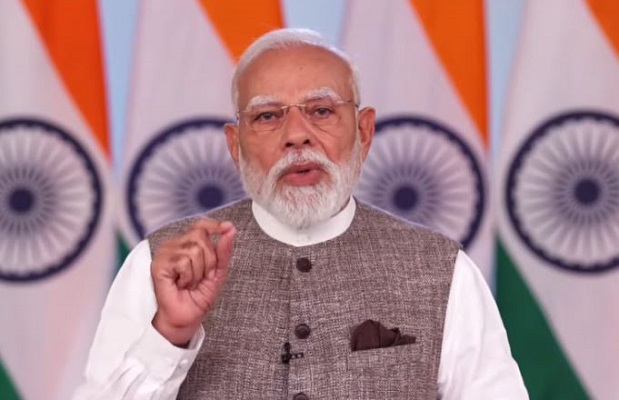
New Delhi, July 7. On the occasion of National Handloom Day, Prime Minister Narendra Modi paid tribute to the country’s weavers and artisans, saying that the handloom sector is an important pillar of rural empowerment, women-led development, and building a self-reliant India. He assured that the central government will continue to encourage and support this sector.
Saluting the skills of weavers and artisans
Prime Minister Modi wrote on the social media platform ‘X’ that National Handloom Day is a celebration of India’s rich and vibrant handloom tradition. He said that for generations, weavers and artisans have preserved and enriched India’s cultural heritage through their skill, creativity, and dedication. He said that the government is continuously striving to strengthen the handloom sector, as it plays a vital role in advancing the rural economy, women’s economic empowerment, and the goal of a self-reliant India.
A special appeal to the countrymen
The Prime Minister urged people to share their favorite handloom products and GRWM videos on social media on the occasion of National Handloom Day. He stated that this would encourage weavers and millions of people associated with the sector and give Indian handloom products a new identity.
Why is National Handloom Day celebrated on August 7th?
National Handloom Day is celebrated every year on August 7th. It was initiated to commemorate the Swadeshi Movement of 1905. The Central Government officially started celebrating this day in 2015 to honor India’s traditional weaving art and its artisans.
The sector supports the livelihoods of over 3.5 million people
According to the Fourth All India Handloom Census (2019-20), approximately 3.522 million handloom weavers and allied workers are engaged in this sector in the country. More than 72 percent of these are women, who play a crucial role in this industry. According to the census, approximately 3.145 million handloom families are engaged in this traditional industry. Meanwhile, approximately 8.48 million workers are engaged in pre- and post-weaving processes, such as winding, warping, dyeing, and calendaring.
The Indian Handloom Tradition is Linked to the Indus Valley Civilization
India’s handloom tradition dates back thousands of years. Evidence of this can be found as far back as the Indus Valley Civilization. The Rigveda, Ramayana, Mahabharata, and the texts of Kautilya mention the excellent quality of Indian cotton and silk. Over time, this art has been passed down from generation to generation, creating its own distinct identity in different regions of the country. Today, Indian handloom products are gaining new recognition through design, digital platforms, and global markets.