


The Domestic Market Management and Development Department (DMS) said Friday the investigation began following intelligence provided by the U.S. about a network suspected of faking the U.S. brand’s products.
Market authorities, along with the police, on July 16 raided a factory belonging to MP Company. The fakes at the factory were very sophisticated, making it difficult to distinguish them with the naked eye, authorities said, adding that even the authentication code on every pair seemed above board.
Based on current market prices, they estimated the value of the seized goods at over VND100 billion (US$3.8 million).
An MP Company spokesperson said the products had been manufactured under a contract with F.C.T Company, the feedstock had been sourced from abroad, and the finished products had been returned.
MP also furnished processing contracts, email correspondence with the partner, and documents purportedly authorizing the use of Nike trademarks.
Authorities have not clarified if MP was merely a victim of F.C.T Company or had a hand in the fraud.
Materials used to produce fake Nike shoes at the factory of MP in HCMC. Photo by DMS |
This year, F.C.T has exported 11 containers of Nike and Air Jordan shoes to the U.S. for more than VND25.46 billion.
But the DMS said Nike Vietnam has stated the company never granted any license to MP or its partner or authorized either organization to represent or act on its behalf.
The DMS said the goods showed signs of being knock-offs and the case was one of the largest and most complex intellectual property infringement cases uncovered in recent years.
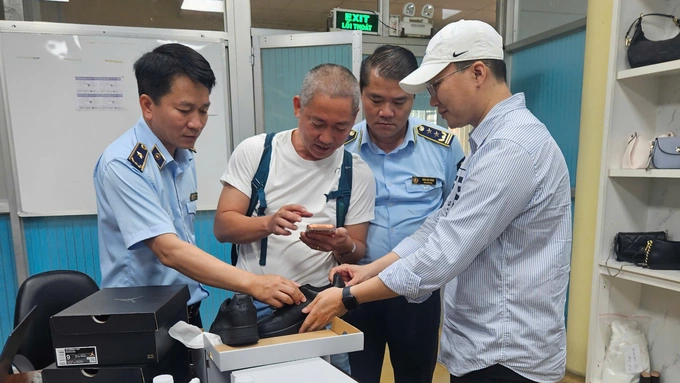 |
Market authorities inspect MP’s factory allegedly producing fake Nike shoes in HCMC. Photo by DMS |
The case involves cross-border elements linked to organizations and businesses in the U.S. and China, and indicates how international contract manufacturing and the use of documents purported to be legitimate but possibly forged work.
Tran Huu Linh, director of the DMS, said the findings demonstrate the effectiveness of international cooperation in detecting and handling cross-border intellectual property infringements.
“The discovery is significant not only because it addresses a violation, but also because it reveals a method of infringement that may still exist in the market, involving multiple parties and potentially even collusion.”

Comments are closed.