

A government committee has recommended canceling the project, previously estimated to cost about 1 trillion baht (US$30 billion), Finance Minister Ekniti Nitithanprapas said at a July 24 news briefing, as reported by Bloomberg.
He said the updated study found the project would generate an overall loss, reversing an earlier assessment that projected substantial economic benefits.
The proposed 100 km link, designed to shorten shipping times between the Indian and Pacific oceans by allowing vessels to bypass the Malacca Strait, regained attention in 2026 after tensions around the Strait of Hormuz highlighted the vulnerability of global shipping routes.
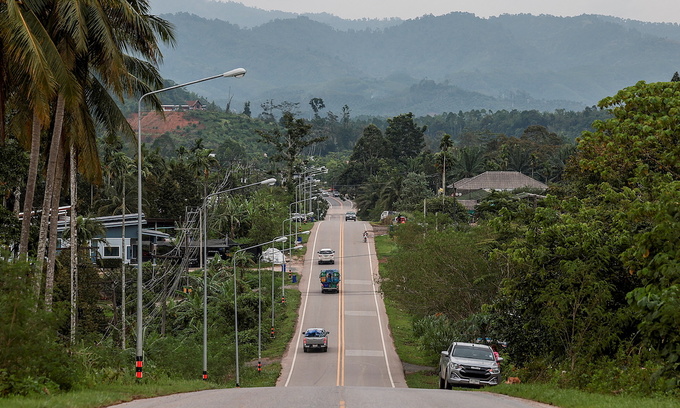
A general view of Phato district in Chumphon province, Thailand, where part of Thailand’s proposed Southern Land Bridge project is planned, May 20, 2026. Photo by Reuters |
In April, Deputy Prime Minister Phiphat Ratchakitprakarn said the government would speed up the project.
The latest study also found the project’s expected financial return had dropped to 4.8% from 8%, while projected cargo volumes were up to 16% lower than previously estimated, according to The Nation.
Ekniti said nine of the world’s 10 largest shipping companies have already invested in competing projects, leaving limited interest in the land bridge proposal.
The project envisioned building seaports on both sides of Thailand’s southern peninsula, connected by highway and rail networks. It replaced an earlier Thai proposal to dig a canal through the Kra Isthmus.
The project panel also raised concerns over the environmental impact of the project, including risks to Ranong’s mangrove forests, marine ecosystems, fisheries, tourism and coastal communities, Reuters reported.
The panel recommended upgrading the existing Ranong port and improving rail links to strengthen logistics connections.
The recommendation will be submitted to Prime Minister Anutin Charnvirakul and the Cabinet for approval. Ekniti said the government has not incurred any losses from the previous plan because no land was acquired and construction never began.
“The project offers an important lesson that large infrastructure investments should begin with a clear assessment of the country’s strategic priorities and environmental considerations before agencies proceed with detailed project studies,” Ekniti said.

Comments are closed.