
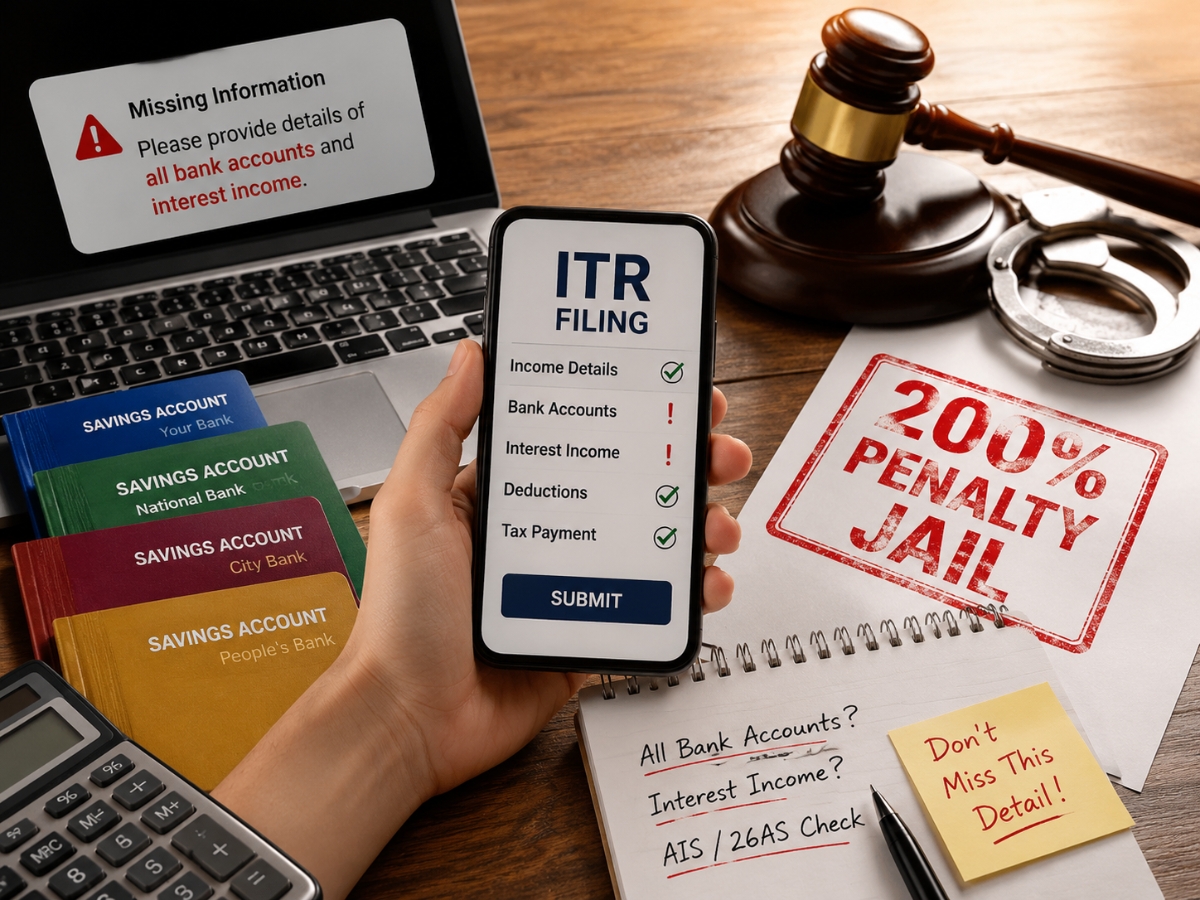

If you are filing your Income Tax Return (ITR) for Assessment Year (AY) 2026-27, then don’t make the mistake of focusing only on your salary and big investments. Tax experts say one of the most common overlooked details is interest earned from savings bank accounts, especially when taxpayers are holding more than one account.
The Central Board of Direct Taxes (CBDT) has notified in the Income Tax Return forms that taxpayers must furnish details of all Indian bank accounts held by them at any time during the financial year 2025-26, except for those considered dormant by the bank. This is the case for savings accounts but also for current accounts and other bank accounts that are eligible.
Every Active Bank Account Must Be Reported
Most taxpayers think that they need to mention only the account where salary gets credited or the account they are currently using while filing returns. But the ITR forms mandate you to report all the eligible bank accounts that you held during the financial year – which were closed thereafter.
Taxpayers will have to give details such as bank name, account number, IFSC code and account type for each of their accounts.
Correct bank account details are also important for your income tax refund. Taxpayers must choose one or more certified bank accounts for refund credits. If you choose the wrong closed or unvalidated account, it may slow the refund process down.
Interest On All Savings Accounts Is Taxable
Bank account details reporting is not sufficient. Taxpayers also have to declare the interest earned on each savings account.
Interest earned on a savings account is taxable under the head “Income from Other Sources” under the Income Tax Act. The same is added to the taxpayer’s total income before calculating tax on the applicable slab.
If you have several savings accounts, you need to add up the interest earned on each account and declare the total amount as gross interest income, even if it is eligible for a tax deduction.
Tax Deductions Are Available, But Only Under The Old Regime
Although interest income on a savings account is taxable, some taxpayers are eligible for reductions on this tax liability through claimed deductions under the Income Tax Act.
Section 80TTA offers a deduction of up to Rs 10,000 for individuals below 60 years of age and for Hindu Undivided Families (HUFs).
Under section 80TTB, the senior citizens can get a deduction of Rs 50,000.
But these deductions are available only to those taxpayers who choose the old tax regime. These benefits are not available to those who opt for the new default tax regime.
Don’t Rely Only On Pre-Filled Information
The Income Tax Department is now using data available through the Annual Information Statement (AIS) to pre-fill interest income in ITR forms. But taxpayers shouldn’t assume the information is always complete or error-free.
Before filing the return, experts say one should match the pre-filled figures with bank statements, Form 26AS and the AIS to ensure all interest income has been reported correctly.
This is particularly important for taxpayers who have numerous bank accounts or fixed deposits with different banks.
Heavy Penalties Can Be Imposed For Incorrect Reporting
Claiming unauthorised deductions or failing to report interest income can be expensive.
Section 270A of the Income Tax Act 1961 says if you misreport or under-report your income, then you can be subject to a penalty of up to 200% of the total amount of tax payable and interest thereon.
In case of serious wilful tax evasion, the income tax department can prosecute under section 276C, which provides for imprisonment for a term of three months to seven years.
One Last Check Before Filing Your ITR
Taxpayers should ensure that they declare all the bank accounts which are required to be reported and that the details of the refund bank account are correct and validated and they should also declare the interest earned from savings accounts, fixed deposits and recurring deposits before filing their return.
Spending a few extra minutes to reconcile your bank statements with Form 26AS and AIS can help you avoid delays in getting your refund, getting notices from the tax department and having to file a revised return later.
Also Read: Will Govt Launch Minimum Pension Scheme for All? Here’s What Ministry Said In Parliament
Priyanka Roshan is a business writer and assistant editor at the NewsX website who tracks everything from stock market swings and corporate earnings to personal finance trends and policy shifts. Known for turning fast-moving business developments into sharp, reader-friendly stories, she combines speed, accuracy, and a data-driven approach to break down complex financial news for everyday audiences.
With over 9.5 years of newsroom experience, Priyanka has worked with leading media organisations, including Bussiness, Times Now, and Ping Digital, covering diverse beats such as business, politics, technology, auto, travel, sports, and the world. From live breaking news desks to SEO-led digital storytelling, she specialises in creating engaging content that keeps readers informed without overwhelming them.
The post Filing ITR? Ignoring This Key Detail Could Trigger a 200 Percent Penalty or Jail appeared first on NewsX.

Comments are closed.