
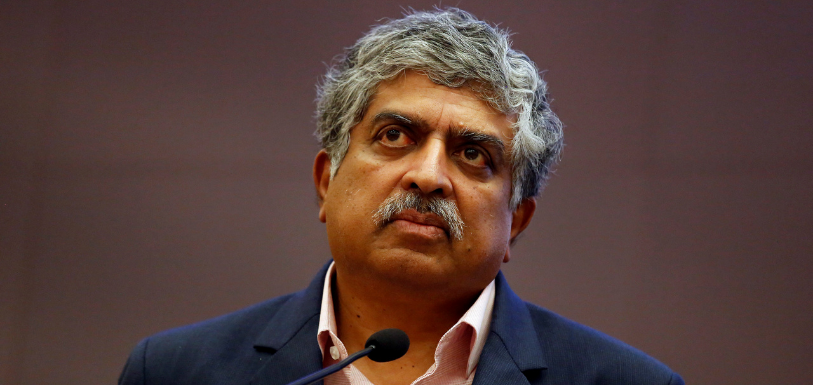

New Delhi: In yet another step to address students’ concerns over paper leaks, Prime Minister Narendra Modi Sunday announced the constitution of a high-powered task force headed by Infosys co-founder Nandan Nilekani to recommend reforms to make the exam system leakproof.
The government will implement the suggestions of the task force which will ensure the examination system is trustworthy and will bring transparency through maximum use of technology, he said in a video message posted on his Instagram handle.
The prime minister’s announcement comes a day after the 36-day agitation, led by the Cockroach Janta Party (CJP), ended with the resignation of Dharmendra Pradhan as the Education Minister.
A multidisciplinary group of domain experts will be part of the task force on reforms to be carried out for the examinations conducted by the NTA. Besides Nilekani, other members of the task force are former chairman of ISRO S Somanath, former director of Intelligence Bureau Tapan Deka, director of IIT Chennai V Kamakoti, former education secretary Anita Karwal and logistics expert Amrit Lal Meena.
Nilekani was the architect of Aadhaar, and the key person behind India’s digital public infrastructure ecosystem.
Modi said for the future of students, the government of India has been continuously taking different steps.
He said those who played with the future of the students, have been put in jails and the government is going to bring a new bill Monday in Parliament to have strong law against examination paper leaks.
But we will have to think about the future. To make sure our examination system is trustworthy, transparent and the technology is used optimally, we have decided to constitute a high-powered committee headed by world renowned technology expert Nandan Nilekani, he said.
The prime minister said the task force has been set up keeping in all these aspects in mind.
It will focus of examination reforms. As soon as we get the report, we will implement its suggestions to ensure future examination trustworthy, he said.
The Centre is scheduled to introduce a bill in the Lok Sabha Monday to strengthen the anti-paper leak law. The Public Examinations (Prevention of Unfair Means) Amendment Bill, 2026, proposes setting up fast-track courts in every state for paper leak cases and completion of investigations within two months.
It also has provisions for enhanced punishment, including imprisonment of up to 10 years and fines up to Rs 50 lakh for individuals involved in paper leaks. Organised crimes related to paper leaks could attract fines of up to Rs 10 crore.
The CJP had led a sit-in at Jantar Mantar since June 20, demanding resignation of Pradhan, accountability over the NEET-UG 2026 paper leak and irregularities in the CBSE’s on-screen marking process, besides seeking wider reforms in the conduct of public examinations.
The agitation got support from thousands of students across the country, along with major opposition parties.
The agitation gathered pace around a fortnight later after videos of activist Sonam Wangchuk’s deteriorating condition during the fast went viral. July 18, police forcibly shifted him to Safdarjung Hospital, triggering widespread anger among students and protesters.
July 20, a massive protest march to Parliament witnessed a strong police response involving lathicharge and the use of tear gas.
After three rounds of talks, the CJP and the government had reached an agreement Saturday under which the government accepted its demands. The CJP immediately called off its stir.
Besides Pradhan’s resignation, the government also agreed to providing honourable compensation to the families of students who allegedly committed suicide and withdrawal of FIRs in Delhi and other BJP-ruled states.

Comments are closed.