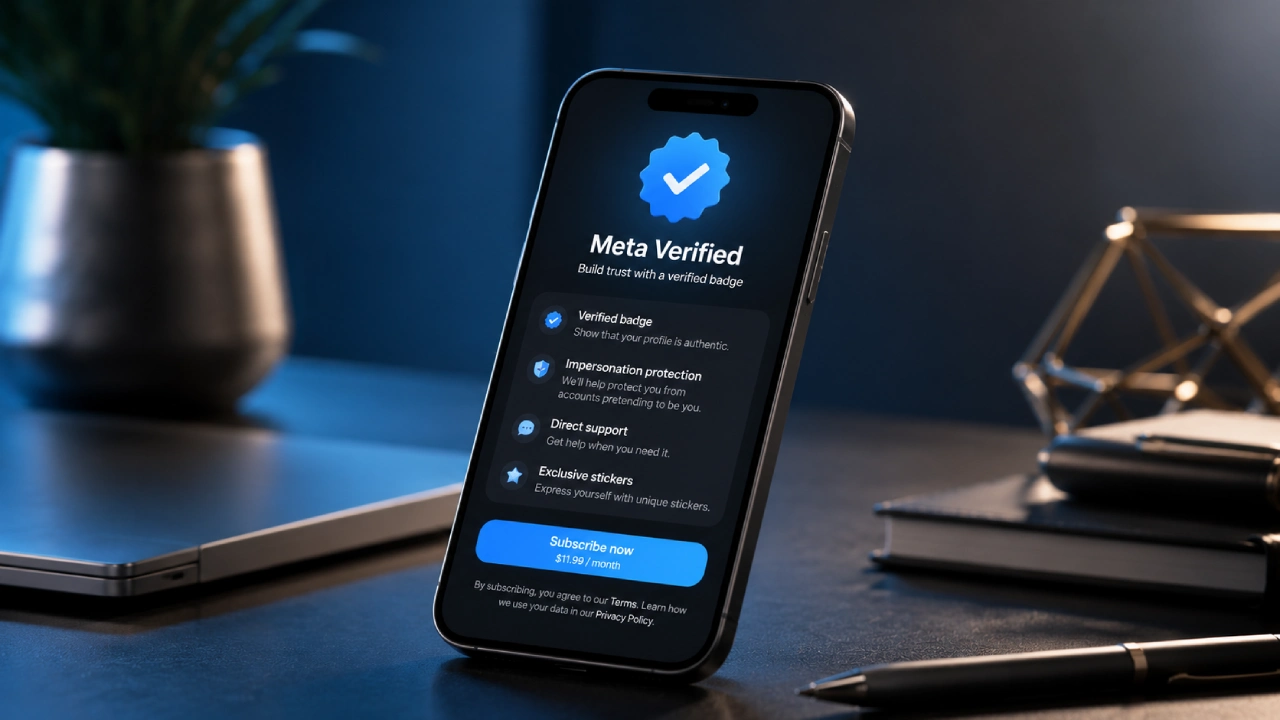

By 2026, Meta gave up on the old internet model to push a pay-to-play scheme. You see Meta Verified everywhere now across Instagram, WhatsApp, and Facebook, sitting next to free identity checks like Facebook Verified. Blue checkmarks used to mean you were famous, or a massive company, or a public figure everyone knew. Now, it is just a subscription item you buy.
If you hand over a government ID and a credit card, pay the higher monthly fee for businesses, obviously, and suddenly you get direct customer support along with proactive account monitoring.
Meta claims this pivot was necessary to stop identity thieves and AI bots from tearing the platform apart. Maybe so, but locking basic safety behind a monthly charge breaks the fundamental, old-school promise of an open web.
The Perks: Direct Support, Fraud Shielding, and Instant Credibility
Surely, the system fixes problems that users complained about for a decade. Fake accounts used to pop up constantly, impersonating small creators before anyone noticed, but machine learning catches those scams early if you pay. If you ever got locked out of your account years ago, you know the nightmare of finding a human being to help you.
Live chat support actually exists now, which feels like a miracle given Meta’s miserable history with user assistance. Smaller accounts can just pay the fee to get a blue badge instead of begging some opaque committee to recognize them. That algorithmic reach boost gives smaller creators a fighting chance in an overcrowded feed, even if paying for visibility feels unethical.
Algorithmic Extortion: How Basic Security Became a Monthly Subscription
The business logic behind all of this is deeply disturbing when you sit down and analyze it. Safety is not a luxury product, yet Meta treats basic platform integrity as a premium add-on. Unpaid users are essentially left out in the cold, treated like secondary assets whose security does not matter to the bottom line.
It feels like algorithmic extortion, at this point. Creators and local businesses end up paying what amounts to a monthly corporate tax just to keep their existing audience numbers from collapsing.
Historically, blue checkmarks functioned as an indicator of verified public interest, reserving identity validation for notable public figures, established journalists, major brands, and public institutions. Now, nobody knows if an account belongs to a real figure or just somebody throwing money at a screen every thirty days.
Scammer Upgrades and Identity Risks: The Hidden Dangers of Pay-to-Play Verification
The deeper issue is how this entrenched class divides online. Rich creators, massive companies, and well-funded bad actors buy a louder megaphone, while grassroots activists and lower-income users get buried by algorithms they can’t afford to pay. Scammers with actual money can literally buy instant credibility to launch sophisticated campaigns.

However, placing core account safety features behind a paid wall fundamentally alters the accessibility model of the consumer web, shifting baseline platform security from an integrated operational standard into a premium add-on service.
The Two-Tiered Feed: Digital Class Divides and the Open-Web Pushback
Look at this through how people actually experience it. Regular users live with constant anxiety, terrified that skipping a payment will make their accounts invisible or leave them exposed to impersonators. Social media used to feel like a town square, messy as it was, but now it feels like a gated shopping mall where security guards only check on paying customers.
However, people are fighting back, though. You see groups organizing boycotts, migrating over to open-source networks, trying to build spaces that do not charge a monthly toll for something as basic as safety.
Conclusion
Meta’s deployment of paid verification models highlights the broader commercialization of digital identity. Sustainable platform integrity requires robust, uniform security controls for all participants, regardless of subscription status. Baseline digital protection must function as an industry standard, not a premium feature. Are you ready to adapt your platform strategy to the evolving reality of paid digital identity, or is it time to explore decentralized alternatives?

Comments are closed.