

Few fields have retained the status of a true “global benchmark” as consistently over time as French pastry. Whether at international competitions or the opening of a new patisserie abroad, the conclusion remains the same: French pastry continues to captivate.
From Tokyo to Seoul, from Singapore to New York, French techniques, our iconic desserts, and our craftsmanship remain enduring references. Yet the world of pastry has never been more dynamic. New talents are emerging everywhere, culinary influences are converging, and trends are spreading at an unprecedented pace.
So Why Does French Pastry Continue To Hold Such A Distinctive Place?
Photo: Canva
Perhaps the answer lies in what has defined it for centuries: its unique ability to combine heritage with innovation.
A universal language built on strong foundations
French pastry possesses a rare characteristic: it is founded on an exceptionally structured and diverse technical framework.
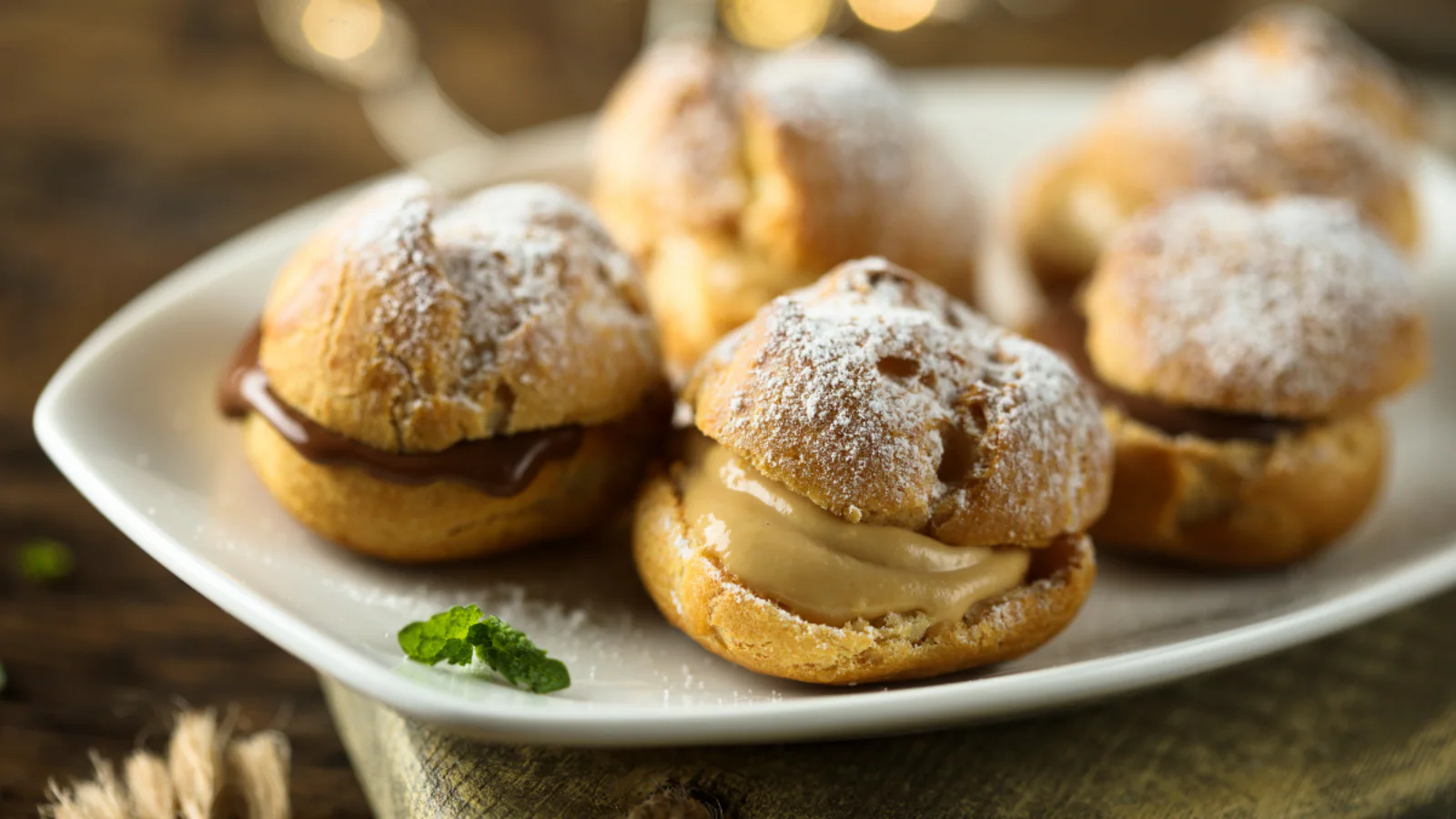
Puff pastry, choux pastry, creme patissiere, viennoiserie, entremets, chocolate, and sugar work: these fundamentals now form the vocabulary shared by pastry chefs across the globe.
As in classical music or architecture, mastering the fundamentals is not a limitation; it is what enables creativity to flourish.
It is this technical rigor that has helped establish France as an international benchmark. Not because it holds a monopoly on talent, but because it has transformed craftsmanship into a true discipline of transmission.
Also Read: Was Pani Puri Invented By Mahabharata’s Draupadi?
This recognition is the result of centuries of development. At the beginning of the nineteenth century, Marie-Antoine Careme laid the foundations of modern haute patisserie by codifying techniques, artistic showpieces and the organization of the profession. A few decades later, Auguste Escoffier built upon this legacy by fully integrating pastry into the modern kitchen brigade and contributing to the structure of French gastronomy as we know it today.
This codification was never intended to constrain creativity. On the contrary, it established a common language that continues to allow pastry chefs around the world to innovate on solid foundations.
This culture of transmission lies at the very heart of our model. It is embodied in historic maisons, prestigious competitions, distinctions such as the Meilleurs Ouvriers de France, and in the schools that train each new generation of pastry professionals.
Excellence Recognized Far Beyond Our Borders
French gastronomy enjoys exceptional international recognition. Since 2010, the Gastronomic Meal of the French has been inscribed on UNESCO’s Representative List of the Intangible Cultural Heritage of Humanity, recognizing a way of life in which the product, craftsmanship, sharing and the transmission of knowledge all play a central role.
This influence is equally evident in the world of pastry.
It is no coincidence that Paris has been named the world’s leading pastry destination in Food & Wine’s Global Tastemakers Awards for three consecutive years, in 2024, 2025 and 2026.
Yet the true strength of French pastry lies elsewhere: in its ability to influence the world while embracing influences from it.
Today, this exchange works in both directions. French pastry continues to inspire chefs across the globe, while remaining remarkably open to ideas and traditions from other culinary cultures.
One of the richest dialogues has undoubtedly emerged between French techniques and the culinary traditions of East Asia. Classic creations such as choux, tarts, entremets and macarons are now enriched with ingredients such as yuzu, black sesame, matcha and Japanese citrus fruits. Not as passing trends, but as genuine new avenues for flavor and creativity.
This openness extends far beyond ingredients. It also shapes flavor balance. Pastry chefs are increasingly exploring umami, sweet-and-savoury combinations, fermentation, spices, and subtle smoky, toasted or caramelised notes. The objective is no longer simply to achieve sweetness but to create desserts that are more nuanced, elegant and contemporary.
Also Read: Why Do We Crave Fried Food Even When We’re Full?
Reinventing Without Losing Our Identity
Photo: Canva
The greatest threat to any tradition is not change: it is stagnation.
French pastry remains influential precisely because it continues to evolve.
Over recent years, we have witnessed the emergence of new expectations: reduced sugar, greater nutritional balance, a stronger emphasis on plant-based ingredients, seasonality and more responsible approaches to sourcing and production.
These developments do not undermine the foundations of French pastry; they build upon them.
It is precisely because those foundations are so strong that such creative freedom is possible. A perfectly mastered pastry, an impeccably executed cream or a carefully balanced interplay of textures provides the confidence to explore new territories: incorporating alternative ingredients, reducing sugar, embracing bitterness, or creating entirely new dialogues between culinary cultures.
When Cedric Grolet places fruit at the heart of his creative vision, when Jessica Prealpato develops her philosophy of desserality, or when a new generation of pastry chefs experiments with innovative ingredients and techniques, they are all contributing to the same movement: advancing the profession while preserving the uncompromising standards of flavour, precision and craftsmanship.
French pastry does not seek to preserve its heritage under glass. It gives that heritage the means to continue evolving.
A global benchmark is not one that seeks to impose a single model. It is one that continues to inspire, to pass on its expertise, and to evolve through dialogue with other cultures.
That is precisely how French pastry continues to remain a global benchmark.

Comments are closed.