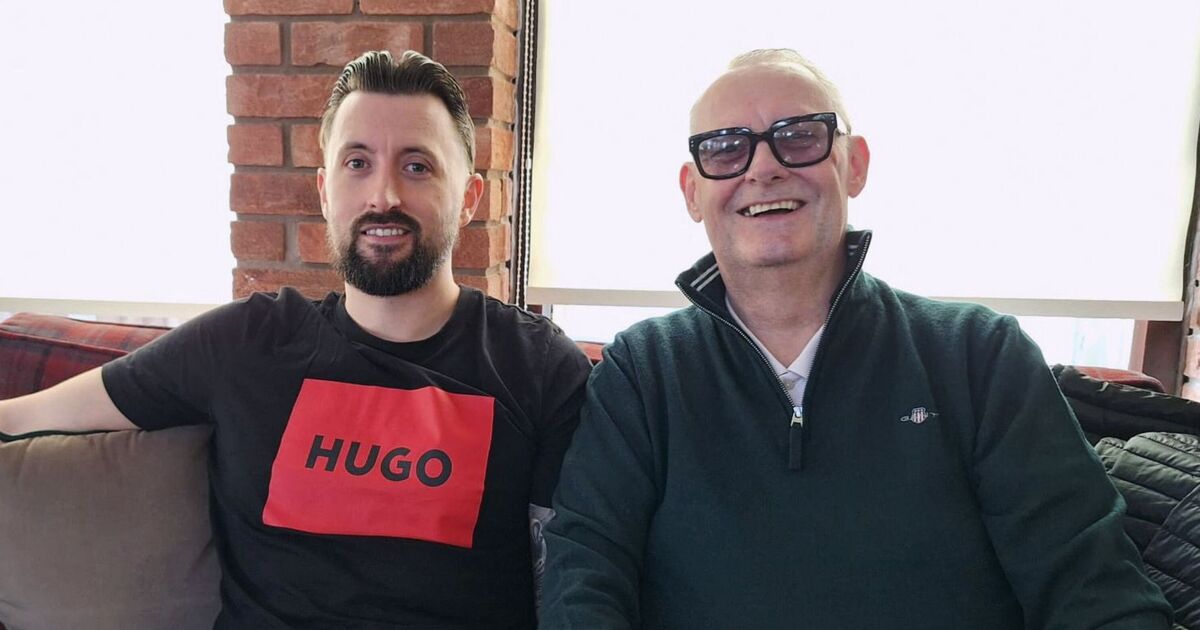
Mark Bond with his son Aaron, who donated a kidney to his dad (Image: Courtesy Mark Bond)
As a professional golfer turned club manager, Mark Bond had always been as fit as a flea. But back in 2013, at the age of 49, he started to feel a little tired and out of sorts and went to see his GP who referred him to a kidney specialist. “I was feeling very lethargic and off my food which isn’t like me and was told my kidney function was a little low,” he recalls. “I was advised to overhaul my diet, cut out fatty foods, potatoes and seasoning, sweets and alcohol.”
With the help and support of his wife Susan, Mark embarked on a healthy new regime, and began walking two or three miles every day and cycling to increase his fitness levels. “I had enjoyed a good lifestyle and my weight had gone up to 18 stone but, in this new regime, I lost four stone and felt great.
“My kidney function was being monitored and I was taking good care of myself.” But despite his efforts, by 2016, Mark was starting to tire much more quickly – and more tests soon revealed the cause. “It was a real shock to learn my kidneys were only functioning at 23% after all my efforts”, the father-of-two from Preston, Lancashire, says. “Then lockdown came and I didn’t see my specialist for two and half years, something they did apologise for.”
High blood pressure
Mark Before his transplant… he was exhausted and run down but remained stoic (Image: Courtesy Mark Bond)
By the time Mark was seen again in 2022 he was devastated to learn his kidney function had fallen to just 15%. Mark was suffering from nephropathy, which is when kidney damage is caused by high blood pressure which puts a strain on the small blood vessels in the kidney.
“As well as suffering from high blood pressure because ofmy weight, for years when I was playing golf, I took a lot of ibuprofen because I had a bad back, maybe eight or 10 a dayfor years. That was in the late 80s and no one said that it was dangerous. The consultant said that, combined with my high blood pressure because of my weight, were the probable causes of my kidney disease.
“But it was a real shock because I had really been looking after myself and I looked well. I was told I would need a transplant and if my function dropped much further I would need to start dialysis, which I really didn’t want to do.”
More than 7,000 patients are currently on the NHS waiting list for a kidney transplant and six people die every week waiting for a kidney. Moreover, there are currently 32,000-plus people on dialysis, at a cost of around £34,000 a year per patient to the NHS. The treatment is required for those living with end-stage kidney failure.
“The kidney nurse came to see me at home and talked about setting up a dialysis machine in a room in the house and said it would be three times a day, four times a week,” Mark continues. “I really didn’t want to be tied to the house like that. I have always been so active. In fact I turned down dialysis four times.”
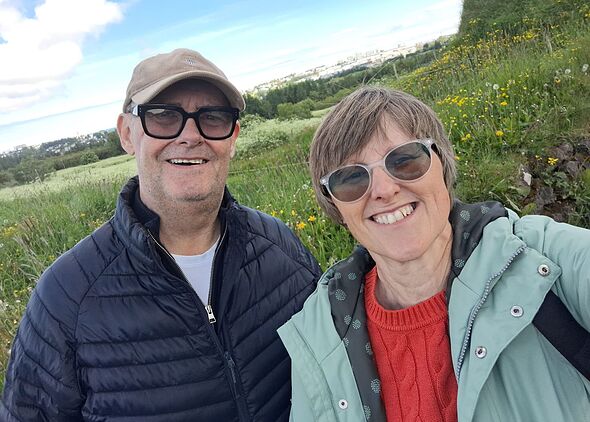
Enjoying a holiday in Iceland in great health with wife Susan after the transplant op (Image: Courtesy Mark Bond)
Mark was still struggling into work running Chorley Golf Club but only managing a few hours before he would be forced to come home, slump in a chair and rest for a few hours.
“I was in bed by 10pm and up and down about four or five times in the night. I was constantly cold and absolutely bushed.”
A transplant was his only option. Nine family members and friends came forward to offer to be tested to see if one of their kidneys would be suitable for a living donation – including Susan and their sons Aaron, 35, and Zack 32. While both sons proved a perfect match, Aaron, as the eldest son, insisted that it would be him. Modestly he says today that it “just felt like the obvious thing to do”. But Mark is under no illusions at the sacrifice he has made. “He is an absolute hero. He has given me my life back.”
For his part, Aaron, a sales manager, says: “Growing up my dad was my superhero. I idolised him as a child and teenager and it was really worrying watching him deteriorate and losing his powers.
“I had no hesitation about donating a kidney. He had looked after me all these years and now it was my turn to do the same. And possibly as the elder son, it felt like it was my turn to be the protector now. I wanted him to live as long as possible, not just for him but for my mum too. They are inseparable.”
Operation scheduled
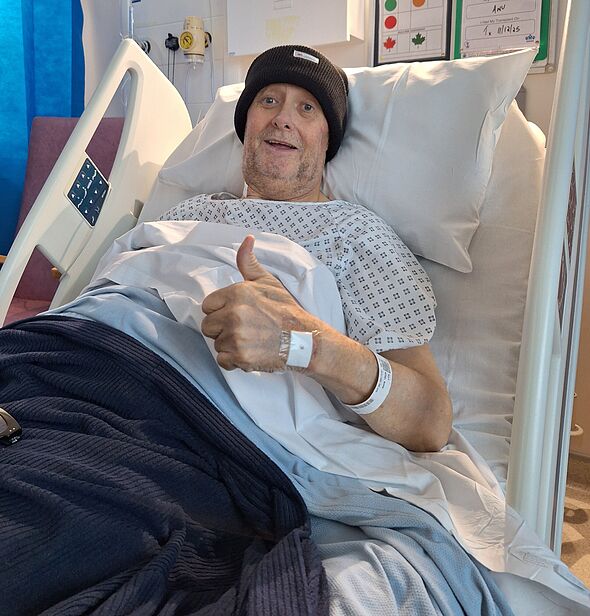
Prrparing for his transplant (Image: Courtesy Mark Bond)
Living kidney donation
Living kidney donation is when someone chooses to give one of their kidneys to a person with kidney failure who needs a transplant. It could be a friend or family member, or some people choose to donate to a stranger on a transplant waiting list.
In the UK, living kidney transplants have been performed since 1960 and around 1,000 procedures are performed each year with a very high success rate.
As well as considering living kidney donation, people can also join the deceased donor registry where your kidneys and other organs will be donated after your death. However, only a very small number of people die in circumstances where their organs are suitable for transplant (fewer than 1% of the population) so there is always a shortage.
The success rate for transplants from living donors is better than from deceased donors, and can also last many years longer. Adults wait an average of 18 months for a transplant but it can be much longer. If more people participated in living kidney donations, the waiting list would shrink and more people with kidney disease could come off (or avoid) years of difficult dialysis, regain their health and independence. For donors, the experience can also be meaningful.
A spokesperson from the Robert Dangoor Partnership for Living Kidney Donation, a charity partnership between Kidney Research UK and Give a Kidney, says: “Many people feel proud, fulfilled, and even gain a new sense of worth knowing they’ve done something to help someone else in need. It’s a chance to make a real difference.”
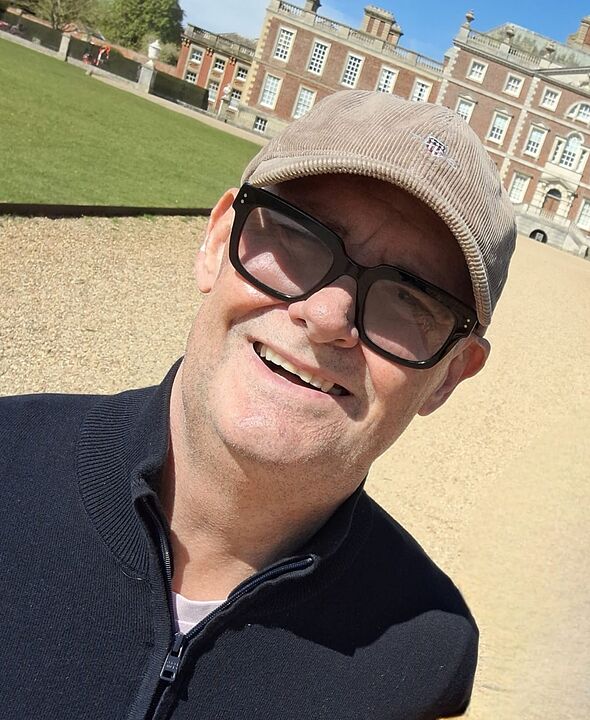
Today Mark feels fit as a fiddle… and happy to spread the word about his transplant (Image: Courtesy Mark Bond)
Unfortunately, the first operation was cancelled when it was discovered Aaron was too dehydrated and so his kidney function wasn’t good enough. Mark adds: “He was devastated because at 2am the night before the op, when we were both in hospital, everything was fine.”
After losing their slot last October, the family feared it could be months before they had the chance to do it again. Then a persistent kidney nurse managed to get them a second slot on December 10 at Manchester Royal Infirmary and this time everything went to plan.
Aaron donated his left kidney. Surgeons prefer this because the left kidney generally has a longer renal vein, making the surgical connection (anastomosis) in the recipient much easier. Mark’s new kidney was placed on the right hand side, at the front, and his original two kidneys remain in place.
After five hours in theatre Mark went to the recovery ward where unfortunately they struggled to stabilise his heart rate so he had to be admitted to the critical care ward where it was discovered he had had a reaction to the morphine. Mark says: “A wonderful nurse stayed by my side allnight monitoring me and making sure I was as comfortable as possible.”
Younger son Zack was devastated when he came to visit as he had exciting news to share. His wife Annabel was expecting their first baby. “My wife and Zack were in tears because they thought I might not make it to hear the news.”
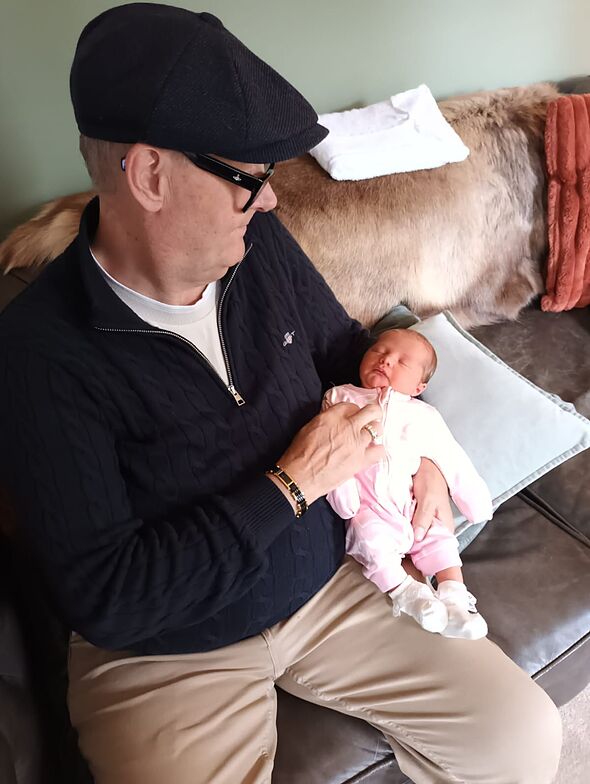
Mark with his first grandchild, Savanna Belle Bond (Image: Courtesy Mark Bond)
However, the next day Mark was feeling much better and thrilled to learn he was to become a grandfather for the first time, with Zack telling him “now you’ve got something to live for”. And in July, baby Savanna arrived weighing 7lbs, 5 oz.
Mark, now 61, and feeling better than ever says: “It is phenomenal how my life has turned around from being at ‘death’s door’ to being ‘pops’. My kidney function is now at 91%, which is incredible.”
At this point Aaron, who is back in the gym and feeling fighting fit again, jokes: “Yeah his kidney function is better than mine. Mine was at 78% but I haven’t had a test for a while. If it doesn’t improve I’ll be wanting it back!”
Both father and son couldn’t believe how quickly they recovered from the procedure. Mark adds: “I was only in hospital for six days and was tucking into a full Christmas lunch for the first time in years a couple of weeks later. We have been on holiday to Iceland since to celebrate my wife’s 60th birthday and now we have our beautiful granddaughter too. Life couldn’t be better and it is all down to my amazing son. He is the real superhero.”