
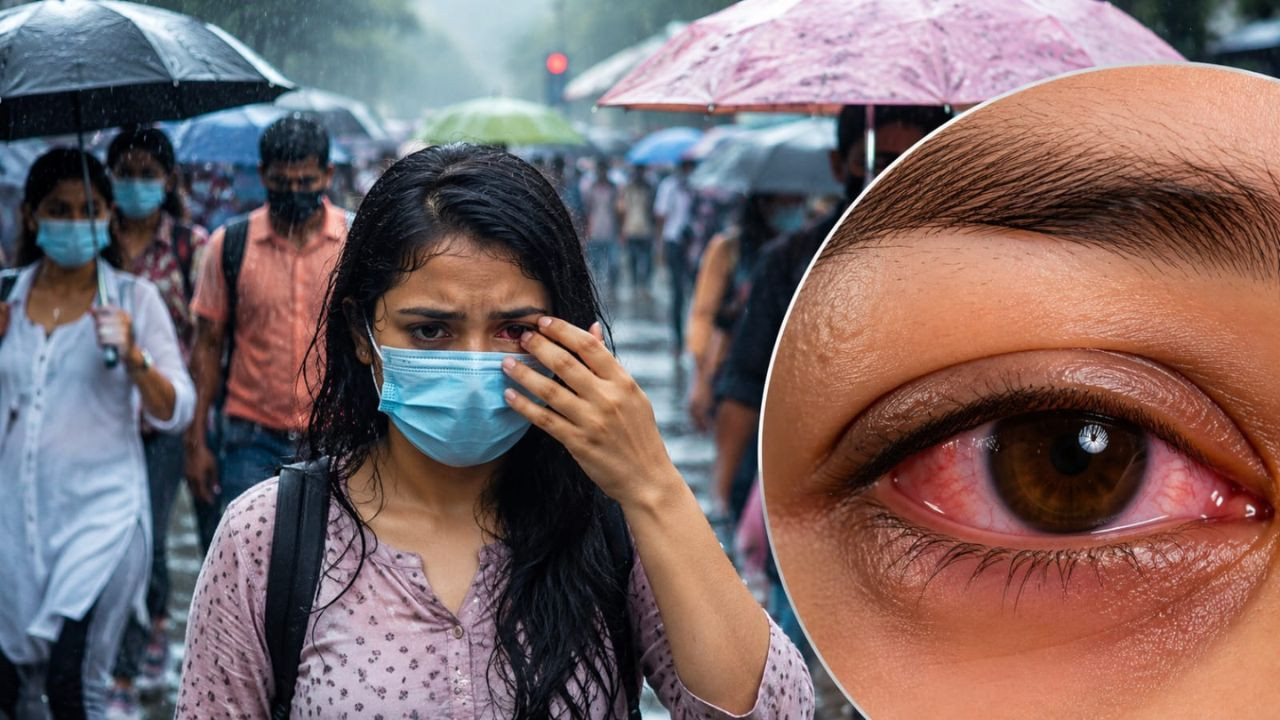
Risk of flu increases in monsoon, know 5 symptoms of conjunctivitis and ways of prevention

New Delhi: Monsoon season brings relief from the scorching heat and humidity, but the increasing humidity in the atmosphere also brings with it the risk of many seasonal diseases. In this season, along with cold, cough and fever, eye infection i.e. ‘eye flu’ i.e. conjunctivitis starts occurring. The activity of viruses and bacteria increases greatly during the monsoon season, due to which people of all ages, especially children, easily fall prey to it. Conjunctivitis is an infectious disease, which spreads rapidly from one person to another.
What is conjunctivitis?
Conjunctivitis is also known as ‘eye flu’ or ‘pink eye’ in common language. This is an inflammation or infection in the ‘conjunctiva’, the transparent membrane of the eye. The conjunctiva covers the white part of the eye and the inner layer of the eyelids. When infection or allergy occurs, the blood vessels swell, causing the eyes to appear red. This infection spreads rapidly by touching eyes with dirty hands, going to crowded areas and using belongings of an infected person.
Recognize 5 symptoms of conjunctivitis
- Redness or pinkness of eyes: This is its most primary and obvious symptom. Due to infection, the white part of the eye starts appearing light pink or dark red.
- Flow of tears: Due to irritation and infection in the eyes, the problem of continuous watering starts.
- Itching and burning: The patient feels as if a particle of dust or sand is stuck in the eye. The stinging and burning sensation increases upon blinking the eyes.
- Sticking of eyelashes: In case of bacterial infection, yellow or green sticky substance comes out from the eyes. Due to this, after waking up in the morning, the eyelids stick together and become swollen.
- Photophobia: The patient experiences discomfort in seeing in bright light or sunlight and may feel slight blurriness.
how to protect
To avoid conjunctivitis and prevent its spread, it is very important to take some general precautions in daily life. Avoid touching or rubbing eyes repeatedly without washing hands. Clean hands with soap several times a day. Do not use towels, handkerchiefs, pillow covers, make-up products or glasses of an infected person. If you feel even the slightest irritation or redness in the eyes, contact lenses should be removed immediately and glasses should be worn until the infection is completely cured. During infection, minimize the use of mobile, laptop and TV so that there is no additional pressure on the eyes. In case of severe eye pain, excessive blurring or increased discharge, immediately contact an eye specialist and do not apply any eye drops without medical advice.

Comments are closed.