
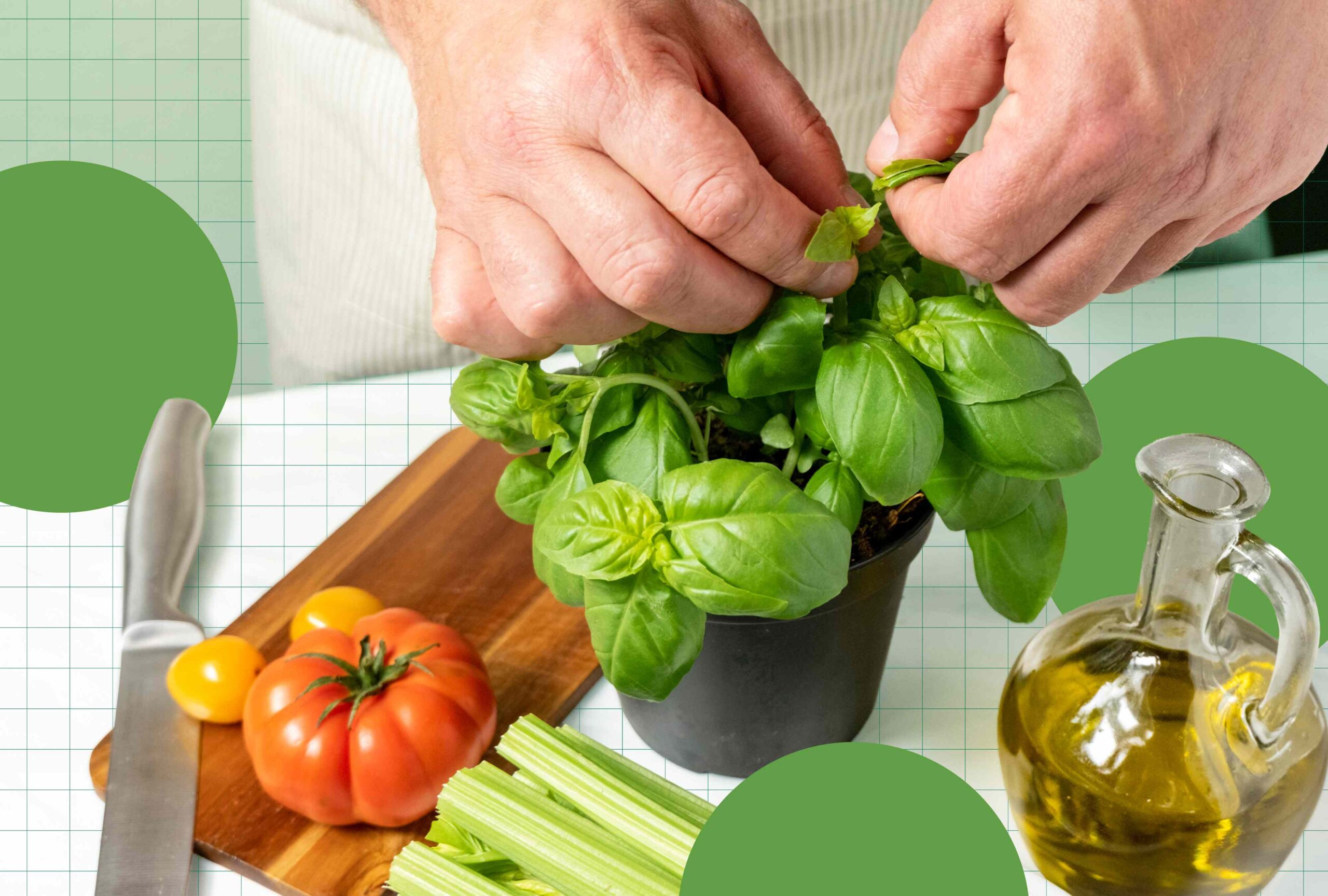

Fresh or dried, these five anti-inflammatory herbs are worth adding to your diet.
Reviewed by Dietitian Jane Leverich, M.S., RDN
Key Points
- Gram for gram, many culinary herbs contain more antioxidants than common fruits and vegetables.
- Dietitians recommend cooking with basil, turmeric, oregano, rosemary and tarragon more often.
- Simple ways to add more herbs to your diet include marinades, infused water and dressings.
Take a peek at traditional medicine all over the world and you’ll notice one ingredient appearing time and again: herbs. It’s not hard to see why, for centuries, people have used these plants not only for their flavor, but also for their potential health benefits. Besides being naturally flavorful and widely available, they’re potent sources of antioxidants—chemical compounds that help reduce inflammation. In fact, gram for gram, many culinary herbs contain more antioxidants than common fruits and vegetables.
There’s plenty of crossover between medicinal herbs and culinary herbs. Each sprinkle of dried (or handful of fresh) herbs, is an easy way to add more of these beneficial compounds to your meals. “I try to alternate between fresh and dried herbs in my cooking to maximize the benefits of both,” says dietitian and herbalist Jenna Volpe, RDN, LD, IFNCP, CLT. Dried herbs tend to have more concentrated antioxidants, she says, while fresh herbs tend to retain more water-soluble nutrients, such as vitamin C and certain B vitamins. Want to give your dishes more antioxidant oomph? Dietitians recommend cooking with these five anti-inflammatory herbs more often.
1. Basil
Dried basil leaves stirred into pasta sauce or julienned strips of fresh basil decorating a Margherita pizza do more than brighten a dish. “Basil is rich in aromatic compounds like eugenol and rosmarinic acid, which have antioxidant and anti-inflammatory properties,” says Sharniquia White, M.S., RD. Eugenol may have antimicrobial activity and has even been used as a temporary dental filler for its pain-relieving properties. Rosmarinic acid, meanwhile, has been studied for its potential as an anticancer agent.
Plus, basil is simply one of the most versatile herbs around. “I love blending fresh basil into ricotta for a savory spread, stirring it into fruit salads with strawberries or peaches, adding it to homemade vinaigrettes, or finishing grilled corn and roasted sweet potatoes with fresh basil ribbons,” White says.
2. Turmeric
Turmeric holds a unique claim to fame: It’s classified both as a spice and an herb. Its reputation as an inflammation-buster is well deserved. Research points to this spice-slash-herb’s ability to fight oxidation.
Turmeric may be best known for its bright golden color, but it’s also rich in curcumin, the compound responsible for many of its potential health benefits. Research suggests it may help support a healthy inflammatory response and protect cells from oxidative stress.
When including turmeric in cooking, be sure to pair it with black pepper to reap these antioxidant benefits. “Many studies have shown that combining black pepper with turmeric has a synergistic effect,” says Volpe. “While black pepper alone doesn’t exhibit antioxidant effects in the body, adding it to turmeric helps amplify the antioxidant potency and bioavailability of certain antioxidant constituents in turmeric.” A few of Volpe’s favorite dishes that feature turmeric and black pepper together include curries, stir-fries and golden milk.
3. Oregano
“Oregano is one of the most antioxidant-rich culinary herbs, thanks to compounds like carvacrol, thymol, and rosmarinic acid,” says White. “These plant compounds have been studied for their antioxidant and anti-inflammatory effects, making oregano an easy way to increase the phytonutrient content of everyday meals.” Though research is still underway, the antioxidants in oregano appear to have antidiabetic, antiulcer, antiviral, antitumor and anti-inflammatory activity.
White suggests putting oregano in dishes that represent one of its growing regions: the Mediterranean. “I like pairing oregano with tomatoes, beans, lentils and olive oil,” she says. “Together, these ingredients create the foundation of many Mediterranean-inspired meals, an eating pattern consistently associated with lower levels of chronic inflammation and improved heart health.”
4. Rosemary
The herb with the pretty name packs a powerful antioxidant punch. “Rosemary is particularly abundant in aromatic volatile oil compounds such as triterpenes, phenolic acids and volatile terpenoids, which all have antioxidant properties as well as antimicrobial properties,” says Volpe. These characteristics offer real-world benefits. In fact, research suggests that consuming rosemary with meals may support more optimal blood sugar control, enhance the activity of glutathione (the body’s master antioxidant) and inhibit oxidation of fats in the body.
Rosemary works well in innumerable dishes, from meats and potatoes to veggie soups and rice pilaf. Or, for a unique, creamy spread, blend some chopped leaves into butter or ricotta cheese and enjoy on toast.
5. Tarragon
Tarragon may not show up in as many recipes as other herbs, but perhaps it’s time to give this underrated leaf more love. According to White, it has a lot to offer culinarily. “Its distinctive anise-like flavor allows you to create bold flavor without adding much salt,” she says. She suggests trying it as a complement to dill in chicken salad or tuna salad, or using it on veggies. “Even adding chopped tarragon to roasted mushrooms or green beans can completely transform a side dish into something that feels restaurant-worthy.”
Due to its high antioxidant content, tarragon has long been used in traditional medicine for all sorts of purposes, such as relieving digestive diseases, epilepsy and pain. Research shows its bioactive compounds may also help resist certain bacterial infections. Consider keeping it on your spice rack as a flavorful, antioxidant-rich cooking companion.
Ways to Enjoy Anti-Inflammatory Herbs
From breakfast to dessert, herbs can add fresh flavor and antioxidant-rich plant compounds to just about any meal. Here are a few easy ways to use them more often:
- Make a pesto. When you’ve got a bunch of fresh herbs to use up, a pesto easily welcomes them into its fold. Though basil is the typical base for pesto, you can experiment with other herbs like rosemary or oregano for a more complex flavor profile.
- Add them to breakfast. Herbed eggs are sure to start your day on a zingy, antioxidant-rich note! “Adding rosemary and turmeric into eggs (with some parsley, oregano, thyme, garlic powder and onion powder) is very tasty and also helps enhance the health benefits of the eggs,” says Volpe.
- Infuse them into drinks. For a flavor upgrade that’s nearly calorie-free, try muddling fresh herbs in the bottom of a water pitcher. Then toss in any other fresh flavor enhancers you prefer. “A handful infused into water with berries adds a fresh herbal note,” White says. Don’t forget you can also pop fresh herbs into hot water for a tea-like drink.
- Whisk them into dressings and marinades. Roasted veggies, meats and salads get an instant upgrade when dressed with an herby vinaigrette or marinade. White says one of her favorite combos contains tarragon, lemon juice, Dijon mustard and yogurt.
- Bake with them. Once you’ve tried the just-right notes of rosemary-infused apricot thumbprint cookies or a ginger-dusted pear pie, you may never go back to an all-sweet preparation.
Our Expert Take
With all the antioxidant benefits of fresh and dried varieties, you can feel free to make herb a verb! Infusing your cooking with rosemary, tarragon, basil and other piquant choices is a win for both wellness and deliciousness. “From a chef’s perspective, herbs help build layers of flavor without relying heavily on salt, sugar or saturated fat,” says White. “And as a dietitian, I love that they also contribute beneficial plant compounds linked to overall health.”

Comments are closed.