
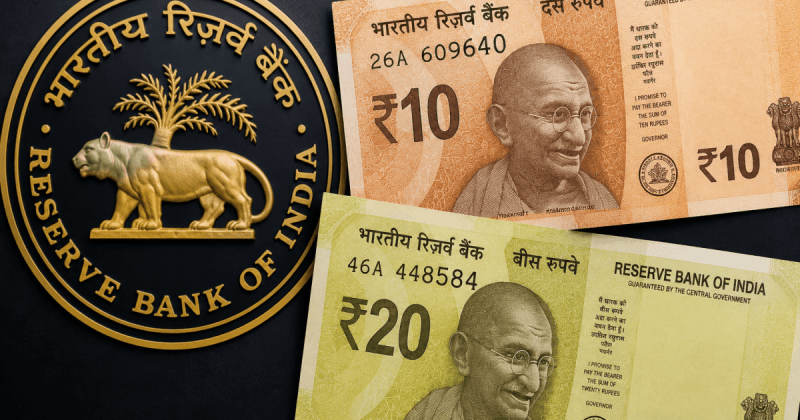

The Reserve Bank of India (RBI) is set to begin field trials of ₹10 and ₹20 polymer (plastic) banknotes after receiving approval from the Central Government. However, the government has clarified that there is no proposal to replace existing paper currency with polymer notes, putting to rest speculation about a nationwide switch.
The pilot project will involve the printing of one billion ₹10 polymer notes and one billion ₹20 polymer notes, allowing the RBI to assess their durability, security features and performance under different climatic and usage conditions across the country.
Polymer banknotes are made from a synthetic material instead of cotton-based paper and are known to last significantly longer. They are more resistant to moisture, dirt and tearing, while also offering enhanced security features that make counterfeiting more difficult. Countries including Australia, Canada and the United Kingdom already use polymer currency extensively.
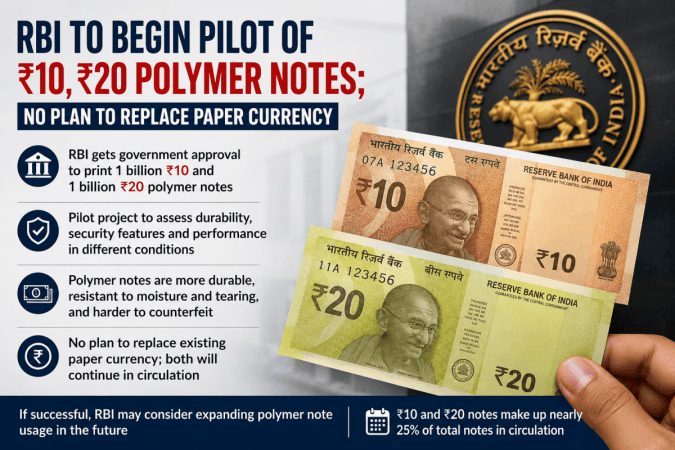
The government informed Parliament that the initiative is only a field trial aimed at evaluating the feasibility of polymer notes. Existing paper currency will continue to remain in circulation alongside the pilot notes, and there are currently no plans for a complete transition to plastic currency.
According to RBI data, ₹10 and ₹20 notes account for nearly a quarter of the total currency notes in circulation by volume, making them suitable denominations for testing the new material. If the trial proves successful, the central bank may consider expanding the use of polymer notes in the future.

Comments are closed.