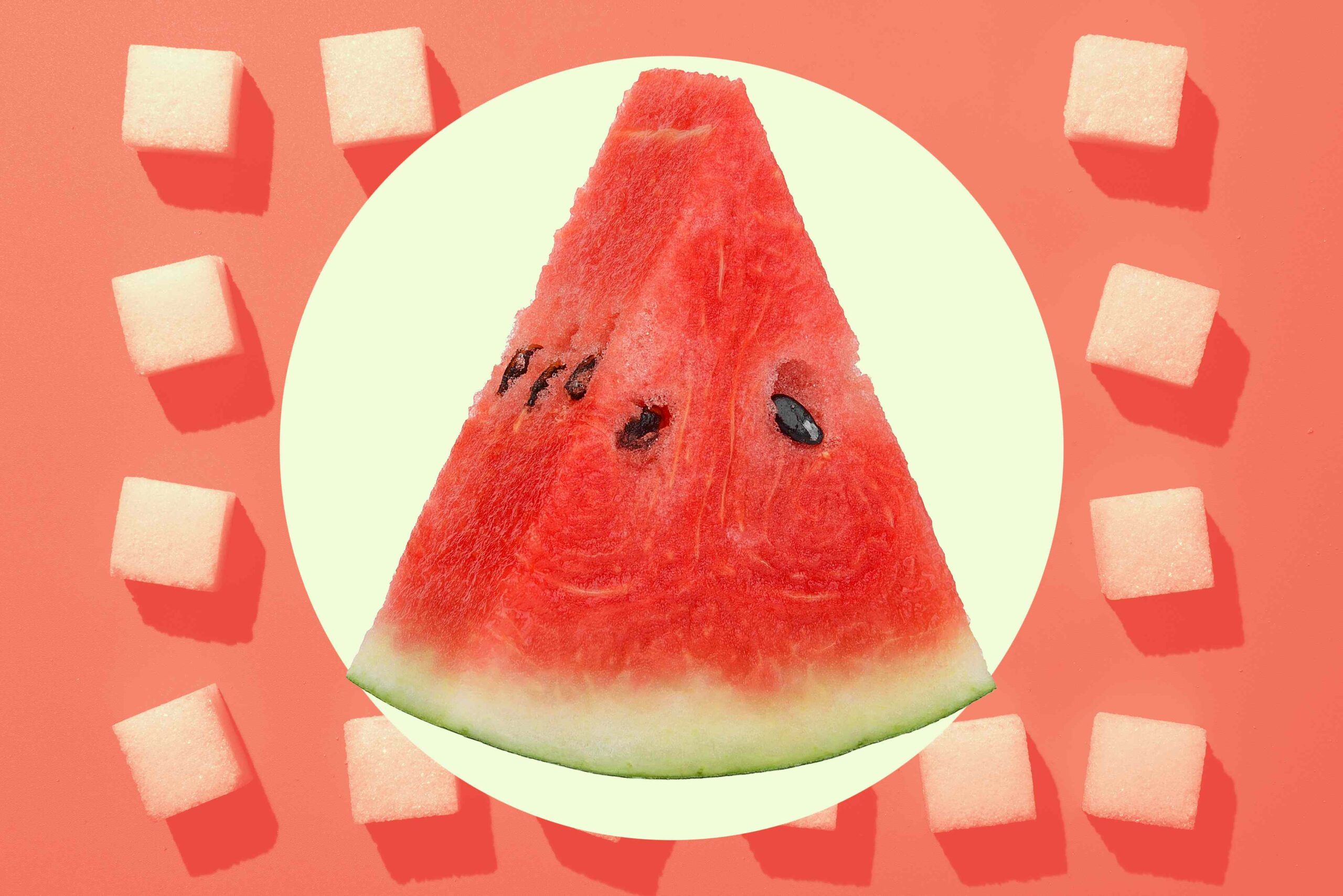
Watermelon lovers, you don’t have to avoid your favorite fruit to get your blood sugar down.
Reviewed by Dietitian Madeline Peck, RDN, CDN
Key Points
- Moderate portions are unlikely to cause significant blood sugar spikes.
- Watermelon’s high water content and antioxidants may support healthy blood sugar.
- Pair watermelon with protein, like Greek-style yogurt, to help prevent rapid blood sugar increase.
Managing blood sugar is important for overall health. Foods with natural sugars, like fruit, are often a point of confusion when it comes to blood sugar management. Most people know fruit is full of nutrients we need, but you may have also heard it should be avoided because of its sugar content.
Watermelon is a prime example. Biting into a juicy piece of watermelon is undeniably refreshing, but its sweetness may have you worried that it’s bad for blood sugar. Although watermelon does raise your blood sugar, you don’t have to avoid it for the sake of supporting healthy blood sugar. “Watermelon contains natural sugars, but it’s also mostly water and can absolutely fit into a balanced eating pattern,” says Vandana Sheth, RDN, CDCES, FAND. We spoke with diabetes nutrition experts to share how watermelon impacts blood sugar, plus tips to enjoy it as part of a blood sugar–friendly diet.
How Watermelon Impacts Blood Sugar
It Raises Blood Sugar
Watermelon is a source of carbohydrates and natural sugars, so it inevitably raises blood sugar. That is not necessarily a bad thing. “A typical serving of 1 cup of diced watermelon contains about 15 grams of carbohydrates, which is about one serving and can nicely fit into a day of eating,” says Caroline Thomason Bunn, RD, CDCES. As Bunn highlights, the fact that watermelon has carbs is not inherently bad for blood sugar. What you want to avoid is big, rapid spikes.
It Has a Low Glycemic Load
Watermelon has a high glycemic index, meaning it can raise blood sugar quickly. However, that doesn’t tell the whole story. It has a low glycemic load, which accounts not just for its glycemic index but also the carb content of a single serving. In other words, a typical serving of watermelon isn’t likely to significantly spike blood sugar. “The fiber and water content help slow digestion and add volume, which can support a more gradual rise in blood sugar,” explains Bunn.
Its Lycopene May Improve Blood Sugar Control
“Watermelon is about 90% water and provides vitamin C and lycopene,” says Sheth. Lycopene—an antioxidant—is especially notable when it comes to blood sugar. According to a 2022 study, higher lycopene intake is linked to lower fasting blood sugar. A 2024 study found that lycopene may be a promising intervention for managing type 2 diabetes. Researchers believe this is thanks to lycopene’s anti-inflammatory and antioxidant activity, which may help prevent chronic inflammation and insulin resistance.
It Hydrates
With a name like watermelon, it’s no surprise this fruit provides hydration. A whopping 91% of its weight is pure water. “Staying hydrated is important for overall health and blood sugar management,” says Bunn. Less fluid in the body means more concentrated blood and higher blood sugar.
Watermelon Nutrition Facts
Watermelon is a good source of carbohydrates, vitamin C and water. Here is the nutrition profile for 1 cup of diced raw watermelon:
- Calories: 46
- Carbohydrates: 12g
- Dietary fiber: 1g
- Total sugar: 9g*
- Added sugar: 0g
- Protein: 1g
- Total fat: 0g
- Saturated fat: 0g
- Cholesterol: 0mg
- Sodium: 2mg
- Vitamin C: 12mg (20% DV)
- Vitamin A: 865 IU (5% DV)
- Potassium: 170mg (4% DV)
*Sugar in watermelon is naturally occurring.
How to Eat Watermelon for Better Blood Sugar
- Pair it with protein. If you want to snack on watermelon, add protein to prevent blood sugar spikes. For example, have watermelon with a cup of Greek-style yogurt, a handful of nuts or cottage cheese. “If you wear a continuous glucose monitor, this can also be a helpful way to learn how your body responds when you eat it alone versus paired with other foods,” says Sheth.
- Eat it after a balanced meal. Research suggests that eating carbohydrates last significantly lowers blood sugar following the meal. Try eating watermelon right after a balanced meal rich in protein, fiber and healthy fat. It’s the perfect refreshing bite of sweetness after a savory meal.
- Be mindful of portions. On a hot summer day, it’s easy to eat a whole lot of watermelon without even realizing it. But a bigger serving means more carbohydrates and sugars that raise blood sugar. “Try serving it in a single bowl or measuring out a portion rather than eating straight from a large container,” recommends Bunn.
Our Expert Take
Even though it provides sugar, watermelon isn’t a bad choice for healthy blood sugar. It has a low glycemic load, a high water content, and antioxidants that may help mitigate blood sugar spikes. Still, one food won’t make or break your blood sugar goals. “The bigger picture is your overall meal, portion size and what you pair it with, not avoiding one fruit,” says Sheth. So for the best results, pair watermelon—and other carbohydrate sources—with healthy fats, fiber and protein to mitigate blood sugar spikes and feel fuller for longer.
Frequently asked Questions
How fast does watermelon raise your blood sugar?
Watermelon has a high glycemic index, so it raises blood sugar quickly. However, it has a low glycemic load, so a typical serving isn’t likely to spike blood sugar too high.
Can I eat watermelon if my A1C is high?
“People with diabetes or those watching their blood sugar do not need to avoid watermelon,” says Bunn. It has a low glycemic load and isn’t likely to spike blood sugar when eaten in moderation. For better blood sugar, pair it with Greek yogurt, cottage cheese or nuts for protein.
What happens if I eat too much watermelon every day?
Eating too much watermelon might lead to blood sugar spikes, especially if you have diabetes. If you follow a low-FODMAP diet, it can cause stomach upset from its high fructose content.