
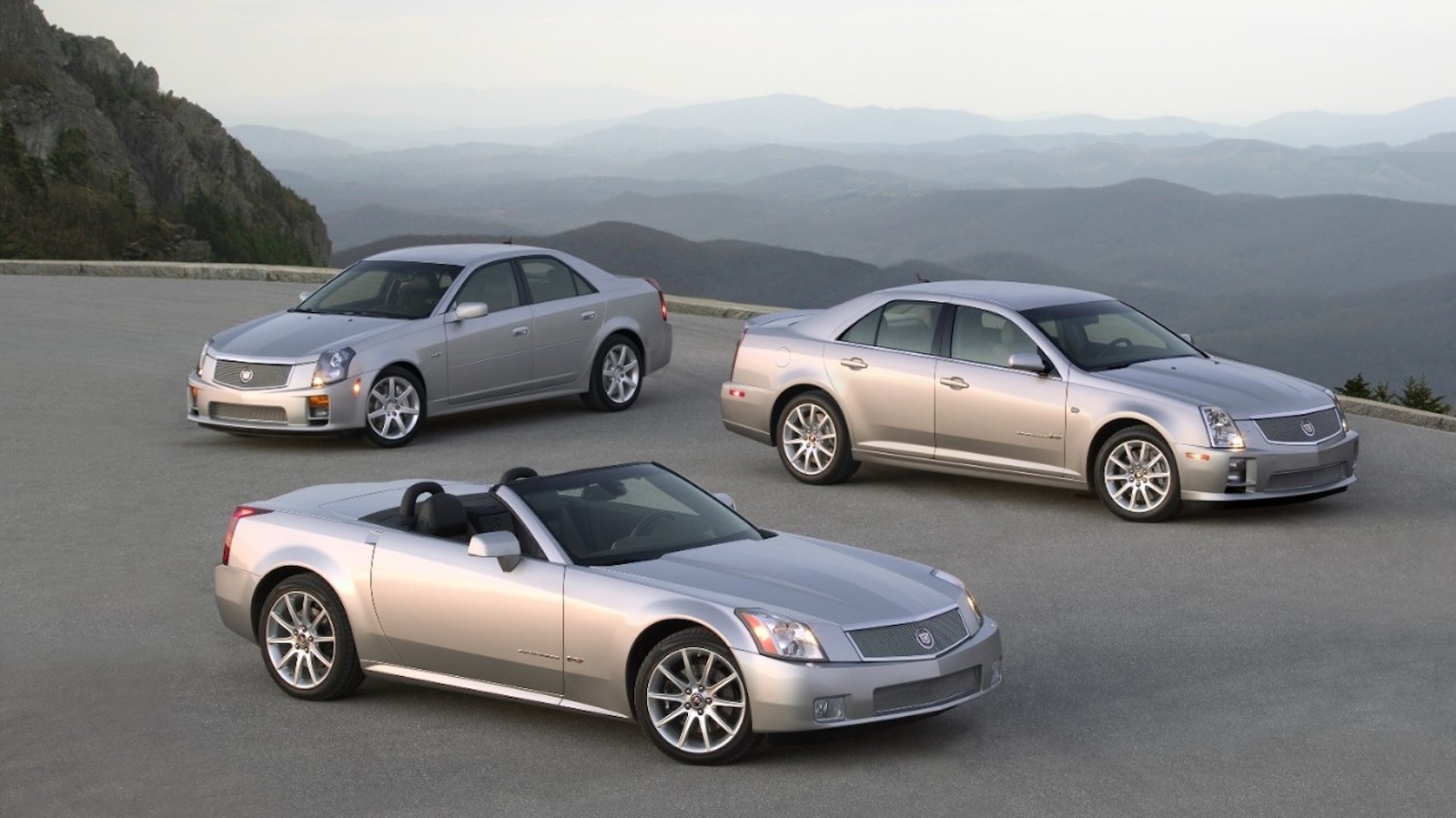

The Cadillac CTS-V has gained a pretty special reputation since it debuted for the 2004 model year. The CTS-V has become associated with a big supercharged V8 from a Corvette and obscene amounts of power, and that’s certainly the case for later variants. But all the way back in 2004, it launched with a slightly more humble 5.7-liter V8, albeit with a much less humble 400 hp.
The CTS-V, in a way, served as a teaser for what Cadillac is today in the world of racing, with its cars taking part in the highest levels of motorsport, be it competing in the 24 Hours of LeMans or launching a new Formula 1 team for the 2026 season. In the early 2000s, General Motors and Cadillac engineers wanted to try their hand at revitalizing the Cadillac brand, which had gotten a bit stale. It also wanted to make a sport sedan to take on the entire world.
The result, after hundreds of laps of the Nürburgring Nordschleife, was the 2003 Cadillac CTS, or Cartera Touring Sedan. But that was just the start, and Cadillac would soon release the CTS-V in 2004, which, in the words of GM’s Ken Morriswho is now Senior Vice President of Product Programs, Product Safety, and Motorsports, took “a great base model, then add[ed] power, and more track capability.”
2004 was a magical time
When it debuted in 2004, the CTS-V was the total opposite of what most people were used to from Cadillac at the time — namely, cars for retirees puttering around Florida or luxury barges for the Whole Foods parking lot.
It was a Corvette-powered, Nurburgring-tweaked sport sedan with a six-speed manual transmission from a company that had no experience offering any of those things to customers. But it was still a Cadillac, meaning it was comfortable and, in a sense, still somewhat dull: The only two colors on launch were black and beige, and it wasn’t until later years that wackier colors that more suited the CTS-V’s performance would be available. Limited colors aside, the CTS-V was something of a hit, with reviewers praising its combination of excellent performance and comfort.
What made the CTS-V more than just another big American V8 sedan was that it wasn’t really designed to be a muscle car. It was based on a model that was honed and refined in Europe on European roads to take on European cars. Cadillac didn’t make the CTS-V to take on American rivals; instead, Cadillac made the CTS-V to go right for the throats of BMW M-Sport cars and Mercedes-AMG models. Whether or not it actually succeeded in doing that is up for debate. But Cadillac certainly deserves credit for trying.
The CTS-V and the revival of racing Caddys
2004 was a magical time for Cadillac. The launch of the CTS-V showed that Cadillac was more than capable of taking on the European sport sedan market with something more refined than a goofy muscle car. It also set the stage for GM’s racing efforts on the international stage. A 400-hp Cadillac might seem a little quaint today, but it was a big deal over 20 years ago.
From a branding perspective, the CTS-V launched Cadillac’s V-Series cars for the road and track. A Cadillac CTS-V.R won its debut race in 2004, and its modern successor, the Cadillac V-Series.R, has scored eight podium finishes in the 2026 IMSA racing season at the time of writing. Of course, the V-Series branding has also given us the Cadillac Escalade V-Series, which probably wouldn’t do too well at the Circuit de la Sarthe but is still a wonderfully ludicrous SUV.
The first Cadillac CTS-V was a huge car for Cadillac, then. Not only did it show what Cadillac could do from a technical standpoint, it also set the stage for what became the rebirth of Cadillac’s racing efforts.

Comments are closed.