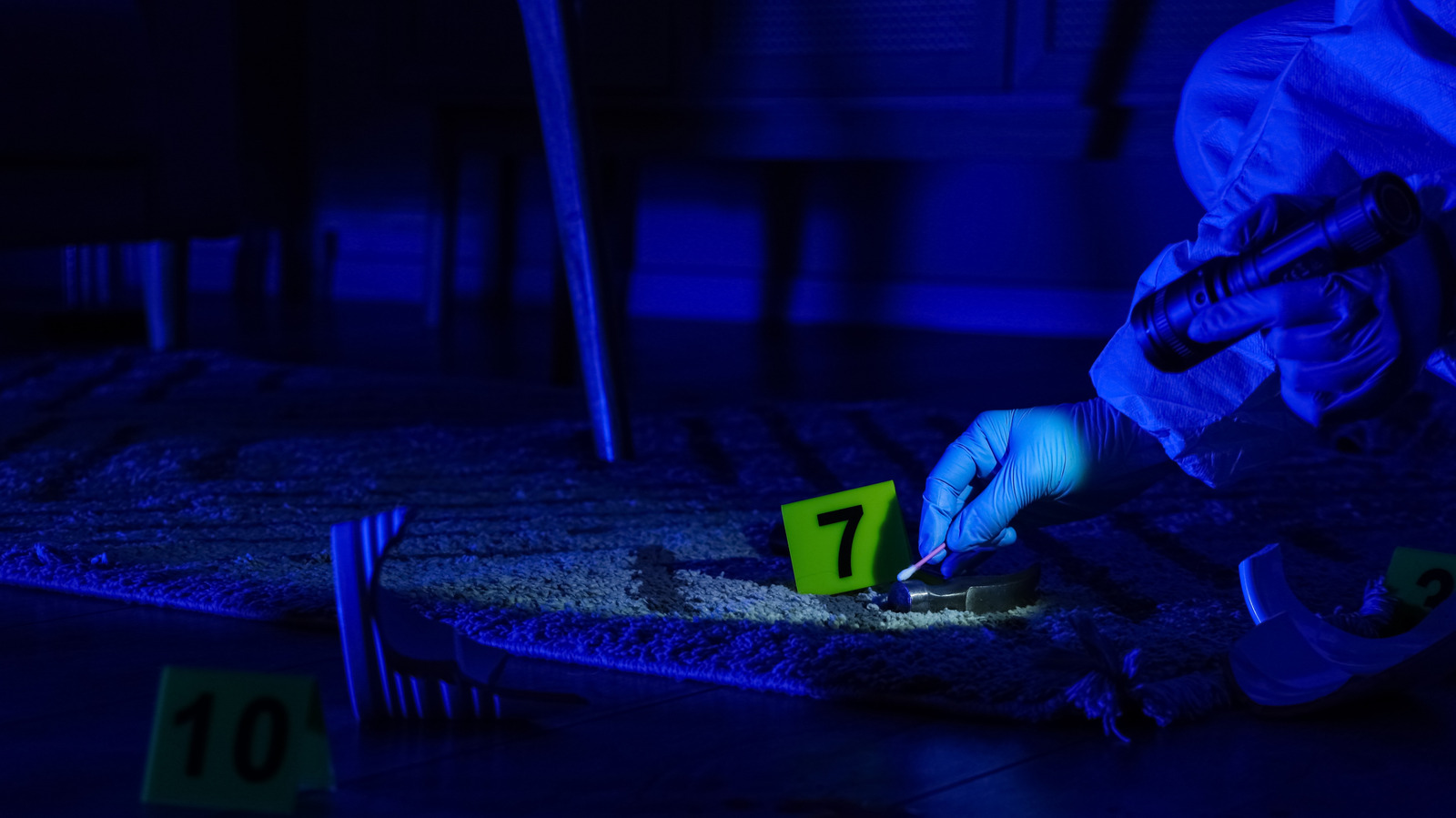
If you’ve ever used a UV flashlight around the home and garage, then you know how handy these devices can be. But UV flashlights serve a bigger purpose for law enforcement, as they can actually help reveal evidence that may be hard to find under normal lighting during an investigation. This is possible because UV light can increase contrast and make certain substances stand out when they otherwise may have been missed.
UV flashlights work by using ultraviolet wavelengths of light to make both items and residues easier to see. As certain materials receive UV light, they absorb the energy and then emit visible light through a process known as fluorescence. When this happens, even the most minute traces of evidence like fingerprints, footprints, and other materials can become easier for investigators to locate during a crime scene search.
UV flashlights are classified as Alternate Light Sources (ALS), and because of their application, are often used in forensic investigations. But while they can be a valuable tool, they are only one part of the process when it comes to investigating a crime scene. Additional testing and analysis are often needed to learn more information about any evidence that is discovered.
How law enforcement uses UV technology
In addition to using UV flashlights in crime scene investigations, law enforcement can also utilize UV imaging equipment to document their findings. Specialized cameras and filters allow investigators to take images using either reflected ultraviolet light or the visible light produced when materials fluoresce. Similar imaging techniques have also been used in other advanced cameras that let people see the way animals do. These techniques can help preserve important details that may not be captured through the use of traditional photography.
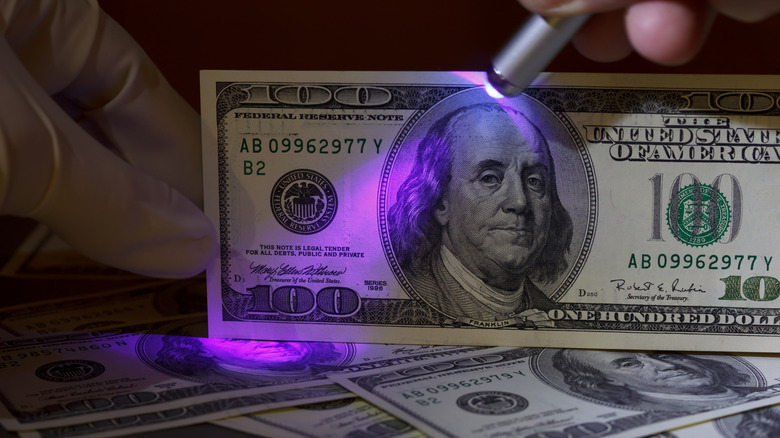
UV flashlights can also be used by law enforcement to examine security features in some U.S. currency. $5 bills and higher typically contain embedded security threads that are positioned differently depending on the denomination. When these bills are exposed to ultraviolet light, the threads glow a specific color, enabling investigators to quickly check whether a bill may be counterfeit.
But while UV flashlights can be helpful during investigations, they also come with some risks when overused. UV exposure can damage unprotected skin, as well as eyes, and prolonged exposure should be avoided. Because of this, it’s important for both law enforcement and everyday consumers buying UV flashlights to take the proper precautions when operating these devices.