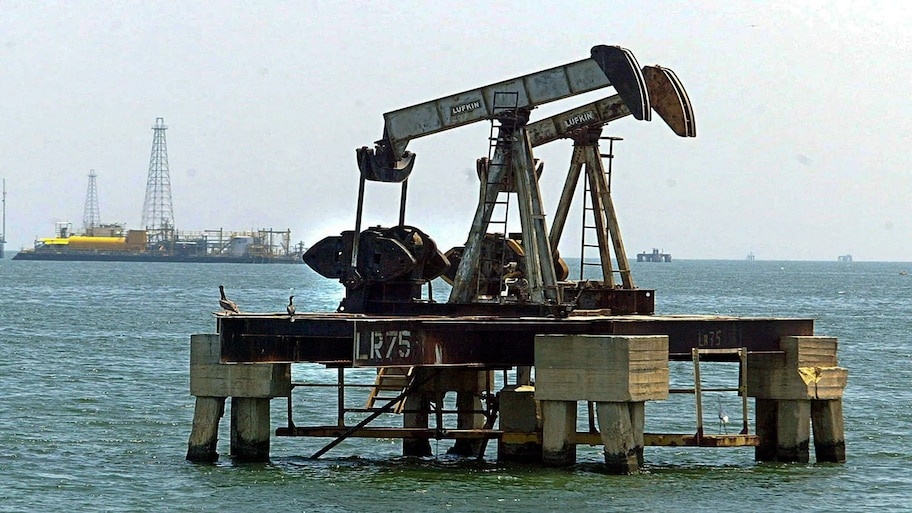
The movement in the global energy market has once again intensified. Due to increasing geopolitical tensions and supply constraints on international sea routes, crude oil prices are continuously rising and have reached very close to the level of $90 per barrel. On one hand, while military activities and attacks on ships in the strategically important Strait of Hormuz in the Persian Gulf have affected the supply chain of crude, on the other hand, the situation has become more worrying due to the targeting of oil tankers in the Red Sea and Gulf of Aden by Yemen's Houthi rebels. Amidst this environment of global turmoil, there has also been turmoil on India's domestic front, where the Himachal Pradesh government has increased fuel rates by imposing a new cess on petrol and diesel.
Crisis deepens in Hormuz and Red Sea: Why is the global oil market burning?
The ongoing conflict over international waterways has created an environment of uncertainty in energy markets around the world. The Strait of Hormuz is the world's most important oil transportation chokepoint, passing through the majority of the global seaborne oil supply. Recent military conflicts in the region and disruptions to shipping movements near the Oman-Iran maritime zone have disrupted global oil marketing. Additionally, Houthi rebels in the Red Sea continue to attack commercial ships, forcing ships to take longer and more expensive sea routes. This increase in freight cost and ship insurance premium is having a direct impact on the prices of crude oil.
Brent crude near $90: What will be the impact on economies like India?
Due to this rise in the global market, the prices of Brent Crude and West Texas Intermediate (WTI) are trading at high levels. Energy market experts believe that if the security situation in the Middle East does not normalize soon, crude oil can easily cross the $90 per barrel mark. India imports about 85 percent of its total domestic crude oil requirement. In such a situation, the boiling of crude oil at the international level can increase the country's import bill as well as put pressure on retail fuel rates in the coming time.
Petrol and diesel become costlier in Himachal Pradesh: Government implements 'Orphan and Widow Cess'
Amidst the global turmoil, there has been a shock at the local level for the common citizens of Himachal Pradesh. The Sukhwinder Singh Sukhu government of the state has decided to impose 'Orphan and Widow Cess' on petrol and diesel in the state. According to the notification issued by the State Tax and Excise Department, due to the implementation of this new cess, an increase of 60 paise (₹0.60) per liter has been recorded in the prices of petrol and high-speed diesel in the state. According to the government, the revenue from this cess will be directly used in the social welfare and relief fund of orphan children, widows and helpless women of the state.
New rates and budget of general public in Shimla and other districts
After the new cess came into effect in Himachal Pradesh, the price of petrol in the capital Shimla has increased to about ₹ 103.05 per liter, which was earlier ₹ 102.45. Similarly, diesel rates have also increased by 60 paise. In a hilly state like Himachal, since freight transportation and public transport are completely dependent on roads, there is a possibility of additional cost on daily consumption items, green vegetables and local transport due to diesel and petrol becoming expensive.
Situation of other states of the country and the way forward
Although the increase in Himachal Pradesh is due to changes in state level taxes/cess, oil marketing companies (OMCs) in other major metros like Delhi, Mumbai, Kolkata and Chennai have kept the central fuel rates stable for now. However, if the price of crude oil remains above $90 per barrel in the international market due to the Hormuz and Red Sea crisis, the pressure for oil review may increase domestically in the coming weeks. At present, the eyes of global investors and the economy are fixed on the security situation in the Middle East.