Let’s break down the science.
Reviewed by Dietitian Jessica Ball, M.S., RD
Key Points
- Eating tomatoes daily may significantly reduce liver fat in people with MASLD.
- Tomato consumption reduced liver fat without weight loss in participants.
- Researchers suggest the benefits of tomatoes are partly due to lycopene, an antioxidant.
Metabolic dysfunction-associated steatotic liver disease (MASLD), is the most common chronic liver condition in the world. Nearly one in three U.S. adults has MASLD, a condition characterized by excess fat accumulation in the liver closely tied to obesity, insulin resistance and cardiometabolic risk. If left unchecked, MASLD can progress to more serious liver disease, including cirrhosis and liver cancer.
When it comes to managing MASLD, diet is one of the most crucial lifestyle factors, and the Mediterranean diet in particular has been linked to reductions in liver fat and improved metabolic outcomes. But now, a new randomized trial zeroes in on one specific Mediterranean diet staple—tomatoes—and finds that eating them daily may significantly lower a key measure of liver fat in people with MASLD, even without major weight loss.
Published in Nutrientsthe study found that adults with MASLD who ate a combination of raw tomatoes and tomato sauce every day for six weeks had a significantly greater reduction in liver fat than a control group that avoided tomatoes. Here’s what the researchers found and what it means for your liver health.
How Was This Study Conducted?
This single-center randomized controlled trial, conducted in Italy and called the POMOSANO Study, enrolled 79 adults between the ages of 18 and 65 who had been diagnosed with MASLD and had a body mass index (BMI) at or below 30 kg/m2meaning participants were categorized as lean to overweight. All participants had confirmed liver fat accumulation at the start of the study, established using a measurement called controlled attenuation parameter (CAP), which uses ultrasound-based technology to estimate the degree of fat in the liver. A CAP score of at least decibels per meter (dB/m) was required for enrollment.
Participants were randomly assigned to one of two groups. The tomato group was instructed to eat 200 grams of raw tomatoes (roughly one large or two medium tomatoes) plus 50 grams of tomato sauce (about three to four tablespoons) every day for six weeks. The control group followed a tomato-free diet for the same period. All participants received standardized dietary guidance and were asked to maintain their usual lifestyle and physical activity. Tomatoes and sauce were sourced from a single certified producer using consistent hydroponic cultivation to ensure a standardized product.
Liver fat levels and body composition measurements were assessed at the start and end of the six-week period. Liver stiffness, blood markers of liver function, blood glucose, lipid levels and inflammatory markers were also assessed.
What Did The Study Find?
Both groups showed a reduction in CAP scores, meaning that liver fat levels declined in both groups. However, the tomato group improved significantly more. The median decline in CAP was 35 decibels per meter (dB/m) in the tomato group compared to 18 dB/m in the control group, and statistical modeling confirmed that the difference between groups was significant, with an adjusted difference in CAP change of 26.63 dB/m.
The reduction in liver fat occurred without significant changes in body weight, BMI, waist circumference or body fat composition in either group. Liver enzyme levels, blood glucose, lipid profiles and inflammatory markers also did not differ meaningfully between groups by the end of the study. Essentially, the liver fat benefit appeared to be related to tomato consumption specifically, not to changes in body weight or metabolic health.
The study’s authors describe the findings as hypothesis-generating and note that larger, longer trials are needed to confirm the results and determine whether the CAP reduction is clinically significant in the long term.
Limitations
The study was a single-center, exploratory trial with a relatively small sample of 79 participants and a short six-week duration. Participants were aware of which group they were in, which means there was some potential for behavioral differences beyond tomato intake itself.
Additionally, the study enrolled only lean-to-overweight adults with MASLD, which limits the generalizability of findings to people with obesity. Because this was a short-term trial, it can’t speak to whether the liver fat reduction would be sustained with longer tomato consumption or whether it would translate to clinical outcomes like reduced fibrosis risk.
How Does This Apply to Real Life?
If you have MASLD, reducing your liver fat is one of the most impactful steps you can take. This is the buildup of fat that triggers the inflammation that can eventually lead to scarring and serious liver damage. Since there’s no approved medication for MASLD, diet is essential for improving your liver health.
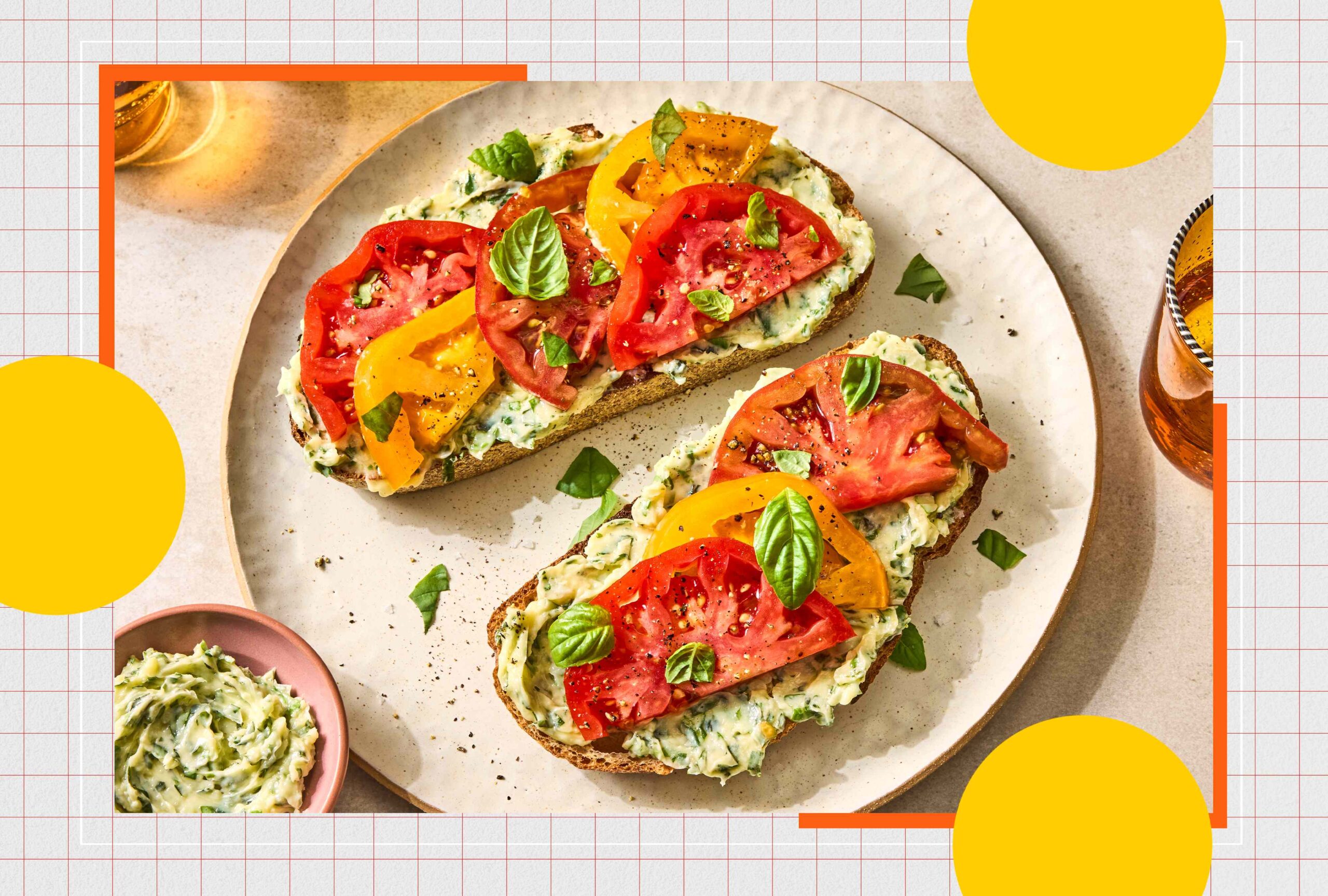
Tomatoes are high in lycopene, an antioxidant that may help reduce oxidative stress and fat accumulation in your liver. The amounts used in the study were one large tomato and 3 to 4 tablespoons of tomato sauce daily—targets that many people can hit each day. Need some recipes to inspire you? We have some favorites:
If you’re managing the condition, talk to your healthcare provider or a registered dietitian about how your diet can help support your liver health and manage MASLD. Options like the Mediterranean diet can be a great way to start shifting your eating habits—and the Mediterranean diet has been connected to benefits for people with MASLD.
Our Expert Take
A new six-week randomized controlled trial published in Nutrients found that adults with MASLD who ate approximately one large tomato plus 3 to 4 tablespoons of tomato sauce daily experienced a significantly greater reduction in liver fat compared to a tomato-free control group, without significant weight loss or changes in metabolic markers. The study’s small size and short duration mean the findings should be considered preliminary, but they add to the growing body of evidence that specific components of the Mediterranean diet may offer liver health benefits for those with MASLD.