The first national speed limit law limiting speed to 55 mph was enacted in 1974 by then-President Richard Nixon as part of the Emergency Highway Energy Conservation Act. This was done mostly in response to the OPEC Oil Embargo that started the previous year. However, a byproduct of this new law was a drop in vehicle fatalities, which fell from 4.28 per million miles traveled in 1972 to 2.73 in 1983.
This national limit was raised to 65 mph on April 2, 1987, after Congress passed the Surface Transportation and Uniform Relocation Assistance Act. It was repealed in 1995, however, returning authority over speed limits back to individual states. This has subsequently led to a tangled web of state-specific laws rife with political and legal complexities. Take, for example, having speed limits that include fractions, speed limit signs that show decimal points, or having two completely different speed limits on the same stretch of road.
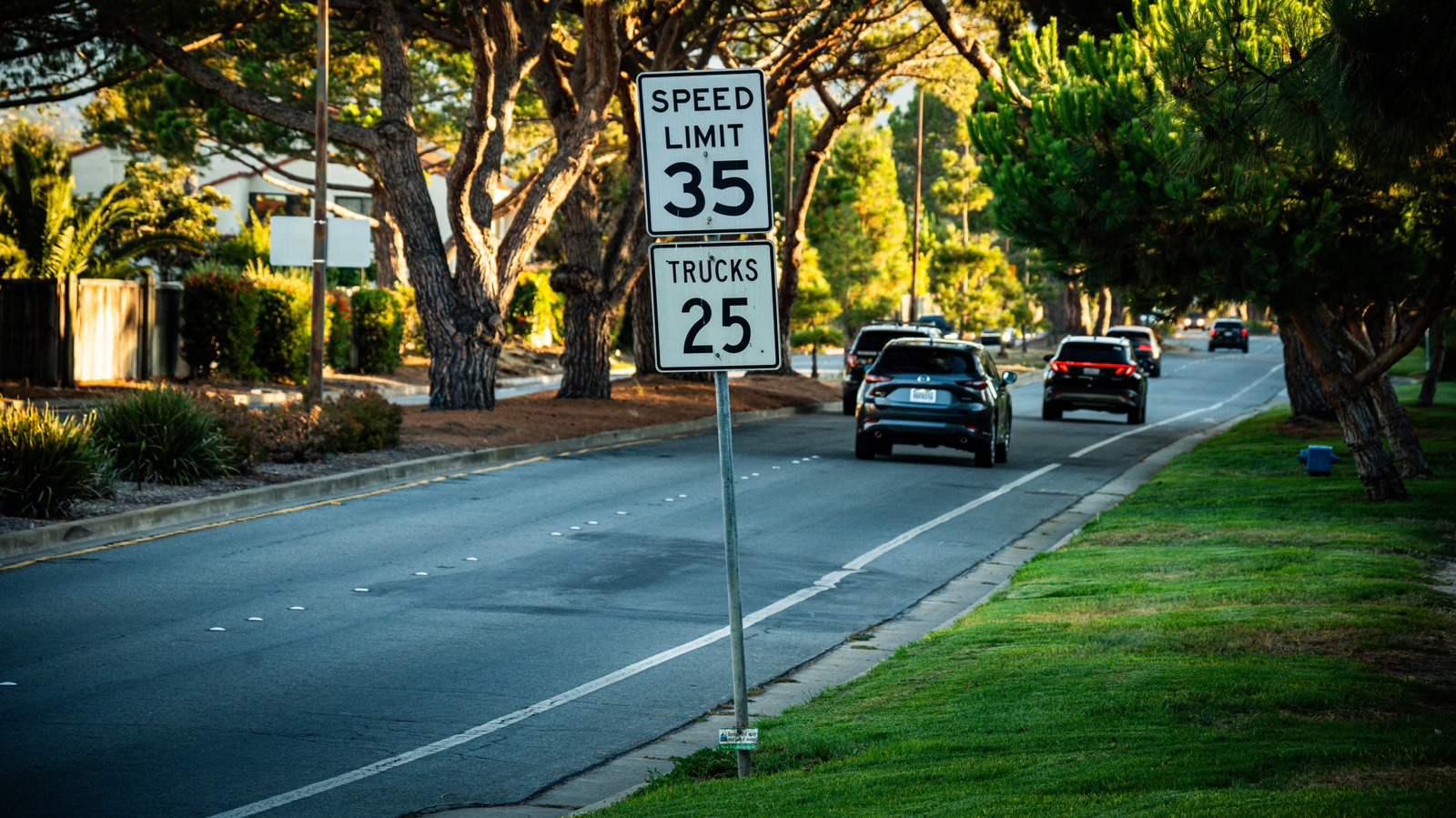
After states were given the authority to regulate their own speeds, some implemented Uniform Speed Limits for both passenger cars and heavy trucks. Other states, however, decided to go another route and set different limits for automobiles and semis. This is referred to as a Differential Speed Limit (DSL), and it is one reason why you might see a single road with multiple speed limits listed.
Do Differential Speed Limits make the roads safer?
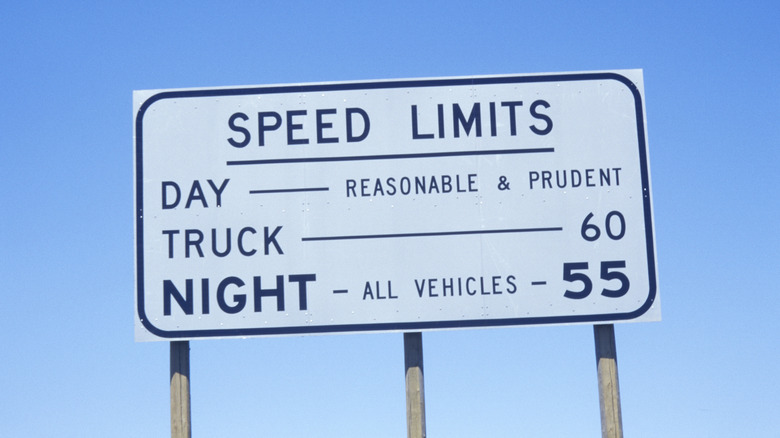
As if this writing, only eight states — California, Idaho, Montana, Oregon, Washington, Arkansas, Indiana, and Michigan — still used DSLs, with lower speeds designed to limit big rigs or passenger vehicles towing a trailer or another vehicle. Throughout the 1990s, when several states implemented DSL policies, average speed and crash rates increased regardless of whether a state used DSLs or USLs, suggesting it wasn’t the limits themselves that were impacting driver behavior.
However, others studies do show that reducing speed can impact crash rates. One study from 1964 conducted by a government agency, for example, examined 10,000 drivers and found that vehicles traveling 10 to 15 mph slower than others on the road experienced more traffic interactions. In 2005, the University of Arkansas reaffirmed that a 10 mph differential increased the frequency of traffic interactions by 227%. However, these studies didn’t specifically look at the vehicles targeted by DSLs, like big rigs or towing vehicles.
Interestingly, the United Kingdom raised its national speed limit in 2015 for commercial trucks with a gross vehicle weight (GVW) over 7,716 pounds. This was done to lower traffic interactions, preventing frustrated drivers from making risky passes and overtaking slow-moving trucks. In the U.S., the Owner-Operator Independent Drivers Association supports eliminating DSLs, claiming that roads are safer when all vehicles travel at roughly the same speed.