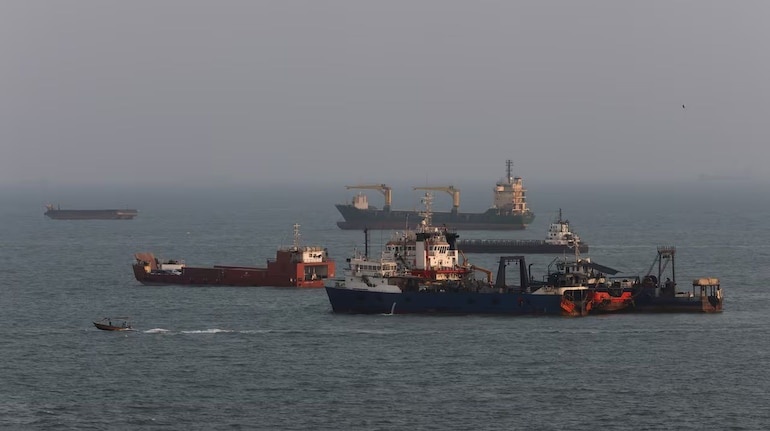
A very important diplomatic and strategic success has emerged amid months of heavy military tension in the Middle East and the global energy crisis. The two coastal countries—Iran and Oman—have reached an official agreement on a new 'shipping route map' for the movement of ships on the Strait of Hormuz, the world's most sensitive maritime chokepoint. This historic agreement has been confirmed by Iranian Foreign Ministry spokesperson Ismail Baghai. The agreement follows weeks of intense technical and diplomatic negotiations aimed at creating a formal framework for the safe navigation of commercial vessels through this strategic waterway. Defense, maritime security and environment experts from both the countries have worked together in this process, which started under the Memorandum of Understanding (MoU) signed between Iran and Oman on June 18. However, despite the route map being agreed upon between the two coastal states, there remains great suspense over when and how this waterway will be fully opened to merchant ships and oil tankers from around the world. What is the shipping route agreement between Iran and Oman? The basic premise of this bilateral agreement between Iran and Oman is to create a safe corridor for international maritime traffic while protecting the sovereignty of both the coastal countries. The Strait of Hormuz is a narrow sea channel, the northern part of which falls within Iranian territorial waters and the southern part under the jurisdiction of Oman's Musandam Peninsula. Key technical points decided under this new agreement: Restructuring of the Traffic Separation Scheme (TSS): Separate navigational channels are being set up for ships entering and exiting the Gulf in view of the threats of conflict and landmines. Division of navigation and monitoring: According to the agreement, the Iranian security apparatus will have a role in monitoring and technical clearance of ships entering Hormuz from outside the Persian Gulf, while the Omani Coastal Authority will coordinate the navigation of ships going out of the Gulf towards the Gulf of Oman and the Arabian Sea. Environmental and Maritime Safety Protocol: It has been agreed to develop a joint rapid response mechanism to deal with shipwrecks, oil spills and emergency situations. Iranian officials have clarified that this is an independent decision of both the coastal countries, the aim of which is to reduce the risk of conflict. Iran's conditions for fully opening the waterway: Tehran's tough stance in front of America Although the route map with Oman has been finalized, the Iranian leadership has made it clear that the key to fully opening the Strait of Hormuz and restoring normal commercial traffic depends entirely on Washington's stance. Foreign Ministry spokesman Ismail Baghai and Foreign Minister Abbas Araghchi have reiterated that full restoration of security is not possible unless the US withdraws its aggressive policies. Tehran has put forward four key conditions to the US for the full operation of the waterway: Complete end of the US naval blockade: Immediate end to the naval blockade and military threats maintained by the US around Iranian ports and territorial waters. End of military strikes and sanctions: A complete end to threats of attacks on Iran's infrastructure, oil installations and nuclear sites. Compensation for violation of commitments: Tehran alleges that America has violated interim agreements, for which Washington will have to compensate. Respect for sovereignty: America should give up its insistence on controlling this strategic waterway on the basis of international military power. Iran has also made it clear that it is not currently involved in any direct talks with the US and messages are being exchanged only through intermediaries. What will be America's role? Donald Trump's statement and Washington's diplomatic confusion After the Iran-Oman agreement, now the eyes of the whole world are focused on the next step of the White House and US President Donald Trump. America is currently the largest and decisive party in this entire crisis. If America does not take steps towards reducing tensions by recognizing this agreement, then this new shipping map may remain limited to papers only. Washington currently faces three major strategic options: De-escalation and de-escalation: If the Trump administration agrees to a ceasefire and security guarantees through indirect diplomacy with Iran while limiting the scope of its naval escort mission (‘Operation Project Freedom’), the movement of oil tankers off Hormuz could rapidly normalize. Aggressive stance and confrontation: Recently, President Trump has talked about American dominance on Hormuz in public rallies and has hinted at establishing it as an American sphere of influence. If the US unilaterally increases military patrols bypassing this new Iran-Oman agreement, the risk of direct military confrontation at sea and new attacks on ships could flare up again. Economic and diplomatic concessions: Petrol prices have jumped by 29 percent in the American energy market. In such a situation, due to domestic inflation and political pressure of mid-term elections, the Trump administration may be forced to find a practical solution by relaxing some restrictions with the mediation of Oman and Qatar. Diplomatic importance of Oman's mediation: How Muscat became a trouble-shooter? In this entire incident, the role of Gulf country Oman has once again proved to be a milestone in international diplomacy. Oman has long served as a neutral and trustworthy bridge between the West and Iran. The Sultan of Oman and the Foreign Ministry agreed with both sides that the marine environment and global energy supplies should be kept separate from military conflict. Due to Oman's geographical location at the mouth of Hormuz, its own national security is directly linked to the peace of this waterway. Muscat has kept alive the back-channel diplomacy between Tehran and Washington behind the scenes, on the basis of which this route map could be prepared at the technical level. Impact on global energy market and oil prices: Will the world get relief from inflation? The Strait of Hormuz is called the world's energy lifeline, through which under normal circumstances about 25 percent of global seaborne trade in crude oil and 20 percent of LNG passes. Since the conflict began in February 2026, ship traffic through this route had become negligible, causing Brent crude prices to skyrocket in the international market. Positive movements have been seen in the international commodity markets as soon as the news of the agreement between Iran and Oman arrived. Energy analysts believe that if safe transit of even a limited number of tankers starts under this route map, there will be a partial improvement in oil supply and crude oil prices may fall by $ 5 to 8 per barrel. This news can bring the biggest relief for Asian countries like India, China, Japan and South Korea, because 70 to 80 percent of the oil imports of these countries pass directly through this narrow sea corridor. What will happen next? Will the world's most sensitive oil route open? This agreement between Iran and Oman is definitely the first concrete technical step towards resolving the Hormuz crisis, but the final destination is still far away. Muscat and Tehran are set to issue a joint official statement in the coming days. The real test will be whether international shipping and insurance companies will take the risk of sending their billion-dollar ships and sailors to this waterway solely on the basis of this regional agreement. Unless there is full agreement and guarantee on safety from the United Nations (UN), the International Maritime Organization (IMO) and the US Navy, widespread operation of ships will remain challenging. The next 48 to 72 hours are extremely important, where it will be decided whether the White House accepts this agreement as an opportunity towards regional peace or whether this dangerous game of show of power in Hormuz will drag on further.