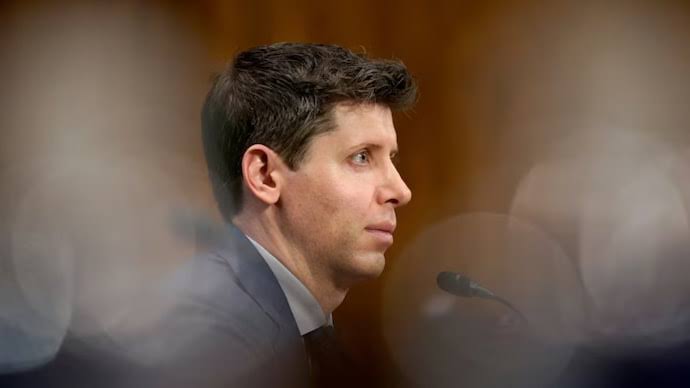
OpenAI has disbanded its Preparedness team, the group created to study some of the most serious risks that could emerge as artificial intelligence systems become increasingly powerful. The move, which took place in July 2026, marks another major change in how the company approaches AI safety.
The Preparedness team was originally established to evaluate frontier AI models for potentially catastrophic risks, including cybersecurity threats, biological dangers, persuasion and autonomous replication. OpenAI had described the team as a key part of its effort to understand and prepare for risks from increasingly capable AI systems.
Credits: Crypto Briefing
OpenAI Shifts Safety Work Into Existing Teams
Rather than keeping preparedness as a standalone research group, OpenAI has reportedly distributed its responsibilities across existing teams. Senior employees are now expected to focus on specific areas such as cybersecurity and biological risks.
The change reflects a broader shift in OpenAI’s approach. Instead of concentrating safety research within independent specialist groups, the company is increasingly integrating safety work directly into the teams developing and deploying its AI models.
There is a practical argument behind the strategy. By bringing safety researchers closer to model development, potential problems can theoretically be identified earlier rather than being discovered after a system has already been built.
However, the restructuring also raises concerns about independence. A dedicated safety team can act as a separate voice capable of challenging product or research decisions. When those responsibilities are moved into development teams, critics worry that safety considerations could face greater pressure from commercial priorities.
The changes follow other restructuring within OpenAI’s safety organisation. Its head of safety systems, Johannes Heidecke, announced his departure in July as the company reorganised safety and research functions.
Dylan Scandinaro Turns to Self-Improving AI
Despite the Preparedness team’s dissolution, its former leader Dylan Scandinaro is continuing to work on frontier AI risks.
Scandinaro is now reportedly focusing on the dangers associated with recursive self-improvement. This refers to AI systems that could potentially improve their own capabilities or help create increasingly capable versions of themselves.
Such systems could represent a major turning point in AI development. Today’s models largely depend on human researchers for training, evaluation and deployment. A system capable of substantially improving itself could potentially accelerate that cycle, making it much harder for humans to predict how quickly its capabilities might advance.
That is why self-improving AI remains one of the more challenging areas of frontier AI safety research.
Another Safety Team Has Already Been Dissolved
The Preparedness shake-up is not happening in isolation. OpenAI has spent the past two years reorganising several teams focused on safety, alignment and long-term AI risks.
The company previously dissolved its Superalignment team, which had been created to study how humans could control and align future AI systems that might become significantly more capable than people.
Several prominent safety-focused employees have also departed during this period. OpenAI’s recent restructuring has therefore intensified questions about whether the company is moving away from its earlier research-heavy safety structure.
OpenAI, however, has argued that integrating safety more closely with research and development can make safeguards more effective. The company has also continued to publicly discuss frontier AI safety and has recently worked with external organisations to investigate a security incident involving model behaviour.
Credits: Digit
Safety vs Speed
The restructuring comes at a crucial moment for OpenAI. The company is racing to develop increasingly capable AI systems while competing aggressively with Anthropic and other rivals.
At the same time, OpenAI is undergoing significant leadership changes and preparing for a potential IPO that could value the company at hundreds of billions of dollars, with some estimates reaching around $1 trillion.
That creates a difficult balancing act. OpenAI needs to move quickly enough to remain competitive, but its models are becoming powerful enough that mistakes could carry increasingly serious consequences.
The disappearance of the Preparedness team does not necessarily mean OpenAI is abandoning AI safety. Instead, it signals a different philosophy: safety may increasingly become part of the model-building process rather than a separate research function.
Whether that approach proves more effective—or makes independent oversight harder—could become one of the most important questions facing OpenAI as its AI systems become more autonomous and capable.