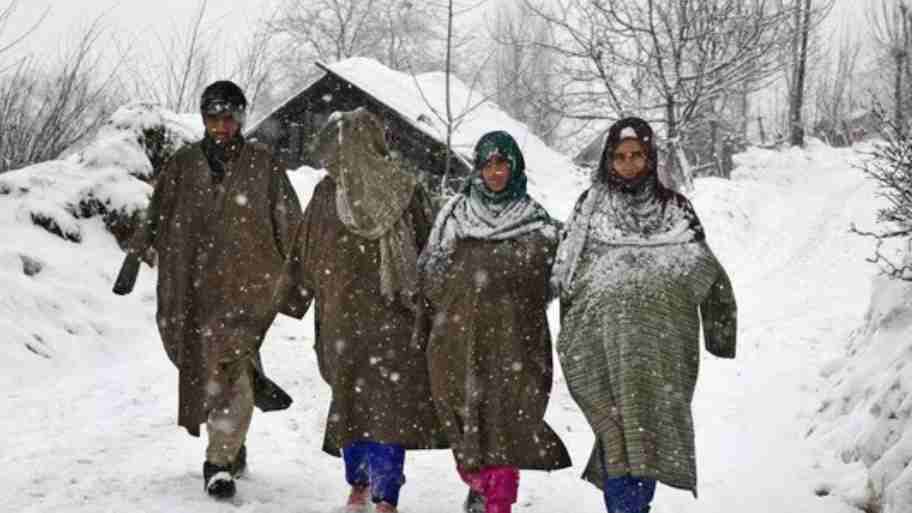
The second and most important phase of India's 16th and 8th census (Census 2027)—Population Enumeration—has begun. Under the notification issued by the Office of the Registrar General and Census Commissioner of India (RGI) under the Ministry of Home Affairs, the census process is being conducted ahead of schedule in the inaccessible and snowy areas of the country. The option of self-enumeration has been activated from August 17 to August 31, 2026 for residents of high mountain and snowfall-affected areas of Jammu and Kashmir, Himachal Pradesh and Uttarakhand, including the Union Territory of Ladakh. After this, from September 1 to September 30, enumerators will go door-to-door to verify this data. Premature onset in snowy and inaccessible areas Heavy snowfall begins after October in the Himalayan regions of North India—especially Ladakh, high mountain districts like Kupwara, Poonch, Doda of Jammu and Kashmir, Spiti Valley of Himachal Pradesh (such as Komik village located at an altitude of more than 15,000 feet) and border areas of Uttarakhand. Many remote villages remain cut off from the rest of the country for months due to extreme cold and heavy snow in winter. Keeping this seasonal challenge in mind, the government has planned to complete the population count in these non-synchronous areas even before the main national census. While the population census in the plains and general areas of the country will be held in February 2027, the reference date for these special snowy areas has been fixed as midnight of October 1, 2026. How to enter information at home: Online process from 17th to 31st August For the first time in the history of the country, citizens have been given the right to fill their own and their family's information on the official portal. For this, citizens will not need to wait for the arrival of any government employee. Citizens can log in by visiting the official self-enumeration portal and entering their mobile number. Answers to the prescribed questions related to the head of the family and all the members can be filled online. After submitting the form a unique 'Self-Enumeration ID/Reference Code' will be generated. When the authorized enumerators reach home between September 1 and 30, the citizen will have to show only that ID, which will complete the field verification immediately. Census officials have clarified that no OTP or bank related sensitive PIN will be asked from any citizen in the entire process, so that cyber fraud can be avoided. These 40 questions are being asked for the first time: Caste enumeration is also included. A total of 40 questions have been prepared in Census 2027, in which many new modern parameters have been included: Caste details: For the first time after independence, an open-ended column of 'Scheduled Caste/Scheduled Tribe/Caste' has been kept in the census form, in which the caste stated by the citizen is entered directly without the constraint of any pre-determined list. Will go. Digital and identity documents: Information of Aadhaar number, Voter ID, passport number and driving license, if available, is being collected. Health and financial status: Also includes details of where the person received the COVID-19 vaccination and the total number of bank accounts he/she holds. Education, Digital Literacy and Employability: Level of education as well as digital literacy (ability to use computers/Internet), occupation, type of industry and job description will be asked. Demographic data: Name, relationship to head, date of birth, marital status, age at marriage, religion, mother tongue and migration history will be recorded. Completely paperless and using the 'Census 2027-PE' mobile app, Census 2027 is India's first fully digital census. For citizens who do not do online self-enumeration by August 31, enumerators visiting their homes will also enter the data directly through the official 'Census 2027-PE' mobile application in digital form instead of paper forms. For security reasons, the data for Indian Army, ITBP and paramilitary forces units will first be compiled in offline/paper mode and later fed into the system by Special Charge Officers. Outline of two phases and national scenario: This campaign is divided into two phases. In the first phase, data on House Listing & Housing Operations was recorded, which included 33 questions related to drinking water, electricity, toilet, internet and property resources. Now the second phase is of population census. About 2.74 lakh population of Ladakh and the population of border and hilly areas of Jammu and Kashmir are being counted in this special cycle. The difficult terrain phase will end with the completion of the revision round from 1 to 5 October 2026, while the final field data compilation for the rest of India will be completed by March 2027.