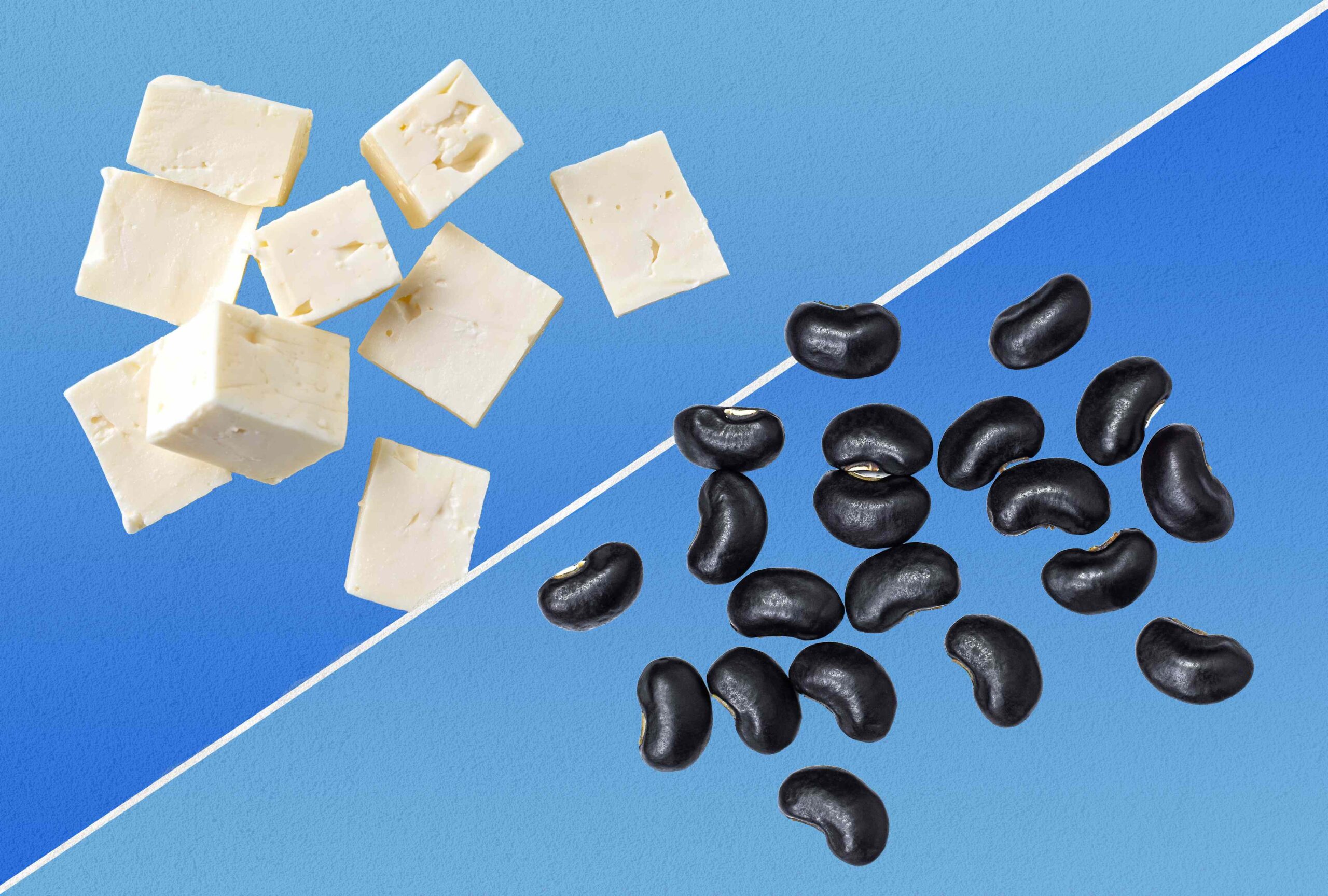
Tofu might have more protein, but both are nutritious options.
Reviewed by Dietitian Jane Leverich, M.S., RDN
Key Points
- Tofu and beans are plant-based proteins that are convenient, nutritious and affordable.
- Both can fit into a balanced diet, but dietitians agree that tofu has a higher protein content.
- Enjoy both in sandwiches, smoothies or baked goods.
Whether you follow a completely plant-based diet or are just looking to add variety to your eating pattern, tofu and beans are two of the most common ingredients you’ll find in meat-free meals. Both of these plant-based proteins are affordable, easy to find and offer an abundance of nutrients in addition to protein, like fiber, antioxidants and a variety of essential vitamins and minerals.
But is one better for you than the other? Not necessarily. Dietitians make a case for both, and the plant-based protein you reach for may depend on your individual health goals and, of course, what you’re cooking. Here’s how tofu and beans compare and how to get more of both into your diet.
Why Tofu Is Good for You
It’s a High-Quality Plant Protein
A half-cup (126-gram) serving of firm tofu can provide as much as 22 grams of protein, which is an impressive amount for a plant-based food. Tofu also stands out among plant proteins because soy provides all nine essential amino acids, making it a complete protein. Its protein is also highly digestible. This means your body can more easily use the protein in tofu to build and repair muscles, organs and bones, as well as support immune health, explains Lydia Bunszel, M.S., RD.
However, the amount of protein you find in tofu depends on the type you buy. Firmer tofu tends to contain more protein, while softer varieties, such as silken tofu, contain less. For example, the same serving size of silken tofu provides about 8.8 grams of protein. Most types and brands of tofu fall somewhere in between.
It’s an Excellent Source of Calcium
During processing, most tofu is treated with calcium sulfate or calcium chloride to help with the coagulation process, creating a firm block from soy milk, which significantly increases its calcium content. A half-cup serving of firm tofu treated with calcium sulfate can provide as much as 861 milligrams of calcium, although the amount in each brand and type can vary significantly.
“Calcium is essential for supporting bone health, and many plant-based eaters may struggle to consume the necessary 1,000 mg per day,” says Amy Brownstein, M.S., RDNwho recommends tofu as an easy way to fill calcium gaps for people who do not regularly eat dairy.
It May Support Weight Management
Whether your goal is to lose weight or maintain a healthy body composition, swapping at least some servings of high-fat animal proteins for tofu could be a smart strategy. “Tofu is great for weight management, as it’s naturally low in calories relative to how much protein and volume it provides,” says Rhyan Geiger, RDNadding that it’s also very low in saturated fats.
A half-cup serving of tofu has 181 calories and 11 grams of fat, of which only 1.6 grams is from saturated fats. In fact, research suggests that eating soy-based protein, like tofu, is associated with potential benefits for body composition and appetite, as well as improvements in skeletal muscle mass.
Why Beans Are Good for You
They’re High in Fiber
While beans are a good source of plant-based protein, with around 7 grams in a half-cup serving (depending on the type of bean), their fiber content is one of their biggest nutritional advantages. The amount of fiber in beans varies by type, but averages around 6 to 8 grams per half-cup of cooked beans, with 7.5 grams of fiber in a half-cup of cooked black beans.
“Fiber helps with digestion, nourishes beneficial gut bacteria, helps slow the absorption of carbohydrates and supports cholesterol management,” says Brownstein. With more than 90% of U.S. adults falling short on recommended fiber intake, eating more beans can make a meaningful difference.
They’re a Good Source of Iron
For people following a plant-based diet, getting enough iron can be a real struggle, and beans can help plant-based eaters meet their needs. A half-cup serving provides about 10% to 18% of the recommended daily value, depending on the type. “Iron is needed to make hemoglobin, which helps carry oxygen throughout the body, and getting enough iron (like from beans!) can help support energy levels and overall health,” explains Bunszel.
The body doesn’t absorb the iron from plant foods as efficiently as the heme iron found in animal foods. Some plant compounds, including phytates, can also reduce iron absorption. As a result, people following vegetarian and vegan diets have higher iron requirements than those who eat meat. That said, how you prepare beans can help. Strategies like soaking beans before cooking them and pairing them with foods high in vitamin C can help increase absorption of this essential mineral.
They’re Rich in Folate
Beans are one of the best plant-based sources of folate, a B vitamin your body needs to make DNA and healthy red blood cells. A half-cup serving of cooked black beans provides 128 micrograms of folate, or about 32% of the recommended daily value.
Folate is most widely known for its important role during pregnancy because adequate intake helps prevent neural tube defects, but that’s far from its only role in health. This B vitamin supports the heart, brain, immune system and gut health, making it an essential vitamin at every age. Since folate is water-soluble, some can be lost in cooking water. Using beans in soups or other dishes where the cooking liquid is consumed can help you retain more of the nutrient.
Tofu vs. Beans: Which Is Better for You?
Both tofu and beans include a variety of micronutrients and antioxidants that support heart health, digestion and metabolic health. However, if protein is your priority, tofu may be the better option. A half-cup serving of firm tofu can provide up to three times as much protein as a half-cup of cooked beans, depending on the type of tofu and bean.
But beans have a major advantage when it comes to fiber, and they also provide notable amounts of folate, iron and other nutrients. Tofu, meanwhile, can be an excellent source of calcium and provides a highly digestible, complete protein.
However, including both tofu and beans in your diet, whether you get all your protein from plant-based sources or not, will provide the biggest benefits, with more fiber, antioxidants, vitamins and minerals than you’d get from just one type of food.
How to Include Both in Your Diet
One of the best things about tofu and beans is how versatile they can be and how easy it is to fit both into meals and snacks throughout the day. If you’re in need of a little inspiration, here are a few ideas to get you started:
- Add them to a sandwich. Brownstein recommends slicing, marinating and roasting tofu to replace deli meat in a sandwich, or you can pan-fry it until crispy and make a banh mi sandwich. For beans, make a creamy white bean smash or spread your bread with hummus before adding other toppings.
- Blend them into a smoothie. While you may think beans and tofu both belong in savory dishes, each can easily boost nutrition and add creamy texture to smoothies, and the flavor is easily masked by other ingredients such as fruit or nut butter. For the best texture and flavor, use white beans or silken tofu.
- Add them to stir-fries. Both tofu and beans pair well with a variety of flavors and ingredients, and are easy to add to stir-fries, whether they’re already in the ingredient list or not.
- Include them in baked goods. Baking with beans or tofu? Don’t knock it until you try it. Black beans blend beautifully into desserts like brownies and chocolate pudding, while a chocolate raspberry tofu pie gets its creamy texture and protein boost from silken tofu.
Our Expert Take
Both tofu and beans are budget-friendly plant-based proteins, each with their own unique nutrients, flavors and uses. While tofu has more protein per serving and is a good source of calcium, beans offer more fiber, iron and folate per serving. Luckily, there’s no need to choose between the two, as a diet that includes both tofu and beans will benefit from a wider variety of nutrients to support your health.