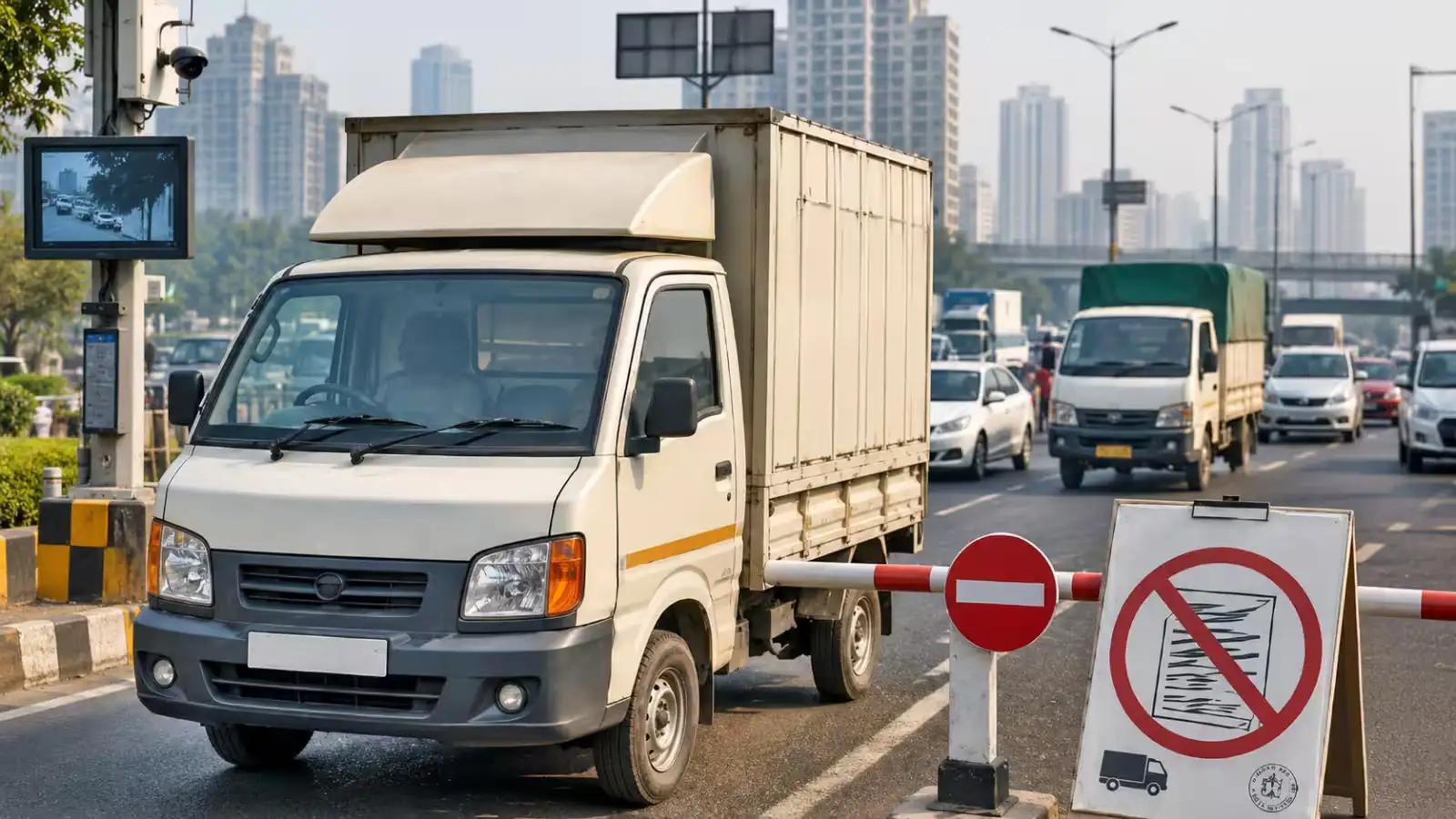
A major decision has been taken to reduce pollution caused by small goods vehicles in Delhi-NCR. Under the directives of the Commission for Air Quality Management (CAQM), a deadline has been set for the registration of new N1 category goods vehicles. In Delhi, registration of new N1 category goods vehicles running on diesel, petrol and CNG will stop from January 1, 2027. After this, only electric vehicles can be registered as new goods carrying vehicles of N1 category in Delhi. The N1 category includes small goods vehicles weighing up to 3.5 tonnes.
When will this rule be implemented in other areas of NCR?
This rule will be applicable from July 1, 2027 in areas with high traffic such as Gurugram, Faridabad, Sonipat, Ghaziabad and Gautam Buddha Nagar. In the remaining districts of NCR, registration of new diesel and petrol N1 vehicles will stop from January 1, 2028; However, CNG vehicles will still be exempted in these areas.
Ban on vehicles carrying large goods later
A later deadline has been set for N2 category goods carrying vehicles. The N2 category includes vehicles weighing 3.5 to 7.5 tonnes. In Delhi, registration of new N2 category vehicles running on diesel, petrol and CNG will stop from January 1, 2028. This ban will be applicable in Gurugram, Faridabad, Sonipat, Ghaziabad and Gautam Buddha Nagar from July 1, 2028. In the remaining districts of NCR, registration of new diesel and petrol N2 vehicles will stop from January 1, 2029.
How much pollution do small goods vehicles cause?
The CAQM directive is based on the interim report of an expert committee. According to the report, the transport sector contributes about 23 percent of PM2.5 pollution in winter and about 18 percent in summer. The share of small goods vehicles in total vehicles plying in NCR is around 1.2 per cent, yet their contribution to PM emissions is around 3.3 per cent. This share in Delhi is said to be around 5.1 percent. Citing ARAI data, the directive said BS-6 CNG cargo trains emit 57 times more PM2.5 than BS-6 CNG cars. At the same time, emissions from BS-6 diesel cargo vehicles are said to be approximately 130 times higher.
Why is CNG also being removed?
According to CAQM, even though CNG directly reduces particulate emissions, it does not completely eliminate nitrogen oxide emissions. Nitrogen oxides can form secondary PM2.5 through chemical reactions in the atmosphere. TERI's 2022 analysis shows that vehicles account for 18 to 22 percent of the total nitrogen oxide load in NCR.
How ready is the electric vehicle sector?
In 2025, CNG vehicles account for nearly 70 per cent of new small cargo vehicle registrations in NCR; In Delhi this figure was more than 90 percent. At the same time, the share of electric vehicles had reached about 7 percent. Currently, 20 electric models from nine companies are available in the N1 category. The situation is different in the N2 category; In 2025, 2,744 new N2 category vehicles were sold in Delhi-NCR, but not a single one of them was electric. This is the reason why a longer time limit has been given for N2 trains.
EV policy also mentioned
CAQM pointed out that the Delhi EV Policy notified on June 30, 2026, already includes a provision for registration of only electric N1 cargo vehicles from January 1, 2027. Through this directive, CAQM is now implementing this approach in other parts of NCR in a phased manner. The responsibility of implementing this rule will be of the Delhi government and the respective states falling in NCR.