
Los Angeles streets are about to get a new kind of ride. Waymo has begun making its latest robotaxi, the Ojai, available to all riders in Los Angeles, marking a major step in the company’s push to move beyond modified conventional cars and build vehicles specifically for autonomous transportation.
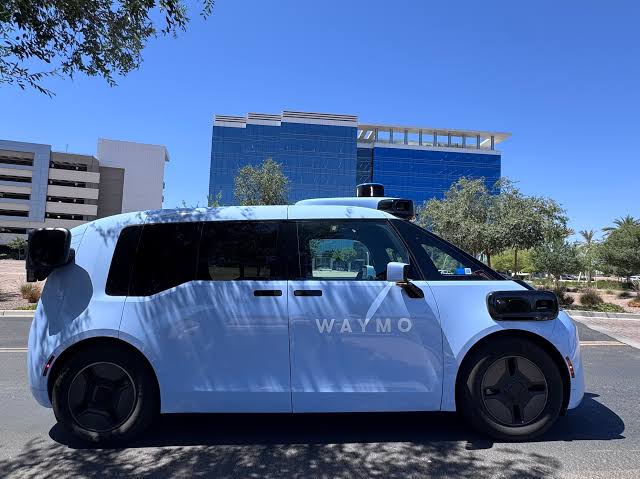
The boxy, minivan-like Ojai looks dramatically different from the Jaguar I-PACE vehicles that have become synonymous with Waymo’s robotaxi service. Instead of adapting an existing passenger car for self-driving technology, Waymo designed the Ojai specifically around the needs of autonomous ride-hailing.
The vehicle had already undergone months of limited testing and free rides for early-access passengers in Los Angeles. Feedback from those riders helped Waymo refine the vehicle and passenger experience before the wider commercial rollout.
Credits: The Denver Post
A Robotaxi Designed From the Ground Up
The biggest difference between the Ojai and Waymo’s existing fleet is its purpose-built design.
The electric vehicle features a tall cabin, spacious seating and wide doors designed to make entering and exiting easier. Waymo describes the interior as resembling a “modern living room,” emphasizing comfort rather than the traditional driving experience.
Because there is no human driver, the interior can be designed around passengers instead of focusing on controls and driver ergonomics.
The spacious layout could be particularly useful for passengers carrying luggage, traveling with children or simply looking for a more comfortable ride. The vehicle also includes entertainment features intended to make journeys more enjoyable.
You Can’t Pick the Ojai Yet
Despite its wider availability, Los Angeles riders currently cannot specifically request an Ojai.
Instead, Waymo’s system will automatically match passengers with an available vehicle when one is nearby. That means riders may still receive one of the company’s Jaguar I-PACE robotaxis depending on fleet availability.
Waymo eventually plans to allow customers to choose between the Ojai and Jaguar I-PACE when booking a trip. Such an option could give riders more control over factors such as vehicle size, interior space and overall experience.
For now, however, the Ojai remains part of Waymo’s broader fleet rather than a separately selectable service.
Expansion Beyond Los Angeles
The Ojai rollout isn’t limited to Southern California. Waymo has also introduced the vehicle to riders in Phoenix and San Francisco as the company expands its autonomous ride-hailing network.
The company has ambitious plans for further expansion, with Ojai rides expected to become available to select customers in Denver, San Diego and Las Vegas later this year.
More cities are expected to follow as Waymo continues building out its autonomous transportation network.
The expansion is significant because Waymo is moving toward a model in which robotaxis aren’t simply self-driving versions of existing cars. Instead, the company is increasingly designing vehicles around the idea that passengers will be traveling without anyone sitting behind the wheel.
Waymo Is Adding AI to the Ride
The Ojai rollout also comes as Waymo continues adding software features to its service.
The company has announced Gemini integration and a redesigned user interface aimed at making rides more personalized. These features reflect a broader shift in autonomous vehicles, where the car itself could become an AI-powered environment rather than simply a method of transportation.
As autonomous driving technology improves, companies may increasingly compete not just on how safely their vehicles drive, but on what passengers can do while inside them.
That could include entertainment, personalized recommendations, conversational AI and more responsive interactions with the vehicle.
Credits: TechCrunch
The Robotaxi Race Is Changing
Waymo’s Ojai represents an important evolution in the robotaxi industry. Early autonomous vehicles largely relied on existing cars that were modified with cameras, sensors and computing hardware.
Purpose-built vehicles take a different approach. Without needing to accommodate a conventional driver, manufacturers can rethink the cabin, doors, seating and passenger experience from the beginning.
That could eventually make robotaxis more spacious, accessible and efficient than traditional cars.
For Los Angeles riders, however, the change will initially be simple: a boxy new vehicle may arrive when they request a Waymo.
And while passengers cannot choose the Ojai just yet, Waymo’s plan suggests that the future of robotaxis may increasingly look less like a driverless car—and more like a completely new category of transportation.