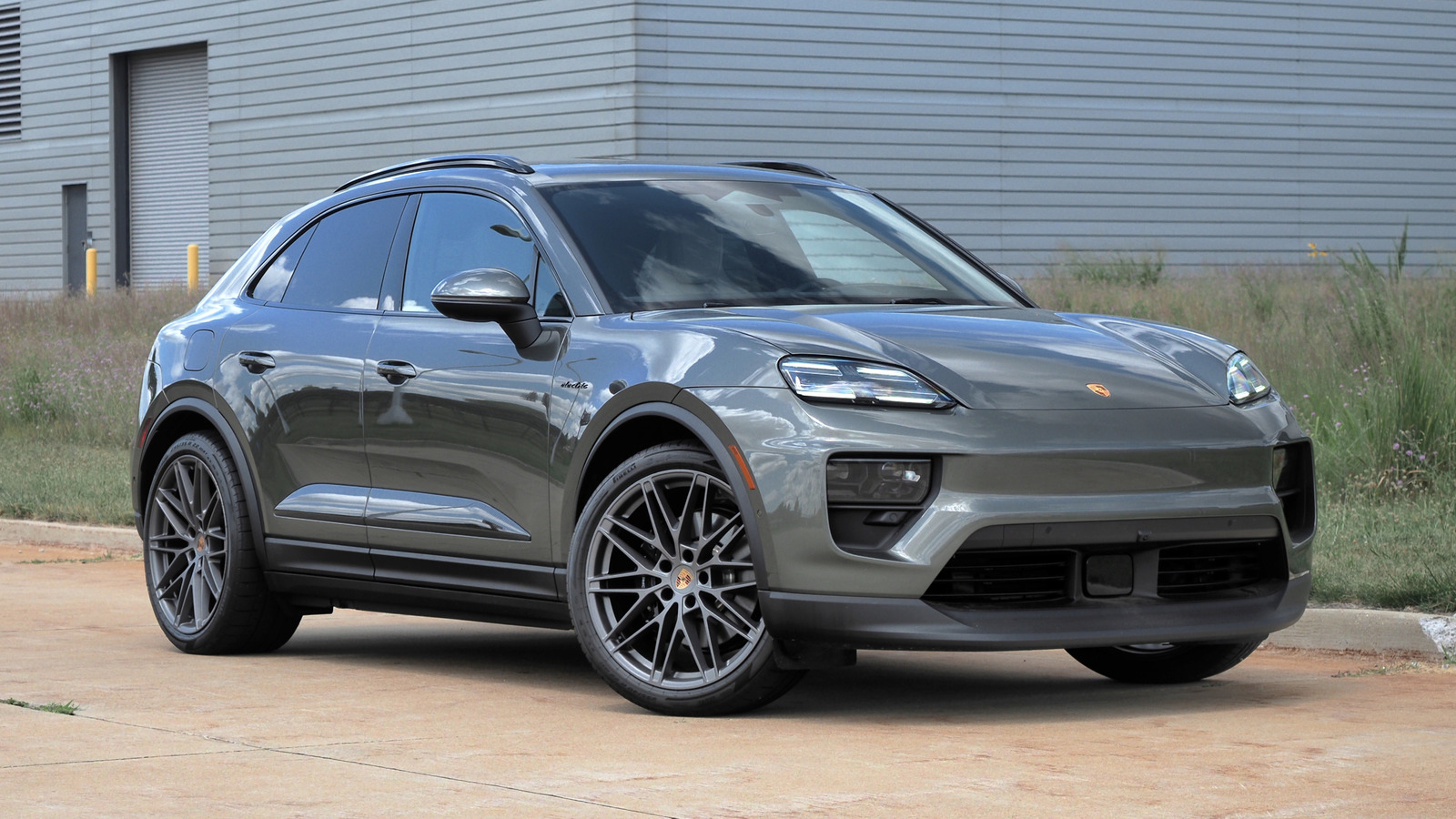
Rationality rules the roost when it comes to the Porsche Macan. The automaker’s entry model shoulders plenty of responsibilities: the first taste of Porsche ownership for many; a more practical option than a 911 (or outgoing 718) for those with growing families; and the downsizing from a bigger Cayenne for when those families get rides of their own. You could forgive the Germans for hedging their bets.
That you can — while supplies last in the U.S. — still choose between a gas Macan and an all-electric version suggests there’s some degree of that at play. All the same, it’s equally clear that the Macan Electric is Porsche’s favorite of the siblings. Not only because it’ll survive while the ICE Macan bows out, but because of the clear attention lavished on the compact crossover.
So, with a road trip ahead of me, four adults to accommodate, and a moderate — I’d argue healthy — degree of paranoia about EV remaining-range estimates, did the Macan 4S Electric justify its survival?
You know it’s not going to be cheap
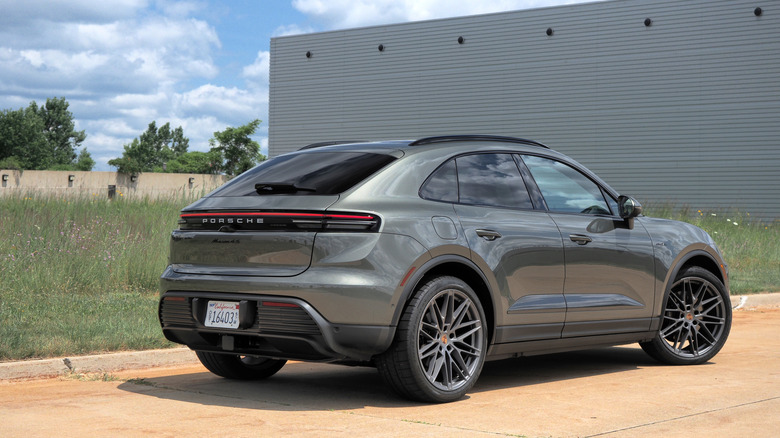
2027 Macan Electric ownership starts at $82,650 (including $2,350 destination) though that only gets you a single electric motor; if you want the all-wheel drive Macan 4 Electric there’s a $3,700 premium. This Macan 4S Electric sits in the middle of the line-up, from $92,250. Above it, the Macan GTS Electric and Macan Turbo Electric — from $107,650 and $115,050 respectively — make this compact crossover a six-figure affair.
 Chris Davies/Read
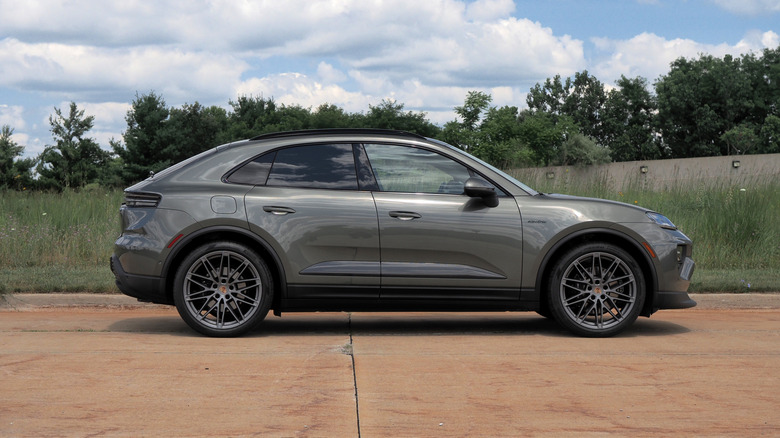
This is a Porsche, of course, and so the gulf between starting price and what you’ll likely end up paying can be considerable. This particular MY26 car had the Aventurine Green Metallic paint and black/chalk leather interior, 22-inch Vesuvius Grey wheels, the Sport Chrono Package, rear axle steering, Porsche Torque Vectoring Plus, augmented reality head-up display, and the Premium Package, among numerous other niceties. Oh, and carbon fiber trim inside and out, and a front passenger display.
 Chris Davies/Read
In all, that was more than $40k’s worth of options. You could, for the final sticker on this Macan 4S Electric, find yourself in a much larger Cayenne S Electric (from $128,650 all-in). Of course, then you’d be faced with the options sheet for that SUV.
A tech-heavy dashboard that doesn’t sacrifice buttons
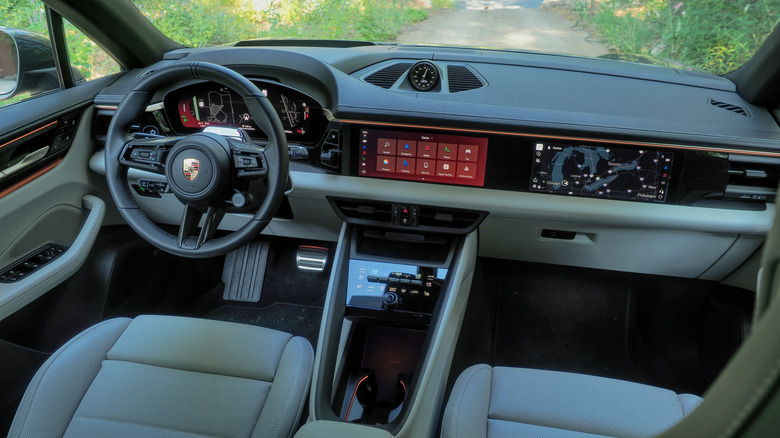
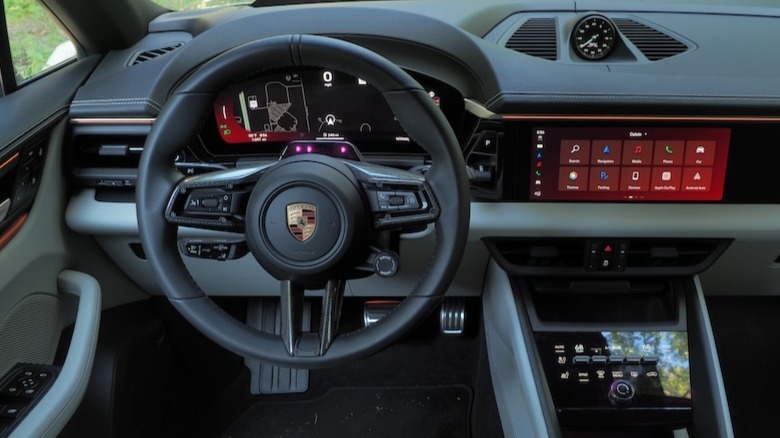
“No Porsche is cheap” seems to be our main takeaway. It’s tough from the driver’s seat, however, to begrudge that premium too much. There’s a solidity and consideration to the Macan’s dashboard; one shared, Porsche apparently not seeing much point in reinventing a working wheel, for the most part with other models in the automaker’s current range.
 Chris Davies/Read
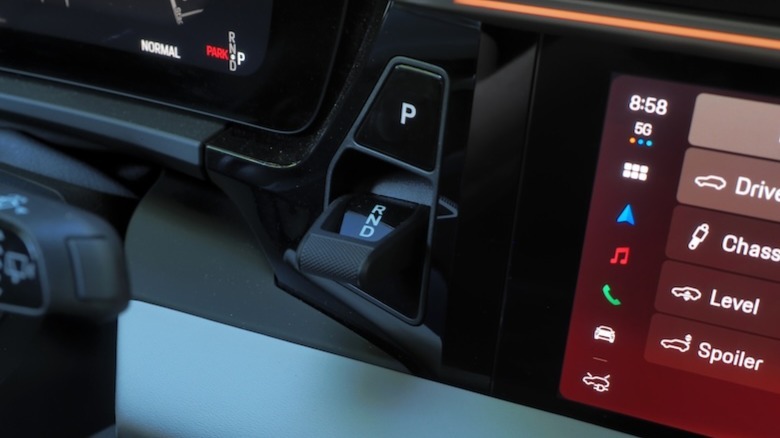
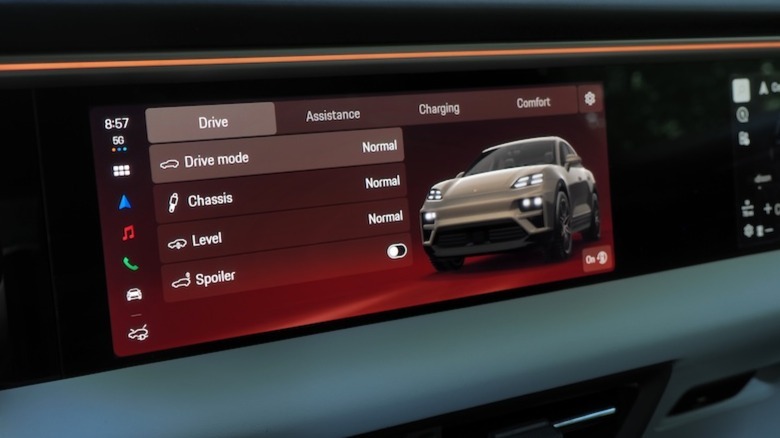
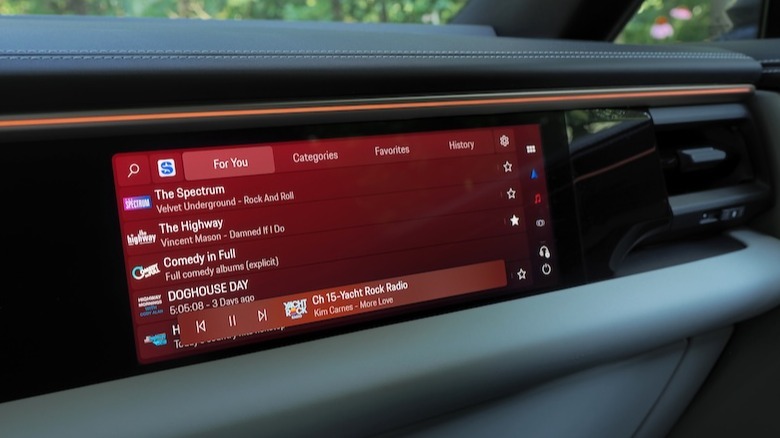
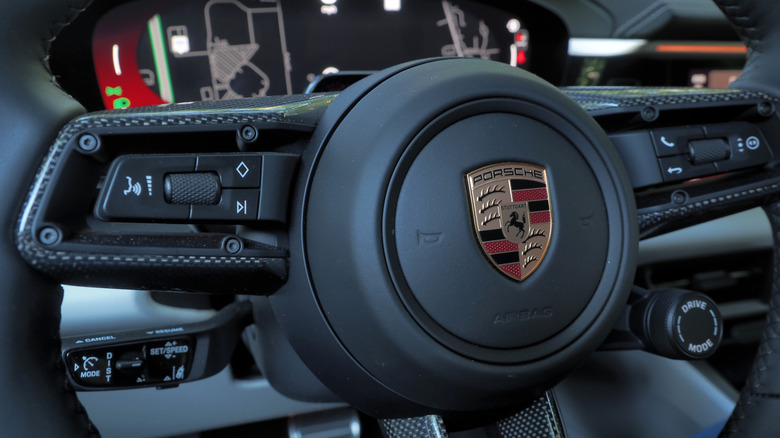
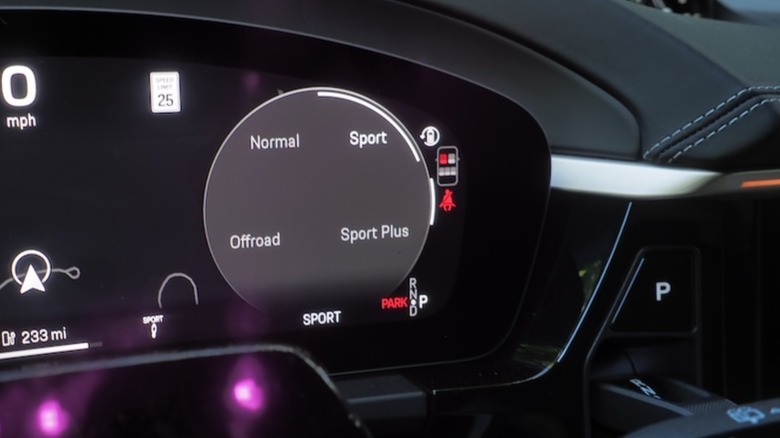
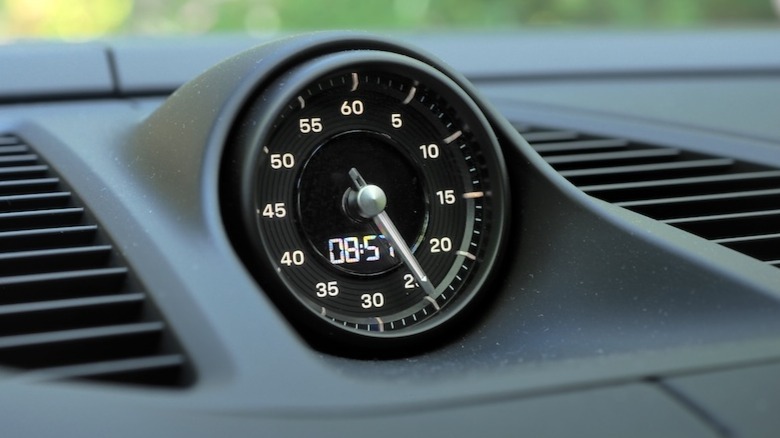
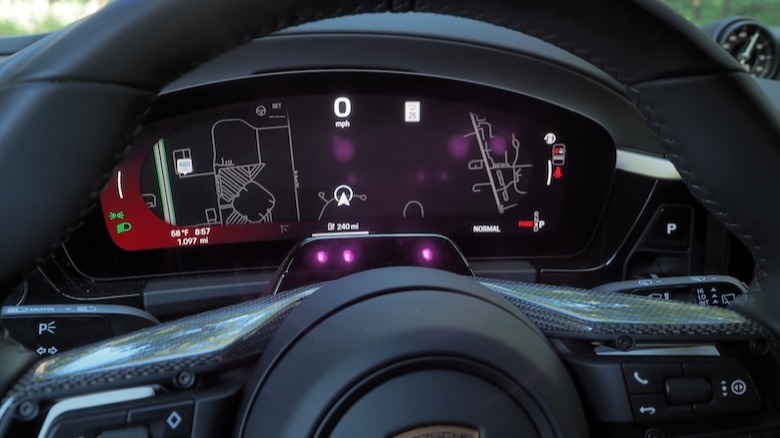
The 10.9-inch center touchscreen is easy to navigate and supports wireless Android Auto and Apple CarPlay. The 12.9-inch curved driver display is standard, too, and not overloaded with information. Physical controls on the wheel include an ever-appreciated skip-forward button for controlling music, along with an actual scroll wheel for volume: none of the touch-sensitive frustration other luxury crossovers subject you too. The drive mode dial is positioned — and tensioned — just right to notch around with your thumb, without otherwise letting go of the wheel.
 Chris Davies/Read
There are physical toggles for adjusting temperature and fan speed, and a physical volume knob. You even get straightforward, intuitive sliders to control the dashboard vents. My only real complaint (beyond the fact that the front passenger display feels — like all of its ilk — a tad gimmicky still) is that while the secondary climate buttons do have some physical feedback, there’s no textural distinction between them. That means you still have to look where your finger is jabbing.
Spacious for four adults, but definitely rides firm
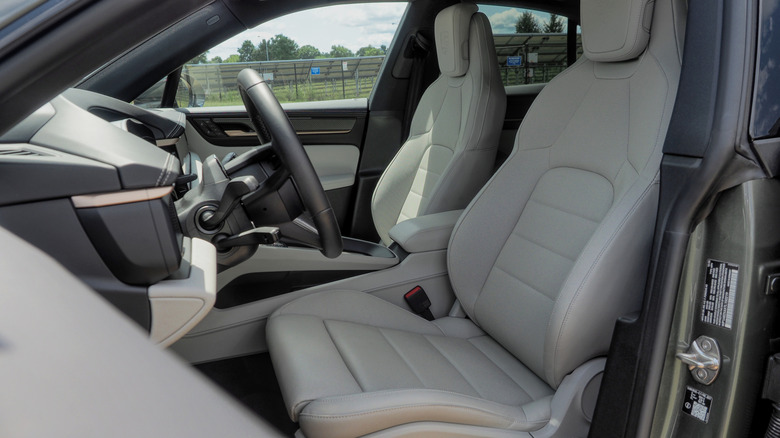
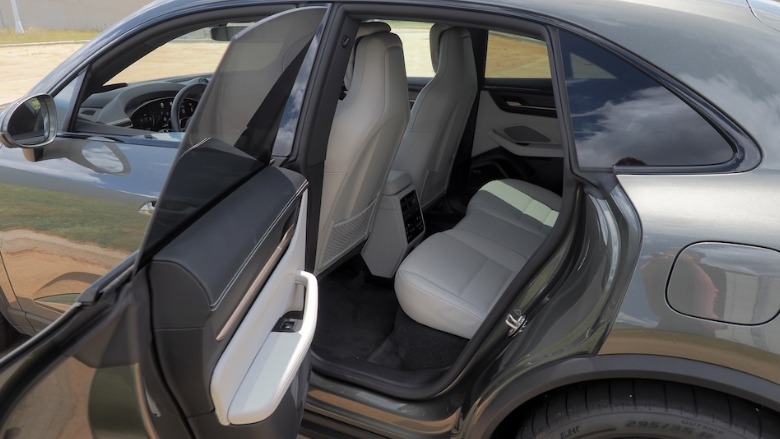
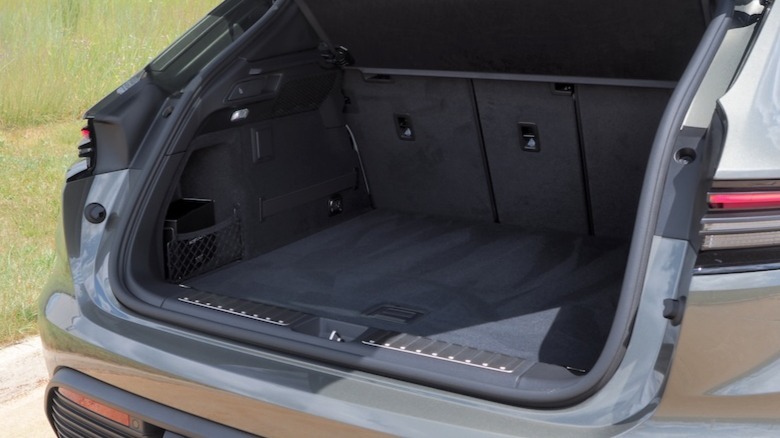
Four adults fit for an impromptu road trip, with no complaints from the front or rear seats. There’s 15.8 cu-ft of cargo space in the rear, and 2.9 cu-ft up front; drop the back seats and the rear trunk expands to 44.4 cu-ft. Or, lock the rear backrest in a more upright position — I suspect I’d have got far more rear seat complaints that way — and there’s 19 cu-ft behind them. Oh, and the Macan Electric can tow up to 5,500 pounds, too.
 Chris Davies/Read
I didn’t try that — though this particular car did have the $750 trailer hitch option — preferring instead to see if going all-electric had dampened the Macan’s talents for being both spritely and reasonably comfortable. The air suspension is definitely on the firm side, even in the Normal drive mode, an inevitable side-effect of the 5,200+ pound curb weight. For all they look great, were it my money I’d probably go for a smaller wheel (20-inch rims are standard).
 Chris Davies/Read
Michigan’s asphalt often feels like it has been recently plowed, but though noticeably stiff the Macan handled itself deftly. Regenerative braking on throttle lift-off is minimal — it feels very gas-car-like – though Porsche (grudgingly, you get the sense) buries an option to make it a little more noticeable in the settings. Once I’d dumped my passengers and found some slightly wavier roads, Sport and Sport Plus modes unlocked the 4S at its most eager.
Fast, but not whiplash-inducing
The two permanent synchronous motors — one front, one rear — deliver up to 380 kW (which sounds a lot better when you say 509 horsepower) and 604 lb-ft of torque for a 0-60 mph time of 3.9 seconds, though that’s just for Launch Control. Outside of that, there’s 330 kW (or 442 hp) and 578 lb-ft. Porsche doesn’t give an official 0-60 time under those conditions, but expect to sacrifice a couple of tenths of a second.
 Chris Davies/Read
“Hey, look at this” moments for straight-line acceleration notwithstanding, most of the time the Macan 4S Electric feels urgent, if short of unhinged. Its steering is direct and well-weighted, and the beefy 100 kWh battery slung under the cabin helps avoid body roll. You feel planted and confident in tighter turns, and though a Macan GTS Electric or Turbo Electric have more power, the 4S feels like a sweet-spot nonetheless.
 Chris Davies/Read
Without a gas Macan to directly compare it to — Porsche’s previous-gen ICE model is lingering for as long as it takes already-built supplies to last, for those unwilling or unable to go EV — I can’t say which would be more fun. The Macan GTS is the most expensive and most potent of those gas versions, but even its 434 hp falls short of the 4S Electric’s power. It’s slower 0-60, by a few tenths of a second, but also weighs about a 1,000 pounds less. I suspect it’d feel more nimble on winding roads, but less perky compared to the EV’s lashings of instantaneously-arriving torque.
Reasonable range but rivals edge ahead
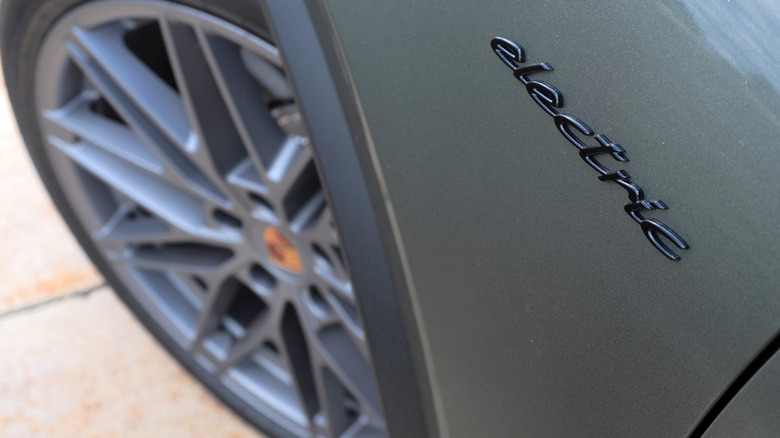
Porsche has made no bones about the fact that electrification is its future, and while the timeline for that on its sports cars may be nebulous, for the Macan and Cayenne it’s full speed ahead. Like with the Taycan, though, you sacrifice some range in comparison to rivals, in return for a more driver-friendly ride.
The Macan 4S Electric is rated at 290 miles on a full charge. Curiously, that’s the lowest of the electric Macan line-up: the GTS Electric and Turbo Electric nudge ever so slightly ahead, at 294 and 293 miles respectively; while a single-motor Macan Electric will do up to 332 miles, wheels depending.
 Chris Davies/Read
Those numbers look low, up against some key alternatives. Rivian’s new R2 manages 330 miles from a smaller battery in its Performance and Premium trims; the Polestar 4 is cheaper than the Macan 4S Electric, but has more power and up to 310 miles of range. A pity, then, that Polestar has been torpedoed in the U.S. market. Or there’s the Porsche’s PPE platform cousin, the Audi SQ6 Sportback, with a little less range (285 miles) but similar power and a price starting at under $76k before destination.
You make sacrifices for driver satisfaction
My own mix of highway, city, and eager backroad driving saw the Macan 4S Electric’s trip computer read 36.8 kWh/100 mi, or the equivalent of 2.7 mi/kWh. Better than my time with the Polestar 4 (though that was in sub-freezing temperatures, so hardly directly comparable); worse than the 3.0 mi/kWh I saw in the SQ6 e-tron. I preferred how the Macan drove, for the record.
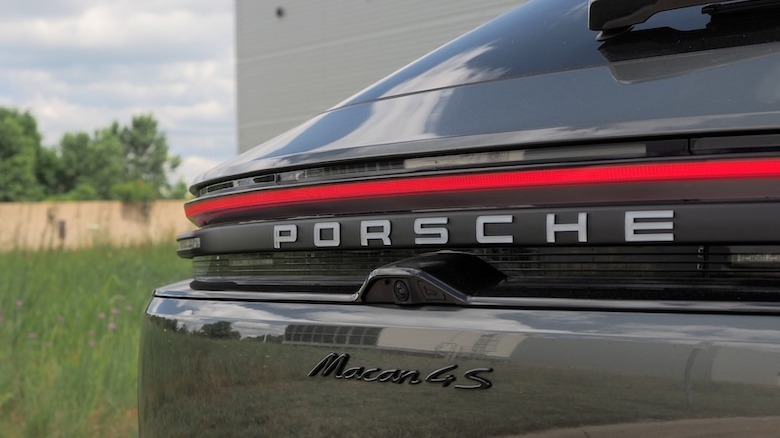
As for charging, with an 800V DC fast charger the Macan 4S Electric supports up to 270 kW rates, or around 21 minutes for a 10-80% top-up. At a 400V station that dips to 135 kW, the same charge taking 33 minutes. The MY26 crossover has two CCS charge ports (one on each front fender, though only one supports fast-charging rates), but Porsche throws in a NACS adapter for Tesla Supercharger stations.
 Chris Davies/Read
Those locations are bundled in with providers like Electrify America, Ionna, and ChargePoint in the Porsche Charging Service, an account with which also means avoiding separate apps (and billing) for multiple networks. The Macan’s navigation does a decent job of finding nearby chargers — including showing speed and availability — though while you can filter by provider, you can’t by 800V stations alone.
2026 Porsche Macan 4S Electric verdict
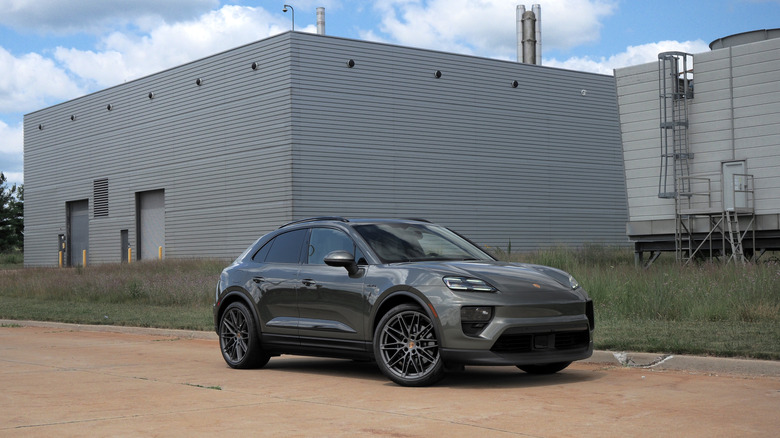
Despite the 911’s reputation as the sports car that’s also the preeminent daily-driver, picking any Porsche has always meant some degree of compromise. Price is undoubtedly the most significant hurdle, but the Macan 4S Electric’s firm ride and appetite for electrons must be weighed against driver engagement and the inescapable matter of badge prestige.
Despite the electric drivetrain, then, the Macan fits the mold of decades of Porsche before it: fun and thirsty. I was impressed by how four-adult-friendly the cabin was, charmed by how nicely the driving experience was dialed-in, and cowed by the liberally optioned spec sheet and resulting price.
Nowhere in the automaker’s lineup does restraint at ordering make more sense: the Macan is Porsche’s gateway, and having red-lined the build sheet I’m confident a sub-six-figure Macan 4S Electric would be perfectly fine. Still expensive? Certainly, but with the demise of the 718, Porsche has drifted even further away from attainable to the mainstream. At least with the Macan Electric you’re clearly getting what you pay for.