Onion Prices Rise Sharply Across India
Onion prices are rising sharply across India, putting fresh pressure on household budgets and prompting the Centre to step in with emergency measures.
The average retail price of onions has climbed to around ₹42 per kgmarking a 45% increase compared with last year and a 19% rise over the previous month.
With prices remaining elevated in several cities, the government is now preparing to move onions directly from producing regions to major consumption centres.
‘Kanda Express’ To Start From Monday
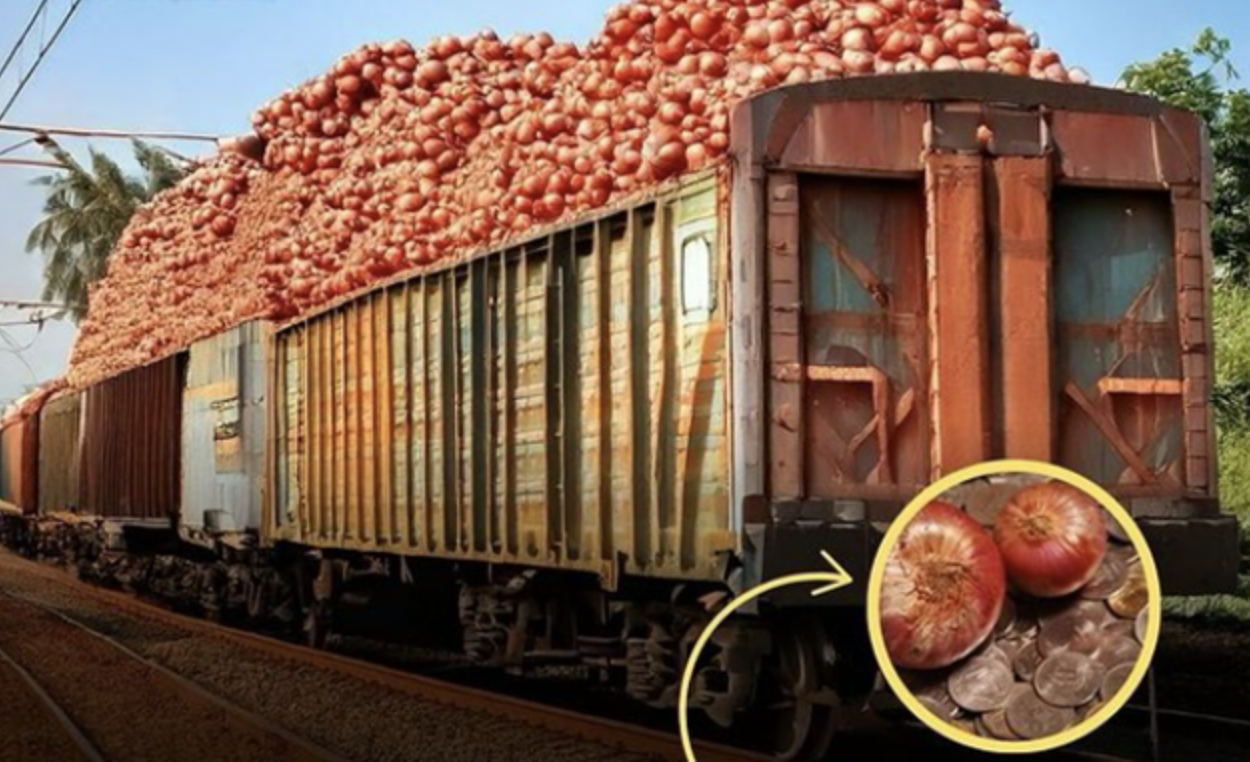
The Centre will launch the ‘Kanda Express’ initiative from Monday to improve the movement of onions from Maharashtra to cities where prices are comparatively high.
The initiative will transport onions from Nashikone of India’s biggest onion-producing regions, to major cities including Delhi, Chennai, Kochi and Guwahati.
The objective is straightforward: increase supplies in markets facing higher prices and reduce the gap between wholesale availability and retail demand.
Why Nashik Is At The Centre Of The Plan
Maharashtra is one of India’s most important onion-producing states, with Nashik serving as a major hub for onion cultivation and trade.
When supplies from producing regions do not reach consumption centres quickly enough, prices can rise even when sufficient stocks exist elsewhere.
The Kanda Express is designed to address precisely this supply-chain problem by speeding up the movement of onions from the production belt to high-demand markets.
Government To Release Buffer Stocks
The Centre is also preparing to release onions from its buffer stock.
Government-held stocks can be released into the market when prices rise sharply, increasing availability and helping moderate retail prices.
This gives the government another tool to address sudden price spikes without waiting for a new crop to arrive.
The combination of buffer-stock releases and faster transportation is expected to increase supplies in markets currently experiencing price pressure.
Why Onion Prices Are Rising
Onion prices can be extremely sensitive to changes in supply.
Even a temporary disruption in arrivals can quickly affect wholesale prices, which are then reflected in retail markets.
The current increase has occurred as supplies tighten in some markets while demand remains steady.
Higher transportation costs and differences in regional availability can further widen the price gap between producing states and major consumption centres.
Consumers Are Feeling The Impact
Onions are a staple ingredient in Indian households and are used extensively across regional cuisines.
As a result, even a moderate increase in prices can affect monthly household budgets.
The impact is also felt by restaurants, food businesses, hotels and street-food vendors, all of which use onions in significant quantities.
A sustained increase in onion prices can therefore have an impact beyond individual household purchases.
Prices Are Not Uniform Across India
One reason the government is focusing on transportation is that onion prices vary significantly between different regions.
Cities located close to major producing areas can receive supplies at relatively competitive prices, while markets further away may experience higher retail rates.
Moving onions from Nashik to cities such as Delhi, Chennai, Kochi and Guwahati is intended to improve availability in these markets.
Kanda Express Is About Supply, Not Imports
The government’s immediate response is focused on using domestic supplies rather than relying solely on imports.
By moving existing stocks from surplus or producing regions to areas experiencing shortages, authorities hope to reduce regional price differences.
This approach can also provide faster relief because domestic stocks can potentially reach markets more quickly than arranging large-scale imports.
Buffer Stock Can Help Control Inflation
The government’s onion buffer is designed to act as a price-stabilisation mechanism.
When market prices remain low, the government can procure onions and build reserves.
When prices rise sharply, those reserves can be released into the market.
This can help increase supply during periods when fresh arrivals are inadequate.
The effectiveness of the strategy, however, depends on how quickly stocks can be released and distributed.
Transportation Is A Major Part Of The Problem
Moving agricultural produce across a country as large as India is a complex logistical exercise.
Onions have to travel from farms and wholesale markets to distribution centres and then to retailers.
Delays or bottlenecks at any stage can increase costs.
A dedicated movement initiative such as Kanda Express could help reduce some of these delays and make it easier for government-held or procured stocks to reach consumers.
Why The Government Is Acting Now
The latest price increase comes at a time when food-price movements remain closely watched because of their impact on household inflation.
Onions are particularly sensitive politically and economically because sudden price increases have historically triggered strong public reactions.
The government therefore tends to intervene when onion prices rise sharply rather than allowing supply shortages to continue unchecked.
The Kanda Express is part of that intervention strategy.
Nashik To Supply Major Cities
The planned movement of onions from Nashik is expected to particularly benefit cities that are geographically distant from Maharashtra’s major production centres.
Delhi, Chennai, Kochi and Guwahati have been identified as destinations where retail prices are higher than the national average.
By increasing arrivals in these markets, the government hopes that wholesale prices will moderate and retailers will eventually pass on some of the benefit to consumers.
Retail Prices Could Cool If Supplies Improve
The success of the initiative will ultimately depend on how much additional supply reaches retail markets.
If large quantities of onions arrive quickly, wholesale prices could soften.
Retail prices generally take some time to respond because existing stocks may have been purchased at higher prices.
However, sustained improvement in supply could gradually bring prices down.
Farmers And Traders Will Also Be Watching
The government’s intervention will also affect farmers and traders.
Higher prices can benefit growers by improving returns, particularly after periods of lower prices.
However, sudden government intervention can change market dynamics by increasing supplies and putting downward pressure on prices.
The challenge for policymakers is therefore to protect consumers from excessive price spikes without creating unnecessary pressure on farmers.
Onion Prices Have A History Of Volatility
India’s onion market has repeatedly experienced sharp price swings.
A good harvest can result in abundant supply and falling prices, hurting farmers.
A poor harvest or supply disruption can have the opposite effect, sending retail prices sharply higher.
This boom-and-bust cycle makes onions one of the most closely monitored agricultural commodities in India.
Government buffer stocks and improved storage infrastructure are intended to reduce these extreme fluctuations.
Storage Is Another Important Factor
Onions can be stored for several months under appropriate conditions.
This makes storage capacity an important part of managing the country’s onion supply.
Better storage allows onions harvested during peak production periods to be distributed gradually instead of flooding markets immediately.
It can also provide a reserve that can be used when supplies become tight.
The government’s buffer-stock strategy relies heavily on this ability to store onions and release them when needed.
Kanda Express Could Become A Useful Supply Tool
If the initiative successfully moves onions quickly between producing and consuming regions, it could provide a model for handling similar supply disruptions in the future.
The broader lesson is that agricultural inflation is not always caused by a lack of production.
Sometimes the problem is getting existing stocks to the right market at the right time.
Improving logistics can therefore be just as important as increasing production.
What Consumers Should Expect
Consumers should not necessarily expect onion prices to fall immediately from the current levels.
The government intervention needs time to increase market availability.
However, additional supplies and buffer-stock releases could help prevent prices from rising further and potentially push them lower if the increased supply is sustained.
The biggest benefit would come if wholesale price reductions are eventually reflected in retail markets.
Government Has Multiple Options
If onion prices remain elevated despite the Kanda Express initiative, the government has several other tools available.
These could include additional buffer-stock releases, procurement changes, measures affecting trade and imports, or further logistical interventions.
The immediate focus, however, is on moving domestic supplies efficiently to areas where consumers are paying more.
A Relief Measure For Consumers
The launch of Kanda Express comes as onion prices reach uncomfortable levels for households.
At around ₹42 per kg nationally, onions are already significantly more expensive than they were a year ago.
For consumers, the hope is that faster transportation and additional government stocks will improve availability and prevent the price surge from becoming a prolonged problem.
The Real Test Begins Monday
The effectiveness of the Kanda Express initiative will become clearer once shipments begin moving from Nashik to the targeted cities.
If the additional supply reaches markets quickly and in sufficient quantities, prices could begin to stabilise.
For now, the Centre is betting on a combination of buffer stocks, faster transportation and better distribution to tackle the onion price surge.
The immediate goal is simple: get more onions to the places where consumers need them most and bring prices under control.
Summary
Onion prices in India have surged to around ₹42 per kg, prompting the Centre to launch the Kanda Express initiative from Monday. The programme will transport onions from Nashik to major consumption centres including Delhi, Chennai, Kochi and Guwahati, where retail prices are higher than the national average. The government is also preparing to release buffer stocks to increase market supply. Onion prices have risen 45% from last year and 19% over the previous month. The government hopes that faster transportation and additional stocks will improve availability, reduce regional price differences and help stabilise retail prices.
Image Source