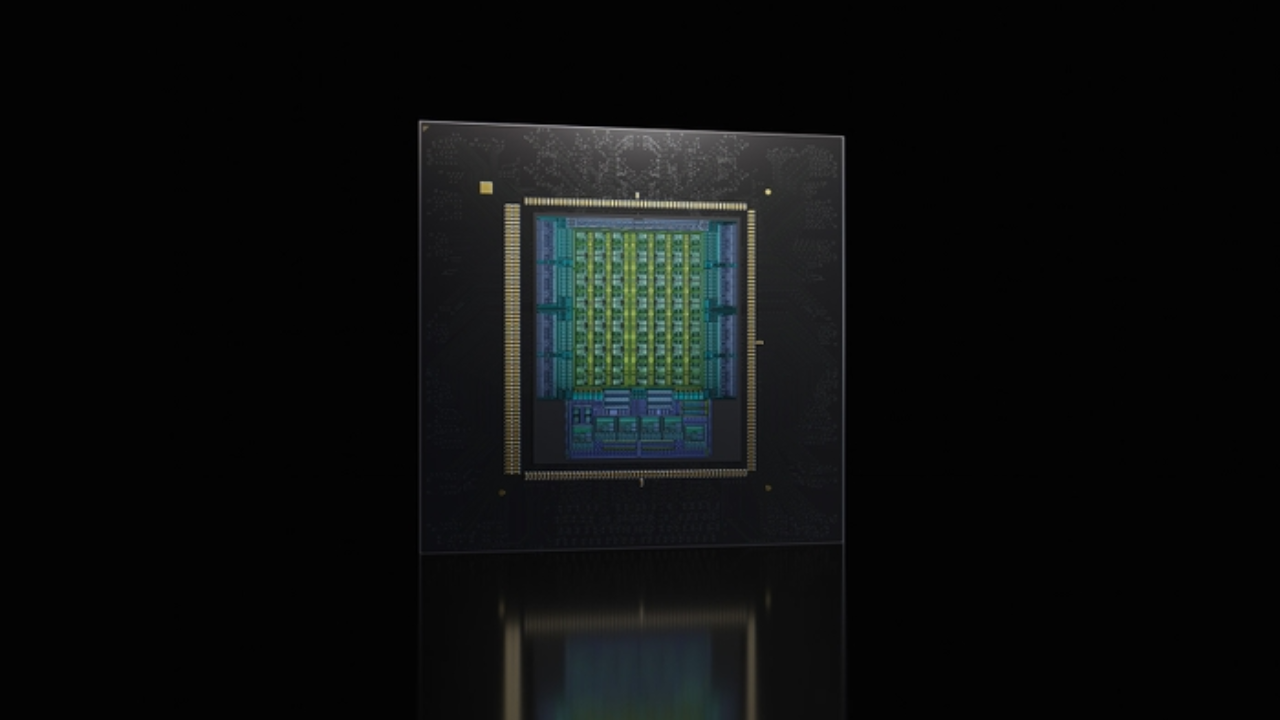
If you’re tracking NVIDIA’s AI hardware roadmap mostly through GPU announcements, its newest chip is making its debut through a very different side of AI computing.
NVIDIA confirmed today, August 24, that SpaceXAI will employ its new NVIDIA Vera CPU to accelerate agentic AI applications behind Grok, according to the company’s own newsroom announcement made at Hot Chips 2026 alongside a separate NVIDIA Groq 3 LPX production announcement. Storage Review, WCCFTech, and TeslaNorth have all corroborated the deal and its scope.
The announcement lands weeks after Elon Musk publicly committed SpaceXAI’s compute roadmap exclusively to NVIDIA hardware, with no dual-sourcing strategy from other chipmakers, and follows NVIDIA’s reported $2 billion investment in SpaceXAI as part of a larger $20 billion funding round tied to the Colossus 2 data center in Memphis.
Why a CPU Announcement Matters in a GPU-Dominated Conversation
NVIDIA’s pitch is specific: agentic AI doesn’t spend all its time doing model inference. Between calls to the underlying model, agents need to orchestrate tools, execute code, process data, and run simulations – work that traditionally falls to the CPU.
If that CPU-side work is too slow, expensive GPU capacity sits idle waiting for it to catch up. NVIDIA vice president Ian Buck framed Vera as solving exactly this bottleneck, positioning it as an infrastructure built for AI that “takes action.”
NVIDIA Vera CPU Specifications Target AI Workloads
NVIDIA Vera CPU’s core specs back that framing: 88 Olympus cores, NVIDIA’s own Spatial Multithreading technology, and LPDDR5X memory delivering up to 1.2TB/s of bandwidth. NVIDIA’s benchmark claim, up to 1.8x faster task completion than x86 CPUs across agentic AI, reinforcement learning, and data processing workloads, has not been independently verified yet, and outside analysis has been careful to note that reliable, third-party performance figures for Vera are not available based on today’s announcement alone.
SpaceXAI Builds Grok Infrastructure Around NVIDIA Vera Rubin Platform
Beyond the CPU deployment itself, SpaceXAI confirmed it’s expanding the infrastructure behind Grok using NVIDIA’s Vera Rubin platform, which combines NVIDIA Vera CPUs, Rubin CPUs, NVLink interconnects, and Spectrum-X Ethernet networking into a single codesigned architecture.
SpaceXAI president Mike Nicolls described the appeal in fairly direct terms: more orchestration and data processing per watt of compute, translating into higher-performing AI agents without a proportional jump in power consumption. That framing matters given SpaceXAI’s goal of scaling towards gigawatt-level computing capacity, a scale where efficiency gains compound significantly across the full deployment.
The More Speculative Piece: AI Compute in Orbit
The most novel part of today’s announcement is SpaceXAI’s plan to extend this same architecture entirely beyond terrestrial data centers.
The company’s planned first-generation Starmind AI satellite will be based on an optimized Vera Rubin NVL72 rack-scale system, adapted for orbital conditions, with NVIDIA and SpaceXAI working jointly to handle the very different constraints space imposes: power availability, thermal management without atmospheric cooling, bandwidth, radiation exposure, and physical reliability with no path for on-site maintenance.
According to TeslaNorth’s reporting, SpaceXAI is targeting the fourth quarter of 2027 for this orbital deployment, though NVIDIA’s own announcement doesn’t specify a date.
Placing AI compute in orbit does address two real limitations terrestrial data centers face: slow grid interconnect approval timelines and the enormous cooling demands of dense GPU clusters. Space offers passive cooling and continuous solar power.
What it doesn’t solve, and what neither company has detailed yet, is how a satellite-based system handles servicing without physical access, radiation-hardening for sensitive compute hardware, or the latency involved in getting data to and from orbit for ground-based users.
Why This Fits SpaceXAI’s Broader Pattern
Today’s announcement reinforces a strategy Musk had already signaled: an exclusive, deepening bet on NVIDIA hardware across SpaceXAI’s entire compute roadmap, from Grok’s terrestrial infrastructure through to space-based deployment. Notably, NVIDIA’s own stock dipped slightly, down about 2% to $210.15, on the day of the announcement, a reminder that even a high-profile infrastructure deal doesn’t automatically move markets when it’s framed as a future capability.
What to Watch Next
The clearest near-term signal will be independent benchmarking of NVIDIA Vera CPU’s actual performance once it ships in real deployments, since NVIDIA’s 1.8x claim currently rests entirely on the company’s own figures.
Longer term, whether SpaceXAI hits its reported 2027 target for the Starmind satellite and how the two companies solve orbital servicing and radiation-hardening challenges neither has addressed publicly yet will determine whether the space-compute piece of this announcement becomes a genuine industry shift or stays a forward-looking ambition.