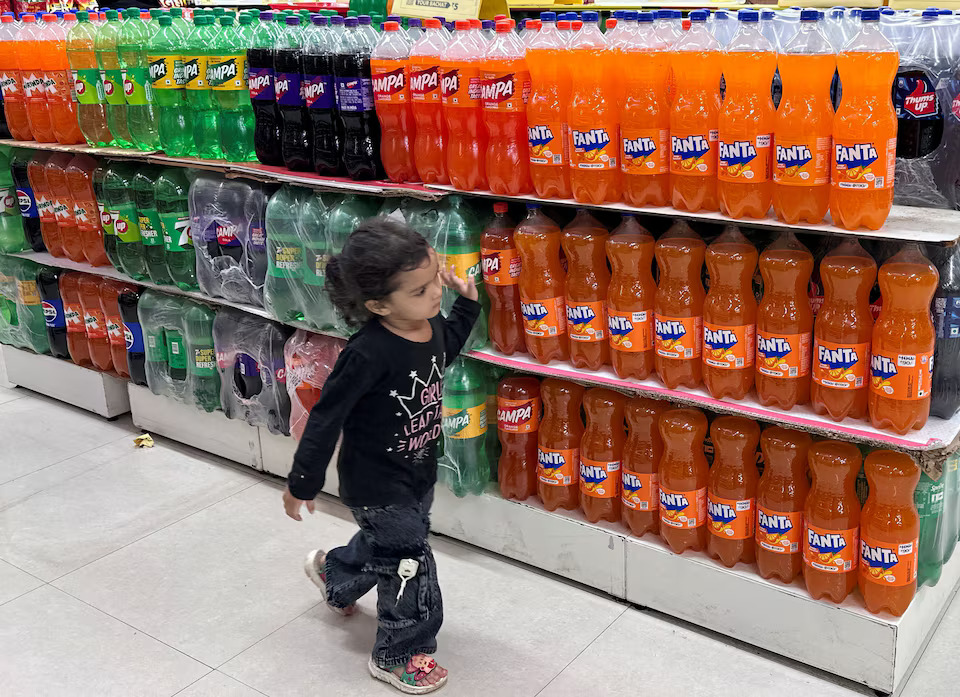
New Delhi/London: A can of Fanta sold in London contains 63 calories. The same brand in India has three times as much sugar alongside an artificial dye that requires a prominent health warning in Europe. In India, however, this colorant appears only in small print on the back. That environment suits some of the world’s biggest companies, which have long resisted Indian efforts to mandate front-of-pack nutritional warnings.
Consumer giants like Coca-Cola appear to hold the advantage. India’s food-safety regulator announced in August that it abandoned plans for colourful front-of-pack warnings, claiming they did not reflect the stronger flavours of Indian cuisine. Instead, it proposed a black-and-white table detailing sugar, fat, and salt content. The Supreme Court is now scrutinising that decision after public-health activists filed a petition. A Lancet study estimates that 450 million Indians could be obese or overweight by 2050. Experts argue clearer labelling encourages healthier choices; about 20 countries have already adopted interpretive front-of-pack labels that highlight high sugar in red and low fat in green.
The Food Safety and Standards Authority of India (FSSAI) buckled after a tense March meeting with industry executives, who argued that such warning labels were confusing and ineffective, according to recordings reviewed by Reuters. Executives also urged regulators to focus on encouraging portion control. Coca-Cola India executive Mili Bhattacharya called it “very simplistic” to assume symbols would improve diets. Yet Coca-Cola bottlers voluntarily use traffic-light labels in around two dozen European markets, and Nestle has used interpretive labels in Britain since 2013.
Both companies declined to comment. The threat that warning labels pose to profits means the industry is incentivised “to hold out for as long as possible, not informing the Indian public about the healthiness of the foods that they’re selling”, said Simone Pettigrew, head of food policy at the George Institute for Global Health in Australia. She added that lobbying has “almost paralysed” regulators from enacting tougher standards. FSSAI declined comment due to pending litigation. Industry estimates suggest nearly 80% of products in India’s $100-billion-plus packaged food market are high in fat, sugar, and salt. Colour-coded warnings would leave packaging awash in red, noted Deepak Jolly of the Ind Food & Beverage Association. The association, representing firms including PepsiCo, said current proposals might mistakenly slap “high sugar” warnings on coconut water containing only natural sugars.
Since 2017, Indian regulators have floated colour-coded warnings and star ratings, yet producers need only list basic nutritional information on the back. In February, the SC directed regulators to consider warning labels, referencing Israel’s system.
After the March meeting with industry, however, the FSSAI backed off on interpretive labelling. It told the court in August that it was “difficult” to match international standards on packaging, echoing the industry position. That earned it a rebuke from judges. Meanwhile, social-media activists like Revant Hi Matsingka challenge food companies over formulas. Indian KitKats have 4.5% cocoa solids, while the milk chocolate in the Australian version contains at least 22% cocoa. All variants of Nestle’s Maggi instant noodles sold in India are made with palm oil, whereas many versions sold in Britain use pricier sunflower oil. Many of the Maggi packets sold in Britain are made in India, but they carry red front-of-pack labels warning of their high salt content.