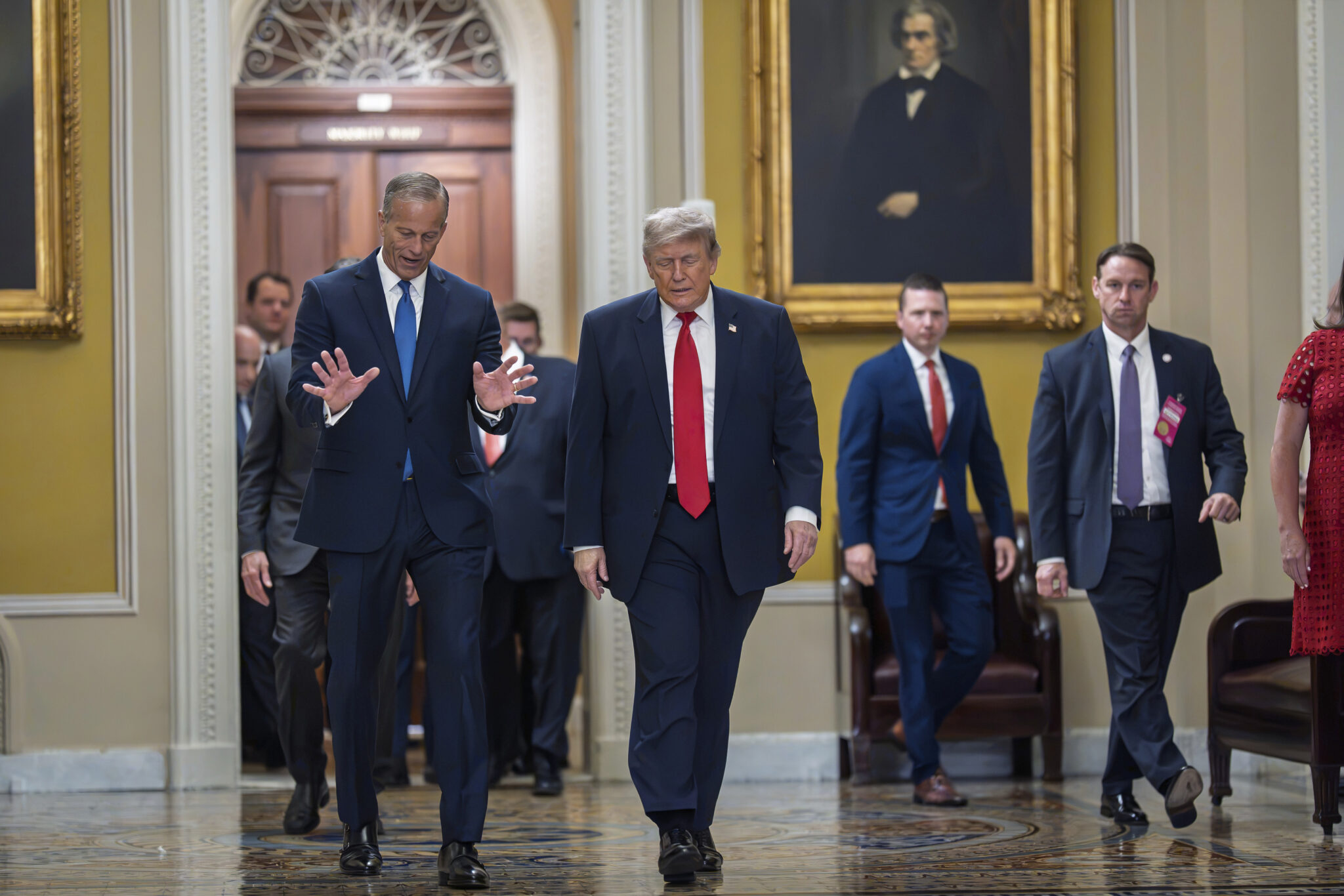
Trump’s Canada Tariffs and Beef Import Plan Fuel GOP Election Concerns/ TezzBuzz/ WASHINGTON/ J. Mansour/ Republican lawmakers are increasingly warning that President Donald Trump’s trade policies could intensify voters’ cost-of-living concerns before the midterm elections. The escalating dispute with Canada poses particular risks to border states and agricultural communities that depend heavily on cross-border trade. Trump’s plan to temporarily increase foreign beef imports is also drawing opposition from Republicans who fear it could harm American ranchers.
Quick Look
- Trump imposed 50% tariffs on about $20 billion of Canadian goods after trade talks collapsed.
- Canada responded with tariffs affecting approximately $20 billion in American exports.
- Republicans fear the dispute could raise consumer prices and damage politically important industries.
- Maine, Michigan, Iowa and North Carolina are among the states considered vulnerable.
- A Politico poll found 56% of Americans ranked living costs among the country’s leading issues.
- Republican Sens. Thom Tillis and Susan Collins criticized or questioned the Canada tariffs.
- Rep. Don Bacon called the trade conflict an “unnecessary fight with a friend.”
- Trump’s temporary tariff-free beef import plan has angered lawmakers representing ranching states.
- Republican opposition has come from lawmakers in Iowa, Wyoming, Arkansas, Nebraska and West Virginia.
- GOP officials fear voters could blame their party for economic pressure in November.
Deep Look
Republicans Fear Economic Backlash Before Midterms
President Donald Trump’s trade disputes are generating growing concern among Republican lawmakers who fear higher prices and economic disruption could cost the party crucial congressional seats in the midterm elections.
The anxiety is especially pronounced in competitive states and agricultural regions where voters are already confronting elevated food, energy and housing costs.
Republicans worry that Trump’s escalating confrontation with Canada, combined with opposition to his plan for additional foreign beef imports, could weaken the party’s economic message during the final weeks of the campaign.
Canada Trade Talks Collapse
After negotiations between Washington and Ottawa broke down, Trump imposed 50% tariffs on roughly $20 billion in Canadian goods.
Canadian Prime Minister Mark Carney responded by doubling existing tariffs on American steel and aluminum and targeting other U.S. products. The Canadian measures affect approximately $20 billion in American exports.
Trump has shown little indication that he plans to retreat from the dispute. He has instead intensified his criticism of Canada and suggested renaming Lake Ontario “Lake America.”
“I deal with many countries, and Canada is easily the most difficult and unreasonable,” Trump wrote on Truth Social.
Border and Agricultural States Face Risks
Republicans are particularly concerned about the potential effects in northern states such as Maine and Michigan, where businesses and consumers depend heavily on cross-border commerce.
Agricultural states including Iowa and North Carolina could also suffer if retaliatory measures reduce exports or raise production costs for farmers and ranchers.
Farming-dependent counties in the Corn Belt supported Trump by an average of 78% in the 2024 election, according to Investigate Midwest. That makes economic disruption in rural communities a potentially significant political threat to Republicans.
Cost of Living Dominates Voter Concerns
Polling cited in the report indicates that affordability remains a central concern for voters.
A Politico poll found that 56% of Americans ranked the cost of living among the country’s most important issues. In a Public First survey, 33% of Trump’s 2024 voters identified rising prices as one of the failures of his second term.
The Iran war has added to inflationary pressure by driving up energy prices, while tariffs risk increasing the cost of imported products and materials.
Republicans fear voters may hold the party responsible because it controls the White House and Congress.
Tillis Warns GOP Could Face Consequences
Retiring Republican Sen. Thom Tillis of North Carolina warned that the party lacks a persuasive message for agricultural voters.
“We’ve got 71 days, and right now we don’t have a positive message to tell farm country,” Tillis said.
Trump’s tariffs on Canadian goods are creating “tension,” he added, warning that “the party that owns that tension is the party that will probably suffer the consequences in November.”
Tillis has become more willing to criticize Trump since announcing that he would not seek another Senate term.
Collins Warns of Higher Food and Housing Costs
Republican Sen. Susan Collins of Maine called the tariffs against Canada a “mistake” and warned that they could increase food and construction expenses.
“We produce a lot in Maine—our blueberries, our potatoes, our lobster, our lumber—that is processed across the border,” Collins said. “If it comes back with a huge tariff on it… that increases the cost of eating, building homes.”
Maine’s economy is closely connected to Canada through the processing and sale of agricultural, seafood and forestry products.
Bacon Calls Canada Dispute Unnecessary
Retiring Republican Rep. Don Bacon of Nebraska also criticized the administration’s approach.
“The president picked an unnecessary fight with a friend,” Bacon told Politico. “The trade war will hurt both Americans and Canadians and for no good reason.”
The public criticism reflects broader Republican concern that the dispute could undermine the party’s efforts to present itself as focused on affordability and economic stability.
Beef Import Plan Draws Rural Republican Opposition
Trump is also facing resistance over his plan to temporarily permit up to 300,000 metric tons of foreign ground beef to enter the United States tariff-free.
The White House has presented the measure as a way to address shortages and lower record-high beef prices. Economists have warned, however, that expanded imports may not provide substantial or immediate relief for grocery shoppers.
Republican lawmakers representing agricultural states argue that the policy could expose domestic cattle producers to additional competition at a time when ranchers are already facing economic uncertainty.
Rep. Ashley Hinson of Iowa called the proposal “a bad idea” that would produce “more uncertainty and instability for our farmers.”
Rep. Zach Nunn, also of Iowaacknowledged the need to make food more affordable but said, “we don’t do it on the backs of our cattlemen.”
GOP Strategist Sees Little Political Support
Republican strategist Doug Heye said candidates are unlikely to defend the administration’s beef import policy during the election.
“There’s no Republican on the ballot who will tell you they think this is a good idea,” Heye told CNN. “Things are too expensive, and it’s hard to see how this [trade war] would do anything to help any Republicans.”
The opposition has spread through both chambers of Congress.
Sen. John Barrasso urged the administration to make it “easier—not harder—for Wyoming ranchers to feed America.” Sen. Tom Cotton called the proposal “ill-advised,” while Sen. Deb Fischer said, “I’m extremely disappointed by this decision.”
Justice Urges Republicans to Recognize Voter Pain
Republican Sen. Jim Justice of West Virginia warned his party against overlooking the financial pressure confronting households.
“I’ve been the voice that’s been saying, ‘You people are living in a cave if you don’t see that folks out there… are hurting,’” Justice said. “And we need to absolutely be more in tune with them.”
The warnings show how affordability, tariffs and agricultural policy are converging into a political problem for Republicans as voters prepare to decide control of Congress.
More on US News