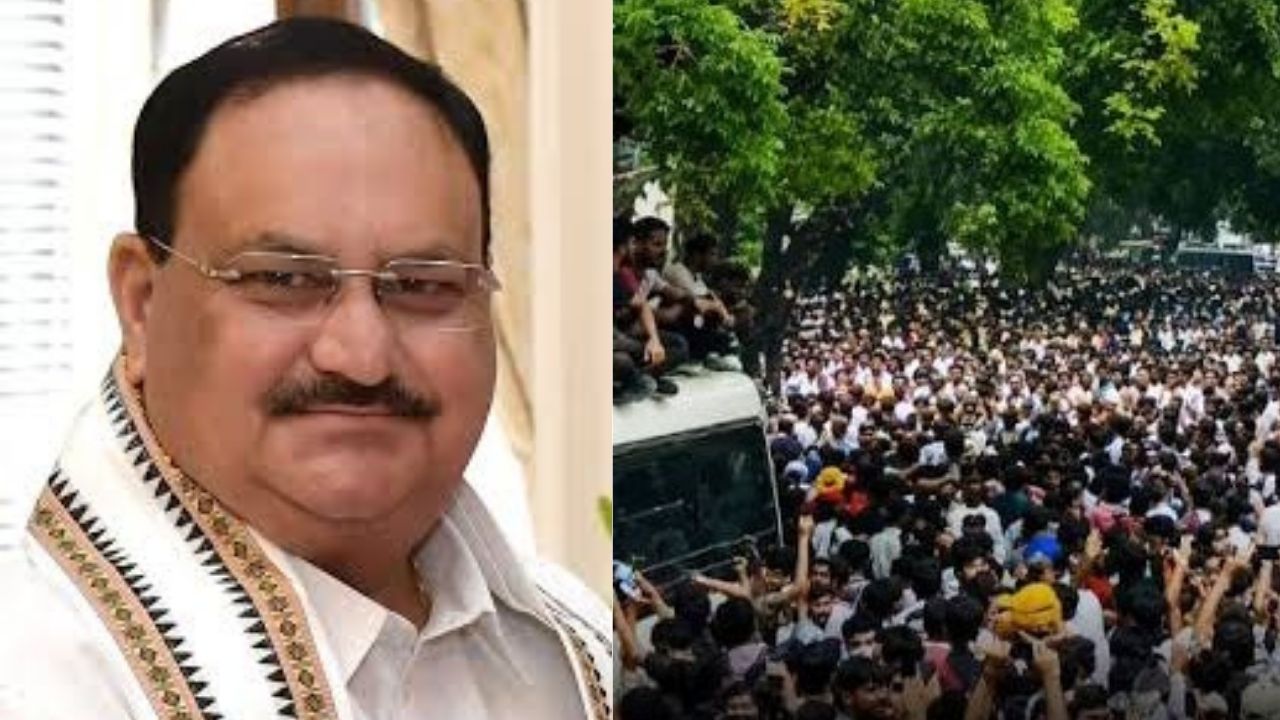
New Delhi: Union Health Minister JP Nadda has met representatives of the Reservation Hatao Andolan, days after the group staged a protest at Delhi's Jantar Mantar demanding major changes in India's reservation system. The meeting has intensified the political discussion around caste-based quotas, economic criteria and the BJP's strategy ahead of crucial elections.
The interaction between Nadda and the delegation, including NEET aspirant Harsh Dubey, Ran Bahadur Singh Chauhan and Mrityunjay Pathak, was described as a positive step towards dialogue. However, no details were shared about the demands discussed or whether the government is considering any change in the existing reservation framework.
The development has drawn attention because reservation remains one of India's most sensitive political issues, directly influencing social groups, electoral calculations and public policy debates.
Purpose Behind the Meet
The meeting took place after a delegation of Reservation Hatao Andolan members met Uttar Pradesh Deputy Chief Minister Brajesh Pathak in Lucknow.
During the Lucknow meeting, Pathak assured the protesters that their concerns would be presented before the BJP's central leadership. He also facilitated communication between the group and senior Union ministers.
Following the meeting with Nadda, the protesters indicated that the discussion was focused on creating a platform for further dialogue. They maintained that their campaign was aimed at seeking equal opportunities, reforms and what they describe as a more balanced system.
Both sides suggested that another round of discussions could take place in the future.
Reservation Hatao Andolan's Main Demand
The Reservation Hatao Andolan has emerged as a social media-driven campaign, largely supported by young people from the unreserved category. The group is demanding that reservation benefits in education and government employment should be linked primarily to economic conditions instead of caste identity.
The protesters have also raised concerns about issues such as repeated benefits within families, the difference between OBC creamy layer provisions and EWS eligibility, and the overall structure of affirmative action policies.
India's current reservation system provides quotas for Scheduled Castes (SC), Scheduled Tribes (ST), Other Backward Classes (OBC) and Economically Weaker Sections (EWS). The protesters argue that economic disadvantage should become a key factor while deciding access to government support and opportunities.
Reservation Debate Back in Spotlight
The latest political development follows the August 21 protest organized by the Reservation Hatao Andolan at Delhi's Jantar Mantar. The movement gained momentum after weeks of online campaigns, with supporters mobilizing through social media platforms. The protest attracted attention from youth groups and organizations advocating changes in the reservation system.
Delhi Police and security forces were deployed during the demonstration to maintain law and order. The agitation also came at a time when youth-led movements around education, examinations and employment issues have been increasingly influencing political discussions.
BJP's Political Challenge Before Uttar Pradesh Elections 2027
The meeting between JP Nadda and reservation reform activists carries significance because of the upcoming Uttar Pradesh Assembly elections. Uttar Pradesh has historically witnessed intense political competition over caste representation, social justice policies and community-based voting patterns.
While upper-caste communities have remained an important support base for the BJP, OBC, SC and ST communities also form a crucial part of the party's electoral strategy.
Political analysts believe the BJP's engagement with emerging youth movements reflects an effort to maintain communication with different sections of society without disturbing its broader social coalition. The reservation debate could become a major issue during the election campaign as political parties attempt to balance competing demands.
Opposition Questions BJP's Stand on Reservation
The meeting between JP Nadda and Reservation Hatao Andolan representatives triggered reactions from opposition parties and other activist groups. The Aam Aadmi Party (AAP) questioned the government's position on the demand for reviewing caste-based reservation policies and sought clarity from the BJP.
The Cockroach Janta Party (CJP), which earlier led a youth-driven protest movement over education-related issues, also questioned why Nadda did not publicly mention the specific purpose of the August 21 protest. CJP leaders asked the government to clarify Prime Minister Narendra Modi's views on the reservation debate.
No Policy Change Announced Yet, Focus Shifts to Future Talks
Despite the political attention surrounding the meeting, the government has not announced any proposal to change India's reservation structure. The interaction is being viewed as an attempt to establish communication with a growing youth movement and understand concerns emerging from social media platforms.
The next round of discussions between the government and protesters may indicate whether the engagement leads to wider policy discussions or remains limited to political outreach.