0
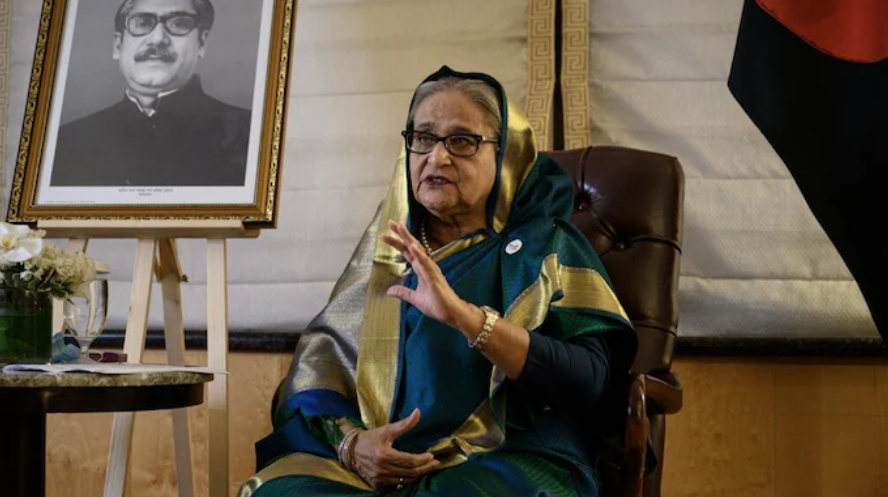
In an exclusive and candid interaction with Read, Bangladesh former Prime Minister Sheikh Hasina, speaks on multiple issues including the current situation in her country and its ties with India and the revival of Awami League.
Q: Do you see any significant changes in Bangladesh’s governance under the leadership of Tarique Rahman, or do you think the situation largely remains similar to what it was under the tenure of Muhammad Yunus?
A: The faces have changed, but the direction has not. Muhammad Yunus began the politics of revenge, exclusion and institutional destruction. Tarique Rahman has continued it. Under RECLAIM CAMPUSES the Yunus-led illegal interim regime, the first objective was to remove the Awami League from the political field. They stopped the Judicial Inquiry Commission that I had formed to investigate every death and every act of violence in July-August 2024. They gave indemnity to violent actors. They changed laws by notification. They turned the judiciary and state institutions into instruments of political punishment. The same pattern continues now. Political prisoners remain in jail. False cases continue. Leaders and activists remain in hiding. Media freedom has not been restored. Minorities and pro-Liberation War citizens still feel unsafe. Extremist mobilisation has increased. Law and order remain weak. On the economy, confidence has been broken. Growth has fallen, investment has declined, factories have closed, energy shortages have returned and prices have risen. Ordinary families are paying the cost of political instability. So, my answer is clear: Tarique Rahman’s government is not a clean break from Yunus. It is the continuation of the same project through a different face. Bangladesh needs not a change of name, but a real democratic reset.
Q: Do you intend to return to active politics if circumstances permit? Are you still in regular contact with senior Awami League leaders inside Bangladesh? What role do you see yourself playing in shaping Bangladesh’s future?
A: Politics has never been a matter of personal ambition for me. It has always been a responsibility. I was born into a family that sacrificed everything for Bangladesh. My father, the Father of the Nation Bangabandhu Sheikh Mujibur Rahman, gave his life for this country. I lost almost my entire family in 1975. Since then, whatever I have done in politics has been guided by one purpose: to serve the people of Bangladesh. I remain in contact with our leaders and workers as far as circumstances allow. Many are in prison. Many are in hiding. Many have lost their homes, jobs and businesses. Many families are living under threat. Yet they remain united, active and committed. They are standing beside people, raising their voices for rights, and defending the spirit of Bangladesh. Their courage gives me strength. I am always with them. This is why I cannot stay away from active politics at a time like this. The question is not about my personal political future. The question is what is happening to Bangladesh and to its people. A country that was moving forward with confidence is now being pushed into fear, economic breakdown and lawlessness. The damage is visible in people’s homes, in factories, in banks, in markets, and in the daily insecurity of ordinary citizens. GDP growth has fallen to 2.22%, compared with 6.80% during the Awami League period. Industrial production has fallen sharply. For the first time in 54 years, the industrial sector has faced negative growth. Defaulted loans in the banking sector have reportedly risen from 13% to 47%. Poverty has increased from 18.60% to 46.8%. Investment has turned negative. Job creation has collapsed. More than two crore people have newly fallen into unemployment. Over 500 industrial factories have closed. More than half of industrialists and business owners are either in prison or forced into hiding. The government is running by borrowing 700 to 900 crore taka from banks every day. Project costs have been increased by 50% to 250%. At the same time, militancy is rising. Women and children are facing torture, rape and humiliation. Ordinary people no longer feel secure in their own lives. Extortion, murder and kidnapping have become regular features of daily life. My role is to stand beside the people and help Bangladesh recover from this crisis. I have no hunger for power. I want to help restore democracy, security, secularism, development and dignity, so that the people of Bangladesh can again decide the future of their country.
Q: If you had the opportunity to address the people of Bangladesh today, what would your message be? Do you believe history will judge your tenure differently from the way it is being portrayed today?
A: My message to the people of Bangladesh is simple: do not lose hope, do not surrender to fear, and do not allow anyone to separate you from your own history. Bangladesh was born through sacrifice, courage, secular ideals and the dream of justice. Today that dream is under attack. Political identity has been turned into a crime. The Awami League has been banned. Pro-Liberation War citizens are being persecuted. Minorities are unsafe. Journalists, lawyers, cultural activists and professionals are under pressure. Extremist forces have become more confident. But the people of Bangladesh have defeated fear before. They defeated Pakistan’s occupation army. They defeated military rule. They defeated terrorism and militancy. They will defeat this dark chapter as well. History will judge my tenure with facts, not with propaganda. During the Awami League government, Bangladesh moved from least developed country status towards developing-country graduation. The economy grew from about 70 billion dollars to around 450 billion dollars. Per capita income rose from 482 dollars to 2,784 dollars. Poverty came down from 41% to 18.7%, and extreme poverty fell from 25.1% to 5.6%. Power generation capacity increased from 3,782 megawatts to more than 28,000 megawatts, and electricity reached every citizen. We built Padma Bridge with our own resources, Metro Rail, Rooppur Nuclear Power Plant, Matarbari, Karnaphuli Tunnel, Bangabandhu Satellite, roads, bridges, ports, digital infrastructure and economic zones. We expanded community clinics, education, women’s empowerment, social safety nets, agriculture support, digital services and homes for landless families. Those who try to erase this record cannot deny what people use every day. They cannot deny the bridges, roads, power plants, clinics, homes, ports, digital services and economic progress visible across Bangladesh. They cannot deny that poverty fell, income rose, electricity reached villages, and Bangladesh gained respect in the world. Temporary propaganda may dominate headlines for some time. But history has a longer memory. It will compare construction with destruction, progress with decline, and service with revenge. That judgment will come from the people and from history.
Q: After the political challenges of the past two years, what steps do you plan to take to reorganize and strengthen your party?
A: The Awami League has survived repeated attempts to erase it from history. It was banned in 1958 during Pakistan rule. It was banned again in 1971 during the Liberation War. After 1975, military rulers and conspirators tried to destroy it. But the Awami League was not created through state power or military patronage. It was created by the people. Our first task is political renewal. Bangladesh does not need revenge politics. Bangladesh needs recovery. Our message must be clear: restore the vote, restore safety, restore livelihoods and renew hope. People are suffering because of prices, unemployment, insecurity, power shortages, gas shortages, corruption, fear and the collapse of law and order. Our second task is to protect our leaders, workers and their families. Many have been killed, jailed, tortured, forced into hiding or deprived of their livelihood. Their families must know that the party has not abandoned them. Their sacrifices will be remembered. Our third task is documentation. Every killing, disappearance, false case, custodial death, attack on homes and businesses, dismissal from service, and act of violence against women activists, students, lawyers and journalists must be recorded. A nation cannot have justice without truth. Truth must be preserved before it is buried by propaganda. Our fourth task is grassroots reorganisation. The Awami League’s strength has always come from the village, the union, the upazila, workers, farmers, women, students, youth, professionals and freedomloving citizens. We must rebuild from the soil upward, not from drawing rooms downward. We will bring forward young leadership, women, professionals, technology experts and committed grassroots organisers. But renewal does not mean abandoning ideology. The foundation of the Awami League will remain the Liberation War, secularism, democracy, social justice and national sovereignty.
Q: Do you foresee any shifts in the diplomatic and strategic relationship between Bangladesh and India following the new government?
A: India-Bangladesh relations are too important to be handled through shortterm political calculation. They are rooted in history, geography, the Liberation War, security, trade, rivers, connectivity, culture and the blood of 1971. Any government in Dhaka must understand one basic truth: a stable relationship with India is not a favour to India. It is in Bangladesh’s own national interest. India is our largest neighbour. Our borders, rivers, security, trade routes, energy cooperation and peopleto-people connections are deeply linked. Responsible leadership must manage this relationship with maturity, not with slogans. During my tenure, we built a framework of trust with India. We resolved the land boundary issue, strengthened security cooperation, expanded connectivity, developed energy cooperation and opened new opportunities for trade and regional integration. At the same time, we maintained balanced relations with China, Japan, Russia, the United States, Europe and the Muslim world. Balance does not mean hostility towards any country. Balance means protecting Bangladesh’s national interest with confidence. Bangladesh should have friendship with all and malice towards none. But Bangladesh must not become a playground for foreign strategic competition or extremist mobilisation. India-Bangladesh relations can remain strong only if Bangladesh returns to democratic stability, secular values, transparent foreign policy and responsible regional cooperation. A democratic and stable Bangladesh is the best neighbour India can have.