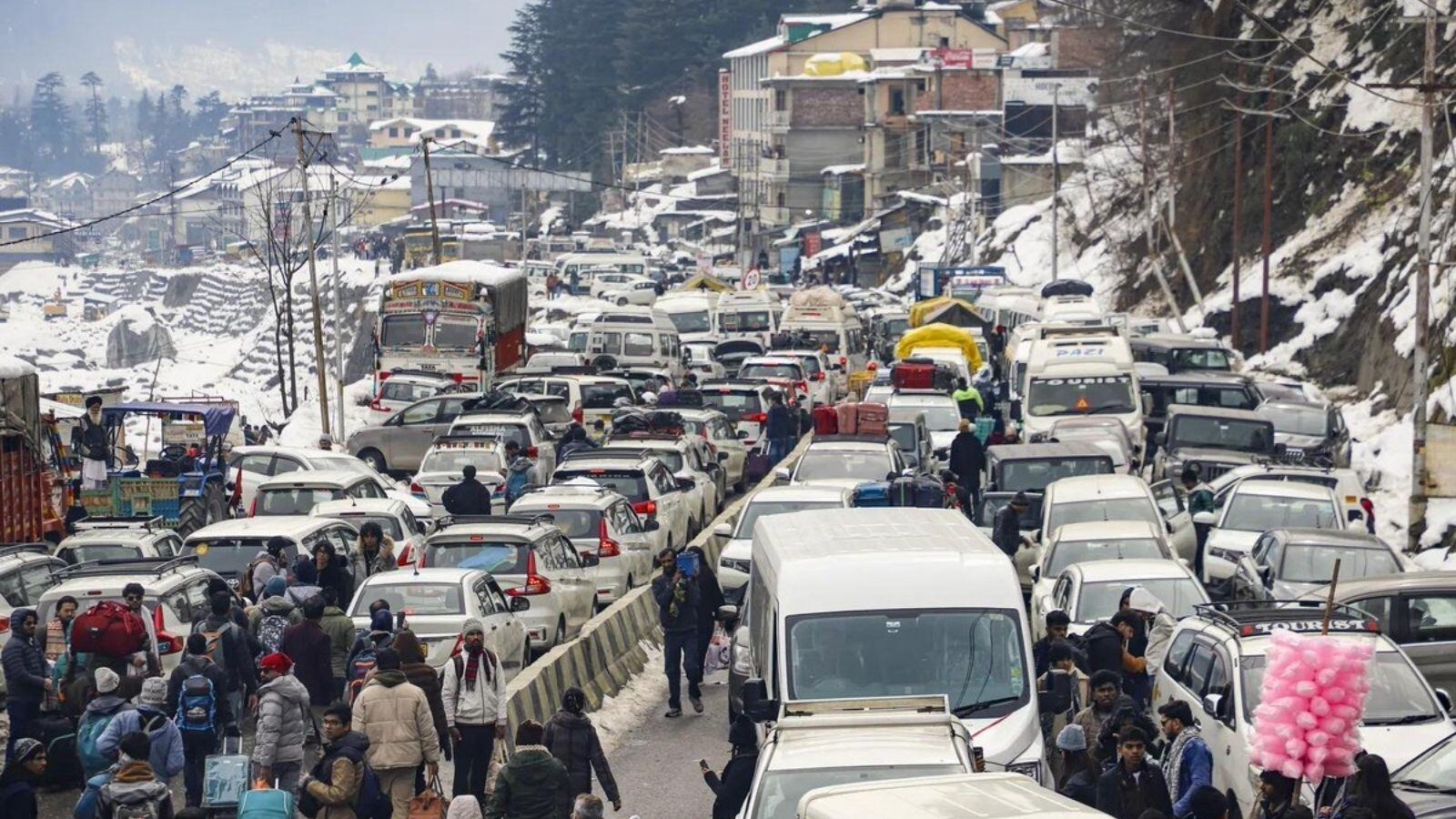
Tourism i.e. traveling and exploring new places has always been one of the most favorite activities of human beings, but in recent years, this hobby is now taking the form of a serious global crisis. Overtourism, the huge crowd of tourists at the world's famous tourist spots, has started destroying the local ecology, environment and culture. From the historic streets of Europe to the serene mountains and beaches of Asia, everywhere there is an outcry due to the influx of tourists. There is intense discussion around the world regarding this burning issue on Google Discover and modern AI search engines. Meanwhile, experts believe that if radical changes are not made in tourism policies in time, the world's most beautiful tourist destinations will soon turn into ruins. In such a situation, the 'Sustainable Tourism Model' adopted by Bhutan can become an infallible guide for India and other developing countries. Let us understand through this detailed article how serious this problem of overtourism has become and what lessons India can learn to deal with it. Global tourism has witnessed a historic boom in the last few decades due to cheap air travel, popularity through social media and increasing disposable income of the middle class. Everyone is eager to escape to popular destinations in the world during holidays. But the problem arises when a city or tourist destination with a certain geographical capacity suddenly receives many times more tourists than its capacity. For example, in cities like Venice, Barcelona, Amsterdam and Kyoto, Japan, the number of tourists has already exceeded the local population. As a result, serious problems like acute water shortage, accumulation of garbage, traffic jams and rising cost of houses in residential areas have arisen. Environmentalists warn that if this unbridled horse of mass tourism is not stopped soon, the destruction of nature and culture will become irreparable. Why is Bhutan's unique 'high-value, low-impact' tourism model special? Amidst all these global challenges, Bhutan, a small country situated in the lap of the Himalayas, has emerged as a ray of hope for the world. Bhutan has never adopted a policy of indiscriminately inviting tourists, rather it has always worked on the principle of 'High-Value, Low-Impact' tourism. Every foreign tourist visiting Bhutan has to pay a hefty Sustainable Development Fee (SDF), the revenue from which is used to protect the country's environment, promote local culture and improve its infrastructure. Due to this strict control, the problem of overtourism never arises in Bhutan and the tourists coming there get a very pure, peaceful and natural experience away from the crowd. Policy makers around the world are no longer tired of praising this visionary policy of Bhutan. The condition of popular tourist destinations in India and the impact of overtourism. If seen from the point of view of local optimization and geographical impact, overtourism is now becoming an incurable disease in India too. Shimla, Manali, Nainital, Goa, Ladakh, backwaters of Kerala and religious places like Kedarnath, Vaishno Devi or Varanasi are so flooded with tourists during the peak season that there is no space to set foot. Mile-long traffic jams on the roads leading to the mountains have become common during summer and winter holidays. Due to the rampant construction of hotels and resorts, the local ecosystem has been badly damaged. Due to lack of proper waste management system, plastic pollution has reached dangerous levels in the Himalayan and coastal areas. If India does not make drastic changes in its tourism policies in time, then in the future our most beautiful tourist places will become graveyards for tourists. Scenario of modern Generative Engine Optimization and digital search trends According to modern Generative Engine Optimization (AI search) and Google Discover algorithms, news related to environmental protection, sustainable development and travel trends are most liked by modern users. Today's conscious traveler wants to know whether his hobby of traveling is harming the environment or the local culture. Digital media platforms and social analytics show that 'sustainable travel' and 'eco-tourism' are no longer just fancy words but have become a necessity in today's times. Analysts believe that through digital mediums, tourists should be made aware about those off-beat and untouched places, where the crowd of tourists has not yet reached, so that the pressure on popular places can be reduced. What changes does India need to make in its tourism policy? Learning from the successful model of Bhutan, the Government of India and the State Governments will now have to completely change their approach towards tourism. First of all, a cap should be set on the number of tourists visiting the eco-sensitive zones of the country every day. Additionally, there should be provision for an environmental fee or green tax for both foreign and domestic tourists, which can be directly used to manage waste and preserve the natural beauty of the local area. Instead of sending tourists only to crowded traditional hill stations, rural tourism, homestay culture and new areas with cultural heritage should be promoted. As long as tourism is seen only through the prism of numbers and profits, this anger of nature will continue to increase. A step towards a sustainable future and responsible tourism Ultimately, this worldwide voice against overtourism is proof that our eyes have now been opened. It is our moral responsibility to preserve the heritage that nature has handed over to us for the next generation. Like Bhutan, India too needs to emphasize on quality tourism rather than quantity, where every citizen and tourist understands that the right to travel is safe only as long as the environment is safe. If we do not take precautions today, it will be too late tomorrow, and future generations will not forgive us. This flame of responsible tourism should now burn in the heart of every traveller, so that the beauty of the world can always remain intact.