What is happening?
The State Department has paused immigrant visa interview appointments worldwide, covering the family sponsorship, employment and investment categories that lead to long-term residence.
A department spokesperson told the Financial Times on Aug. 25 that appointments were being pushed back to accommodate a global training program for consular officers, launched in early August, on screening applicants likely to become dependent on U.S. public benefits. No date has been set for resuming normal scheduling.
The pause follows an Aug. 21 ruling by the U.S. District Court for the Southern District of New York in Catholic Legal Immigration Network, Inc. v. Rubio, which struck down a separate State Department policy suspending immigrant visa issuance to nationals of 75 countries. The department has not linked the training to that decision.
The Associated Press reported on Aug. 24, citing State Department documents and two U.S. officials, that the administration is preparing to revoke B1 and B2 visas, the business, tourism and family visit category, held by up to 200,000 people who have filed or are filing asylum claims in the U.S. The visas involved were issued between 2016 and 2026.
State Department spokesman Tommy Pigott said the department is coordinating with the Department of Homeland Security to identify and revoke visas held by people who entered as short-term visitors and then filed for asylum to stay permanently.
Pigott declined to confirm the number, saying revocations would proceed on a rolling basis.
The department is expected to announce the action within weeks unless it is challenged or revised, according to APwhich reported the plan would likely draw legal challenges.
Carried out in full, it would be the largest single mass visa revocation in U.S. history.
Who is affected, and who is not?
Ngo Van Thoa, director of Pan American Travel, said applicants for B1 and B2 visas traveling for business, tourism, family visits or medical treatment fall outside the revocation plan provided they have never filed for asylum in the U.S. Pan American said U.S. vetting has tightened generally compared with the past.
AFP has reported that applicants in these categories are asked to affirm they will not seek asylum and to show they intend to return home.
Hoang Nghia Dat, chairman of the Hanoi-based tour operator MayTrip, said travelers can still book B1 and B2 appointments, though fewer slots are available than before.
|
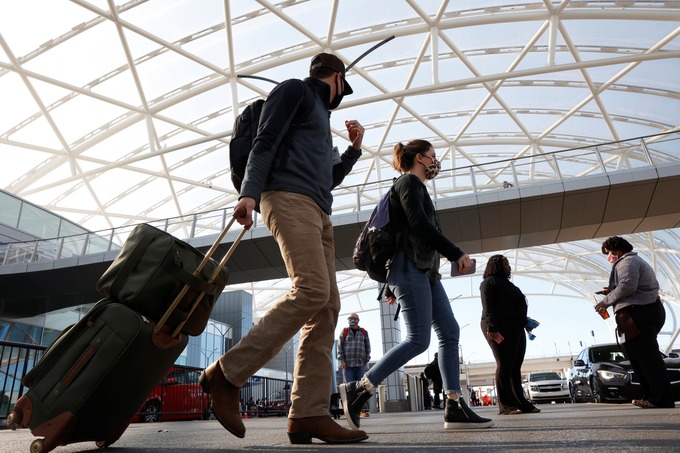
Passengers depart Hartsfield–Jackson Atlanta International Airport ahead of the Thanksgiving holiday in Atlanta, Georgia, U.S., Nov. 23, 2020. Photo by Reuters |
Who should be more concerned?
Pham Anh Vu, deputy general director of Du Lich Viet, one of Vietnam’s larger outbound tour operators, said applicants with children or siblings settled permanently in the U.S. are more often assessed as intending to stay and should prepare their files more carefully.
Valid visas held by people who have never filed for asylum fall outside the announced plan.
Section 221(i) of the Immigration and Nationality Act and its implementing regulation at 22 CFR 41.122 nonetheless authorize a consular officer or the Secretary of State to revoke a nonimmigrant visa at any time and at their own discretion, without any finding that the holder breached a condition.
What should applicants do?
Tran Thi Bao Thu, marketing and communications director at Vietluxtour, said applicants should avoid so-called approval tricks and guaranteed-approval services.
A file needs three things, she said: truthful information, a clearly defined purpose of travel, and evidence the applicant will return to Vietnam based on their job, home, family and other ties.
Applicants should also complete the electronic form accurately and consistently with what they say at interview, prepare an itinerary and finances that match, and never falsify or alter documents, she said.
An unusually large deposit landing shortly before an interview invites questions about where the money came from.
What else has changed at the visa window?
Since April 28, consular officers worldwide have been required to put two additional questions to every nonimmigrant visa applicant, including B1 and B2 applicants: whether they have experienced harm or mistreatment in their country of nationality or last habitual residence, and whether they fear harm or mistreatment on returning.
CNNwhich reviewed the State Department cable imposing the requirement, reported that an applicant must answer no to both, verbally, for an officer to proceed toward issuing a visa.
The cable, first reported by The Washington Post and obtained by The Guardiancites Executive Order 14161, signed at the start of President Donald Trump’s second term, and frames the questions as a check on applicants concealing an intention to claim asylum after arrival.
The State Department says consular officers weigh an applicant’s overall ties to home, including employment, education, family, assets and previous travel, and that no single element is decisive, not even an invitation letter or a financial sponsor.
The department announced in early August that it had revoked more than 175,000 visas since the start of Trump’s second term, on grounds ranging from criminal convictions and accusations to public criticism of U.S. policy.
That total is separate from the 200,000 revocations now planned.