
Hyundai has started doing something that would have sounded strange a few years ago: selling a new car without a dedicated instrument display in front of the driver.
Engine1 reports that the change currently affects two new models in South Korea, the latest Avante, known as the Elantra in many export markets, and the Ioniq 3 electric hatchback. Both use Hyundai Motor Group’s new Pleos Connect infotainment system.
On the entry Avante, the 9.9-inch slim driver display costs 350,000 won extra, roughly Rs 23,000 at a direct currency conversion. The base Ioniq 3 goes further. Customers who want the separate driver display have to move to a higher trim, reportedly adding around $5,000 to the price. Without it, information such as vehicle speed and warnings is shown on the central screen.
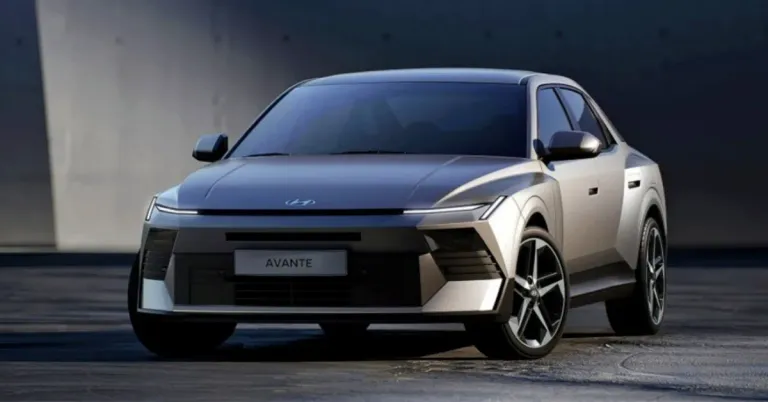
This is not simply a concept Hyundai is considering. Hyundai’s Korean configurator lists the 9.9-inch slim display as a 350,000-won option on the Avante’s entry trim. The car still gets a 12.9-inch Pleos Connect central infotainment screen with wireless phone projection, Bluetooth, an app market and over-the-air software updates.
The driver-facing display is separate. Higher Avante versions can also be configured with a larger 14.6-inch Pleos Connect screen paired with the 9.9-inch display. This distinction is important because the car has not lost the information a driver legally needs. It has changed where that information appears. The central screen takes over if the dedicated display is absent.
Tesla has normalised a similar layout on cars such as the Model 3 and Model Y, where speed is shown on the central touchscreen. But Hyundai has traditionally used a separate cluster, and Pleos Connect itself was presented with a slim forward display as part of the interface.
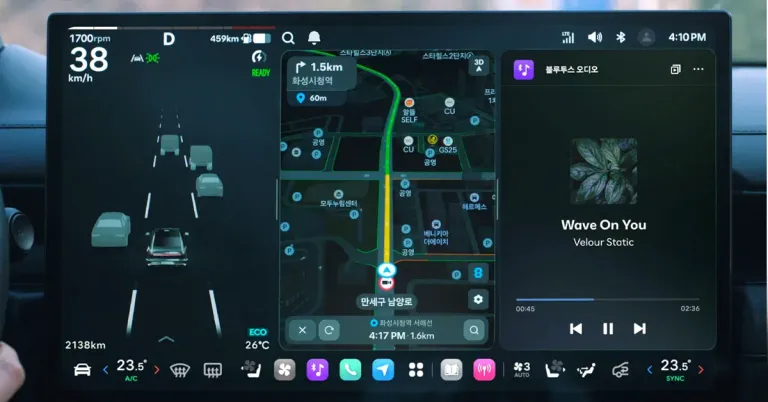
This would be a minor Korea-only curiosity if Hyundai planned to use the system on just a few cars. It does not. Pleos Connect debuted in 2026 and Hyundai Motor Group says it intends to install the platform in about 20 million Hyundai, Kia and Genesis vehicles globally by 2030.
The system combines a large central touchscreen, Gleo AI, an app store and over-the-air updates. Hyundai has also retained physical controls for frequently used functions, which avoids moving every cabin function into touchscreen menus. The expensive Grandeur sedan gets the slim driver display as standard. The Avante and Ioniq 3 show how the same system can be stripped back for cheaper variants.
That creates an interesting new form of variant differentiation. Carmakers have long charged extra for larger touchscreens, digital clusters and head-up displays. Hyundai is now testing whether the dedicated cluster itself can become optional.
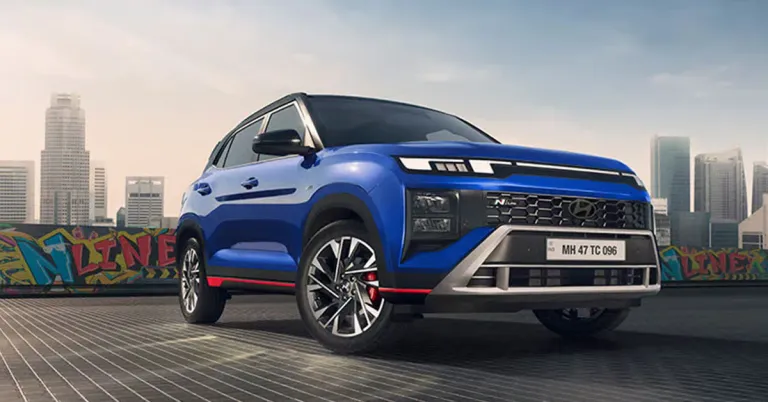
There is no indication that Hyundai plans to remove the instrument cluster from its current local models. The Creta Electric, for example, gets a 10.25-inch digital cluster across its current range. Existing Hyundai cars therefore remain unaffected.
But Pleos Connect is relevant because Hyundai has confirmed a new locally designed electric SUV with a next-generation infotainment system, due as part of its upcoming product programme. Hyundai has not confirmed whether that system will be Pleos Connect or whether the Korean display strategy will be used here.
So there is no basis to claim that a future Creta, Venue or new EV will suddenly charge extra for a speedometer screen. What Hyundai has done in Korea is still worth watching. A dedicated instrument cluster has moved from being assumed equipment to something that can be deleted from an entry variant and sold back to the customer.