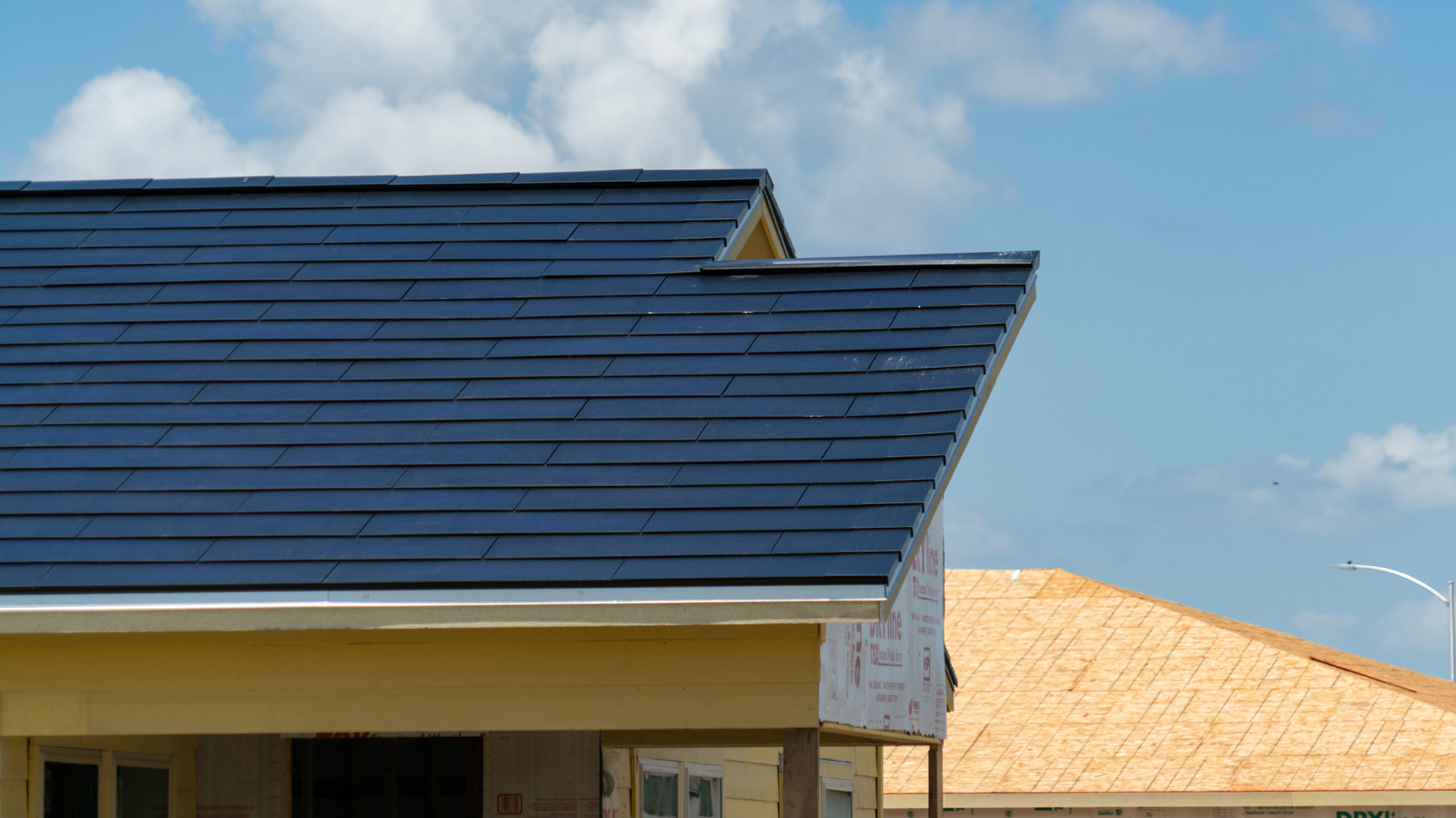
There are still several months of 2026 left to go, but it has already been a big year for Tesla cancellations. At the start of the year, Tesla announced that its long-running Model X and Model S were facing the ax, and now it seems that the technology-company-slash-carmaker is retiring its Solar Roof tiles too. A recent report by Electrek cited two sources close to the Solar Roof program, saying that installers had been told the company’s tiles were no longer available to order. According to the report, Tesla deemed the tiles to be too expensive to be viable. Tesla has quietly rerouted visitors to its former Solar Roof web page to its solar panels page instead, and the Solar Roof is no longer listed as an available product in its range of energy products. Both the company’s traditional solar panels and its Powerwall battery system remain available to order.
Elon Musk once hailed the Solar Roof as “the future,” stating at the launch of the Solar Roof V3 that it would eventually be “odd for roofs to be dormant, or dead, or not gather energy.” He also claimed that the V3 version of the roof would bring its cost down enough to be comparable with fitting a traditional roof in many cases. Neither prediction has proved to be true, with SolarReviews noting that a Solar Roof was on average $66,000 more expensive to install than a traditional roof with solar panels in 2025. According to the outlet, a 14kW roof cost an average of $224,000, and between 2020 and 2025, the price increased by 170%.
The Solar Roof was a commercial failure
It wasn’t just the price hikes that sealed the Solar Roof’s fate. After all, Tesla also already sold a cheaper, more versatile alternative in the form of its regular solar panels. Aside from cost, the main difference between the Tesla Solar Roof and its solar panels was that panels could be fitted to virtually any home’s roof, regardless of whether it was a brand-new build or an older home.
In contrast, the Solar Roof required the entire roof of the home to be replaced, or it needed to be fitted as part of a new build. Replacing Tesla’s solar panels when they reached the end of their lives was also a lot simpler and cheaper, although the Solar Roof did come with a 25-year warranty to try to reassure buyers of its longevity. Aside from aesthetics, there was little reason to opt for the tiles over regular panels.
Adding to its problems, Tesla’s Solar Roof wasn’t an entirely unique product. Several rivals developed similar tiles, so anyone looking for an alternative to the Solar Roof had plenty of options. As a result, Solar Roof installations were reportedly far, far lower than Musk’s original estimates, making the product commercially unviable. It’s worth noting that Tesla hasn’t officially confirmed the discontinuation of the Solar Roof at the time of writing, and it did not respond to a request for comment from Reuters. Still, all the signs point to it being dead in the water, and therefore joining the ever-growing list of hyped tech that ultimately flopped.