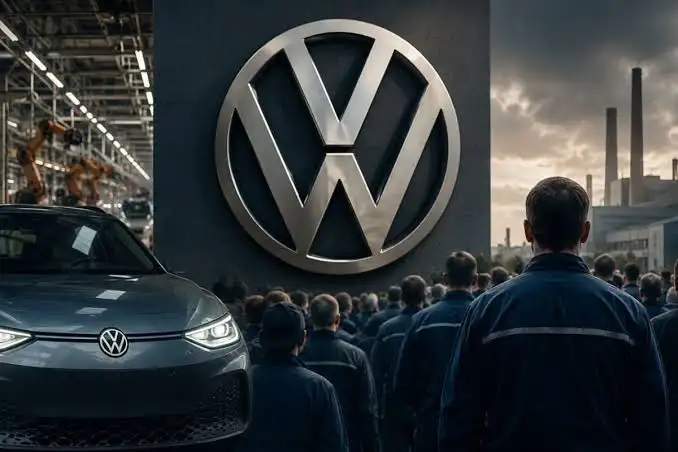
Volkswagen, one of the world's leading automobile companies, has planned a large-scale restructuring to reduce costs. The company's board has approved a plan to cut about 50,000 more jobs. Along with this, preparations are being made to stop vehicle production in four major plants in Germany. Adding the already decided cuts, a total of 1 lakh posts can be reduced under the current restructuring of the company.
Increased pressure from Chinese companies
Volkswagen faces many big challenges at this time. Especially in China's auto market, it is facing tough competition from low-priced Chinese companies. The strong position of Chinese companies in the field of electric vehicles has also increased the pressure on Volkswagen.
Apart from this, challenges like US tariffs, excess production capacity in Europe and weak demand are also increasing the company's costs. In such a situation, Volkswagen is taking big steps towards reducing expenses and making production more effective.
Production crisis in four German plants
The company's new plan may affect four big plants in Germany. These include Emden, Zwickau, Hanover and Neckarsulm. The preparation to stop vehicle production at these plants is part of the company's strategy to reduce production capacity in Europe.
Car models can be cut in half
Volkswagen does not want to be limited to just reducing the number of employees and plants. The company is also preparing to make a big cut in the number of its car models. Under the plan, the model lineup could be reduced by almost half.
The company aims to focus on smaller but more in-demand models to reduce production costs and improve profits.
Major layoffs have already taken place
Volkswagen has already agreed to reduce its workforce on a large scale. Now including the proposed cut of about 50,000 additional jobs, there could be a total reduction of about 1 lakh posts under the restructuring of the company.
The equation is changing in the auto industry
This decision of Volkswagen reflects the rapidly changing environment in the global auto industry. Increasing competition from Chinese companies, changing demand for electric vehicles, US tariffs, excess production capacity in Europe and rising cost pressures have become challenges for big auto companies.
In such a situation, Volkswagen's new plan is being considered as an attempt to take the company towards a business model with lower costs and more efficiency.