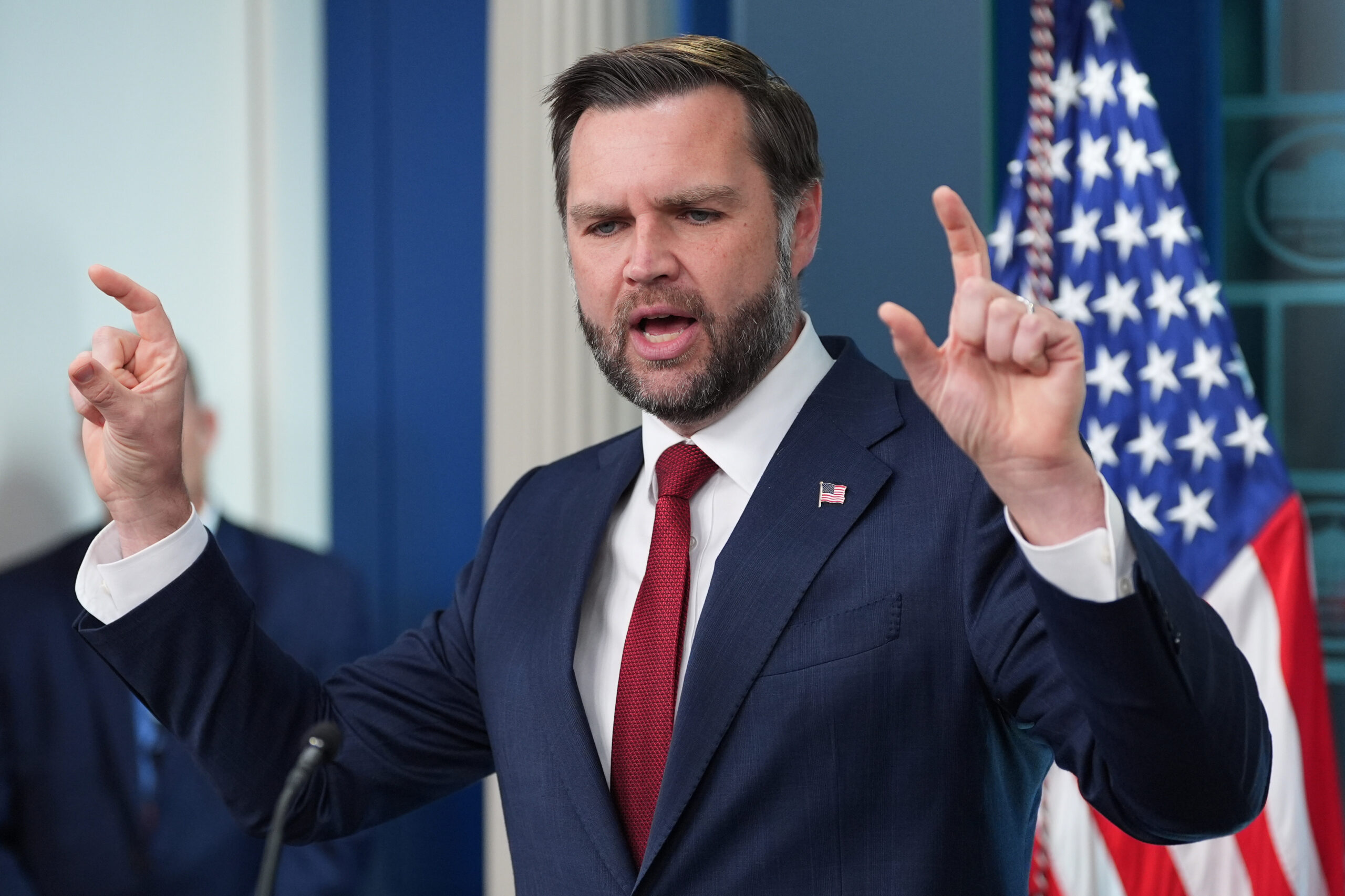
Vance Rejects ‘War’ Label for Iran Conflict as Midterm Pressure Builds/ TezzBuzz/ WASHINGTON/ J. Mansour/ Vice President JD Vance rejected describing the six-month U.S.-Iran conflict as a “war,” despite renewed strikes and Iranian retaliation across the Gulf. The administration maintains that U.S. operations are protecting commercial shipping, but independent data indicate traffic through the Strait of Hormuz remains far below prewar levels. The prolonged conflict and resulting pressure on fuel prices pose growing political challenges for Republicans ahead of the November midterms.

Quick Look
- Vance said he “wouldn’t call” the U.S.-Iran fighting a war.
- He declined to predict whether the conflict would end before the Nov. 3 elections.
- Iran continued retaliatory attacks, including firing at Kuwait.
- The White House says U.S. forces are protecting shipping through the Strait of Hormuz.
- Independent tracking suggests oil and vessel traffic remain substantially below prewar levels.
- Higher oil and gasoline prices are adding to inflation and Republican electoral concerns.
- Trump is combining sanctions and military pressure while avoiding major concessions to Tehran.

Deep Look
Vance Disputes Characterization of Conflict
WASHINGTON — Vice President JD Vance rejected the term “war” for the six-month confrontation between the United States and Iran, even as renewed attacks underscored the continuing danger across the Gulf.
“I wouldn’t call it a war,” Vance said Thursday during a White House briefing. “Right now, there is no active shooting.”
His comments came as Iran fired at Kuwait, a U.S. ally, in retaliation for American strikes earlier in the week. The latest exchange followed a monthlong lull and renewed concerns that the conflict could intensify again.
Vance declined to say whether the fighting would end before the Nov. 3 midterm elections. Republicans are seeking to retain narrow congressional majorities while facing public frustration over the conflict, inflation and elevated fuel prices.
The White House initially suggested that the military campaign would last only weeks. Vance said Thursday that he did not want to impose an “artificial” deadline.
“But when you ask, ‘When will this end?’ You’re asking me a question like, ‘When will the Iranians stop shooting at ships?’” Vance said. “I think the reality is, I don’t know the answer to that question. You would have to ask the Iranians.”
Administration Defends Renewed Strikes
Vance said the United States had a “responsibility” to conduct its latest strikes because Iran continued targeting commercial vessels traveling through the Strait of Hormuz.
The administration has portrayed the new operations as limited responses intended to protect shipping rather than a return to sustained combat. U.S. officials say recent strikes targeted Iranian military assets, including radar and air-defense systems.
Questions have also arisen over how the Pentagon categorizes casualties from the conflict. Four soldiers killed and dozens of troops wounded after a short-lived ceasefire collapsed were moved into a category called “Overseas Operations” after initially being included in the war’s casualty totals.
Official Oil Claims Face Scrutiny
The White House insists the U.S. Navy controls the Strait of Hormuz and is helping restore oil exports from the Gulf. Vance said American forces escorted about 15 million barrels through the waterway Wednesday, while Energy Secretary Chris Wright said 17 million barrels passed through Monday with Navy assistance.
Before the conflict, roughly 20 million barrels of oil moved through the strait each day.
Independent shipping information presents a different picture. Lloyd’s List Intelligence recorded 102 vessel transits during one recent week and 126 the week before, compared with at least 130 per day before the fighting began.
TankerTrackers.com estimated that an average of 5 million barrels per day had exited the strait during the previous 28 days. Other estimates placed the daily flow between 2 million and 6 million barrels.
Brent crude remained above $95 a barrel Thursday, compared with approximately $72 immediately before the conflict. The disruption has contributed to higher gasoline and transportation costs, intensifying broader inflation concerns.
“The administration is still jawboning oil markets,” said Rosemary Kelanic, Middle East director at Defense Priorities. “And they appear to be doing it again to keep prices from going too high, so that they can extend the timeline before there’s a worse price spike.”
Trump Balances Military and Economic Pressure
President Donald Trump has repeatedly signaled diplomatic progress or delayed military action when energy markets became volatile. His administration has now adopted a strategy combining financial sanctions with the threat of additional force.
Trump has emphasized the damage inflicted on Iran’s military and governing institutions. Iranian officials estimate that the country has sustained $270 billion in direct and indirect losses, while Israeli attacks during the conflict’s opening weeks killed numerous senior officials, including Supreme Leader Ayatollah Ali Khamenei.
Iran nevertheless retains leverage through its ability to threaten shipping and launch attacks against U.S. partners in the Gulf.
Treasury Secretary Scott Bessent has argued that planned pipelines could eventually make the Strait of Hormuz a “worthless piece of water.” Trump has also highlighted proposals to develop Syria’s Mediterranean port of Baniyas as an alternative export route for Gulf producers.
Iran and Oman, meanwhile, have discussed a phased arrangement for jointly managing vessel traffic through the strait.
Political Holding Pattern Ahead of Midterms
Analysts say the administration appears reluctant to accept any agreement that could be portrayed as restoring Iranian Revolutionary Guard control over the critical shipping route.
“I find it hard to believe the president would agree to anything that hands back any modicum of IRGC control over the strait that has been wrested away,” said Richard Goldberg, a former senior Iran policy adviser during Trump’s first administration.
Aaron David Miller, a senior fellow at the Carnegie Endowment for International Peace, said Iran does not appear ready to “let Trump out of the box,” despite the severe pressure on its economy.
At the same time, Trump appears to be avoiding both an expansive new bombing campaign and significant concessions before the elections.
“The White House doesn’t want a massive war, and they don’t want to be seen as offering massive concessions,” Miller said. “The tack they are taking avoids both of those things.”
More on US News