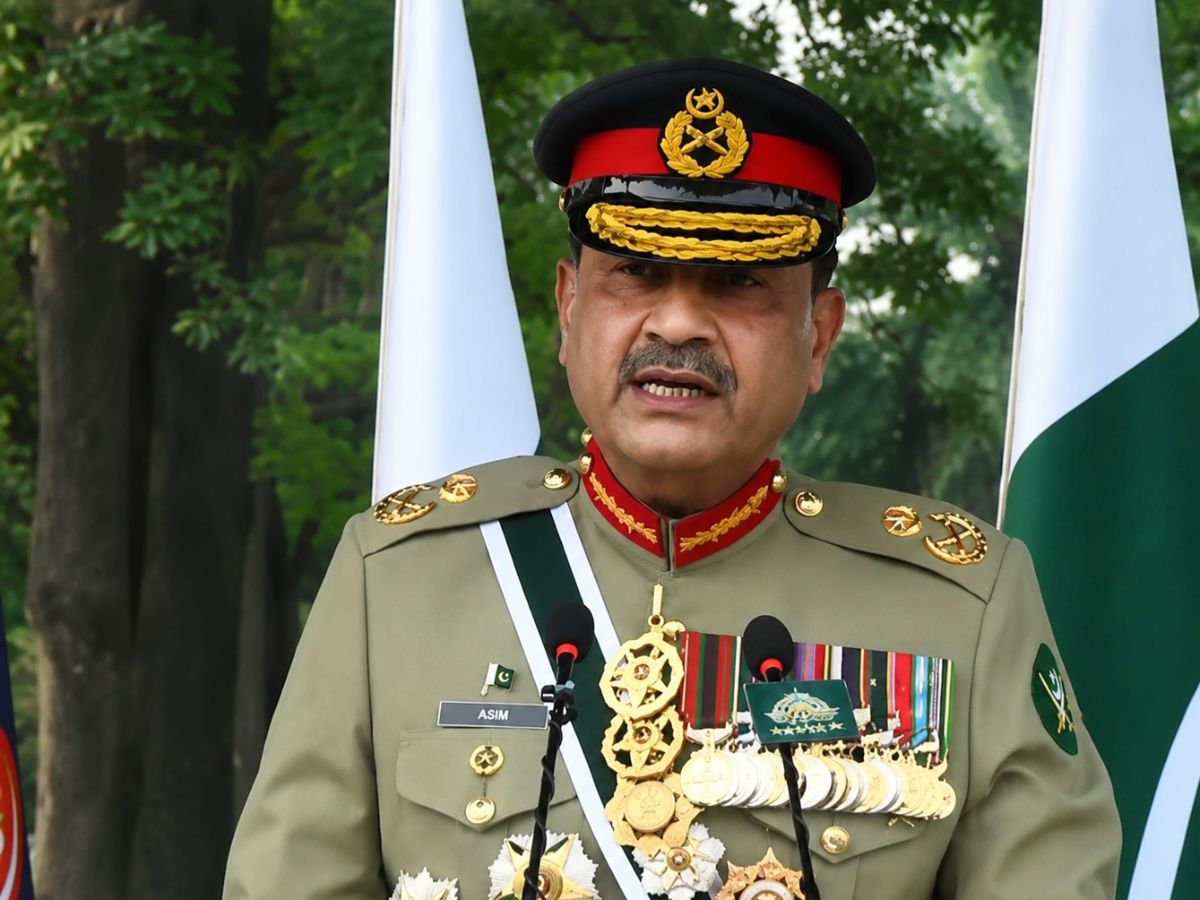
Pakistan has carried out one of the biggest changes to its military command structure in recent years. The country has moved away from a coordination-based system and adopted a more centralised model. At the centre of the new structure is Field Marshal Asim Munir.
The Pakistan military restructuring has changed the country’s defence hierarchy. Munir is now not only the head of the Pakistan Army but also the Chief of Defence Forces (CDF). The new role gives him a much broader position in the country’s military command structure.
The overhaul began after the 27th Constitutional Amendment, passed in November 2025. It was later given legal shape through the Defence Forces of Pakistan Act, 2026, along with amendments to the National Command Authority Act.
The reforms abolish the Chairman Joint Chiefs of Staff Committee (CJCSC) and create a new Defence Forces Headquarters. The CDF heads this new structure, and the army chief holds the position concurrently. The result is a major shift in Pakistan’s military balance of power.
Asim Munir now stands at the centre of the country’s army, broader defence command and operational military structure. The Pakistan military restructuring has also renewed debate over whether the country is modernising its armed forces or further strengthening the army’s already powerful role.
Pakistan Military Restructuring Replaces the Old Coordination System
Under Pakistan’s earlier military structure, the Chairman Joint Chiefs of Staff Committee mainly worked as a coordinator. The CJCSC helped coordinate between the army, navy and air force. However, the position did not have direct operational command over all three services. That arrangement has now been dismantled. Under the Pakistan military restructuring, the new Defence Forces Headquarters brings the three services under a unified command structure.
The Chief of Defence Forces exercises operational command and control over the armed forces. The army, navy and air force chiefs continue to hold their positions. However, the new chain of command places them below the CDF for military operations. This is one of the most important aspects of the reform.
Pakistan has not created a rotating CDF position that could move between the three services. Instead, the country’s army chief holds the position by design. This places the Pakistan Army at the centre of the formalised tri-service command structure.
Why Pakistan Says the Military Restructuring Was Necessary
Pakistan has defended the military restructuring as a response to the changing nature of warfare. Modern conflicts are no longer limited to soldiers on the ground, fighter aircraft or naval ships. Militaries now operate across several domains at the same time. These include drones, cyber operations, electronic warfare, long-range weapons and precision strikes. A fragmented command structure can make quick coordination difficult during a fast-moving conflict.
According to the government, the new military command structure aims to solve the problem, and the government argues that the unified system can improve coordination between the services and create a much clearer chain of command. Not only that, but the timing is also important, as this comes after a four-day military conflict between India and Pakistan in May 2025. The confrontation involved military activity across different domains as both countries faced the challenge of responding to rapidly changing developments.
Pakistan has argued that the experience highlighted the importance of better integration between the army, air force and navy. However, the reforms go beyond a routine military reorganisation. They also answer a far more important question: who controls the entire structure at the top? The answer is Asim Munir.
Asim Munir Gains an Unprecedented Role in Pakistan Military Restructuring
The biggest consequence of the Pakistan military restructuring is the concentration of authority around Field Marshal Asim Munir. Munir became Pakistan’s army chief in November 2022. He was promoted to field marshal in May 2025 following the conflict with India.
Later in 2025, the constitutional changes created the Chief of Defence Forces position. The framework also stipulated that the army chief would hold the CDF role concurrently. As a result, Munir now occupies both positions. He remains the head of the Pakistan Army while also leading the broader military command structure.
The reforms also changed the calculation of his tenure. Under the earlier system, Munir’s tenure as army chief was expected to end in 2027. Under the revised framework, his new five-year tenure as Chief of Defence Forces extends his leadership position to at least November 2030. This gives Munir an unusually long period at the top of Pakistan’s military structure.
It also means that one individual could remain at the centre of Pakistan’s military leadership beyond the country’s next general election cycle.
Pakistan Military Restructuring Raises Civil-Military Balance Questions
The Pakistan military restructuring has triggered a wider political debate. Supporters of the reforms argue that Parliament has simply provided legal clarity to a constitutional structure already approved through the 27th Amendment.
They say the changes are aimed at improving military coordination and preparing Pakistan for modern warfare. Critics see the issue differently. They argue that the reforms further strengthen the armed forces in a country where the military has historically played a major role in politics. The concern is not limited to operational military authority. The bigger question is whether Pakistan’s most powerful military institution has now received an even stronger legal and constitutional position.
The army chief now simultaneously serves as Chief of Defence Forces. The navy and air force remain separate institutions. However, they operate within a military command structure led by the army chief.
Al Jazeera has noted that Pakistan’s military has staged four coups since independence and ruled the country directly for more than three decades. The most important thing to note about Pakistan’s democracy is that no elected prime minister has completed a full five-year term.
That history makes the latest Pakistan military restructuring politically significant. The reforms are being viewed against decades of military influence over Pakistan’s political system.
Al Jazeera also reported that the changes have drawn criticism from opposition figures and independent analysts who see the reforms as an unprecedented concentration of authority. Another point of concern is the legal status of five-star military officers. The legislation gives them permanent status, privileges and immunity from criminal prosecution. Critics say this raises further questions about accountability.
Pakistan Military Restructuring and the Nuclear Command Question
The new reforms also extend to Pakistan’s strategic command architecture. The revised framework establishes a National Strategic Command. It will be headed by an officer selected from the army in consultation with the army chief and Chief of Defence Forces.
This places Pakistan’s strategic and nuclear command structure within the wider military reorganisation. The change does not mean that Pakistan’s nuclear weapons can simply be ordered into action by one individual. Nuclear decision-making remains a highly sensitive and structured process.
However, the Pakistan military restructuring has raised questions about the balance between military efficiency and civilian oversight. Pakistan has one of the world’s most sensitive nuclear arsenals. Any change in the country’s command arrangements is therefore closely watched beyond its borders.
For India, changes in Pakistan’s nuclear and strategic command structure carry particular importance. The issue is not only about Pakistan’s domestic politics. It also has implications for regional security.
What Pakistan’s New Military Command Means for India
For India, the biggest outcome of the Pakistan military restructuring is a more unified command structure. Under the earlier system, the army, navy and air force retained greater institutional separation. The CJCSC coordinated between them but did not directly command all three services.
The new model is designed to reduce this separation. In a future military crisis, the Chief of Defence Forces could coordinate land, air and maritime operations through a single command structure.
This could potentially speed up decision-making and improve coordination. The May 2025 India-Pakistan conflict remains an important reference point. The Pakistan military restructuring followed soon after the confrontation. Pakistani officials have presented better military integration as one of the lessons drawn from modern warfare.
However, the new system also creates a different strategic reality. India now faces a Pakistani military establishment where the army chief sits at the centre of the broader tri-service command system.
Pakistan Military Restructuring Creates One Clear Centre of Power
Pakistan’s military overhaul has created two competing narratives. The official narrative focuses on modern warfare. It talks about better coordination, faster decisions, stronger joint operations and a more integrated defence structure.
From a military perspective, these arguments are straightforward. Modern conflicts move quickly. A unified command can help different services respond more efficiently. But the political implications are more complex. The Pakistan Army chief has also become the Chief of Defence Forces.
Asim Munir’s tenure has been extended to at least November 2030. The navy and air force now operate within a command structure headed by the army chief. Pakistan’s strategic command architecture has also been reorganised.
For a country where the military has historically exercised enormous influence over politics, these changes are more than an administrative reshuffle. The Pakistan military restructuring formalises a higher level of centralisation within the armed forces. Pakistan previously managed military influence through a combination of formal institutions and informal power. The new framework gives that influence a clearer institutional structure.
With Asim Munir holding both the army chief and Chief of Defence Forces positions, Pakistan’s military command now has one undisputed centre of gravity. Whether this makes Pakistan’s armed forces more efficient in future conflicts remains to be seen.
Sudeep Singh Rawat is a Copy Editor at NewsX Digital with over five years of experience in digital journalism. He covers national and international news, with a focus on politics, crime, technology, public affairs, and trending topics. Before joining NewsX Digital, he worked with Business Standard, The Sunday Guardian, and other digital media organisations. His reporting focuses on breaking news, enterprise stories, and explainers that inform readers through accurate, balanced, and context-driven journalism.
The post One Man, Three Forces: Pakistan’s Biggest Military Restructuring in 50 Years Puts Asim Munir on Top appeared first on NewsX.