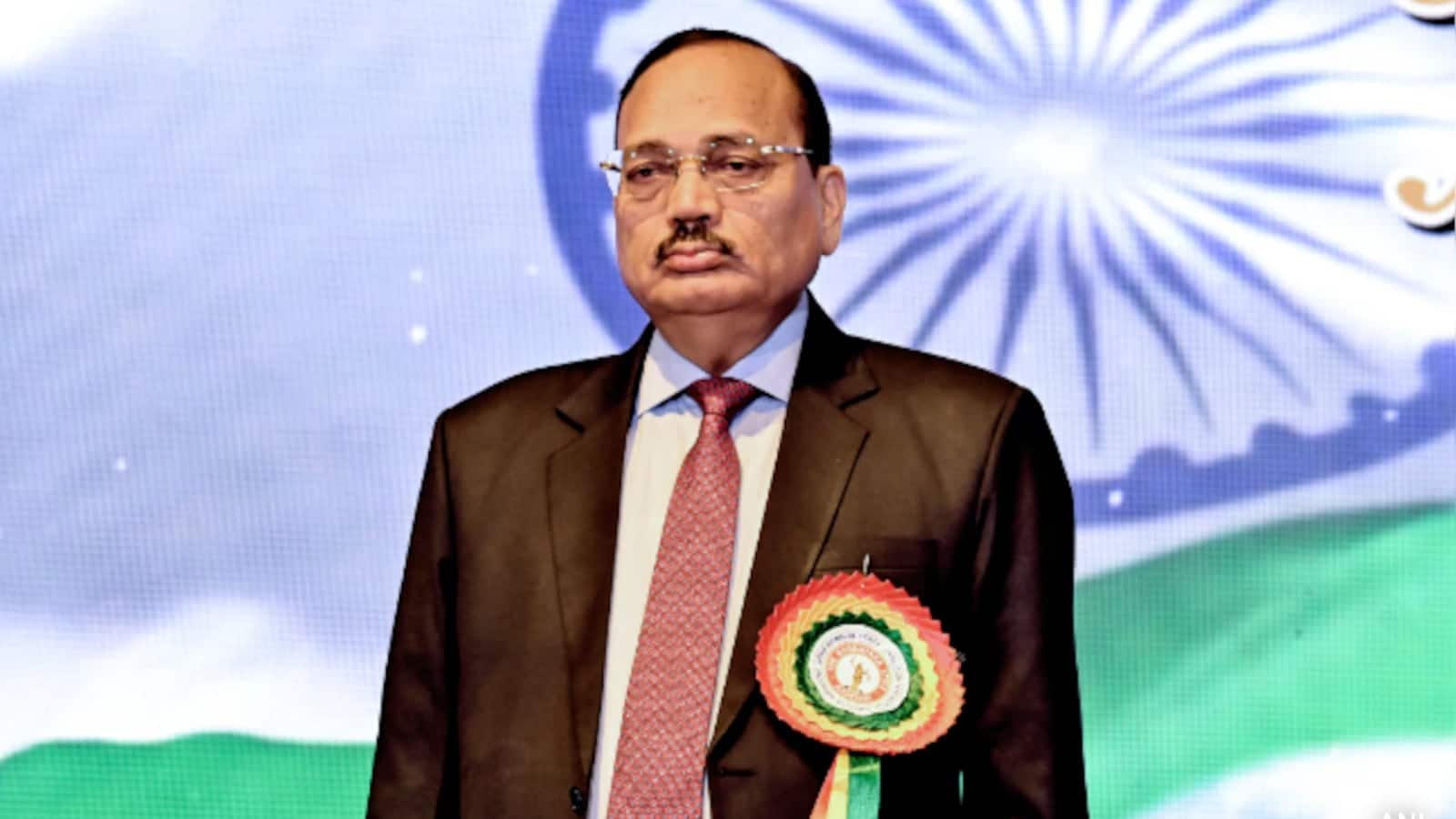
Chief Justice of India Surya Kant on Monday questioned whether a Supreme Court-appointed panel examining the definition of the Aravalli hills and range was seeking to delay its work beyond his tenure.
The Supreme Court rejected the committee’s request for an extension until February 28, 2027, and directed it to submit its final report by November 30, 2026.
“They should have clearly asked for a date after my retirement… appears they are waiting for my retirement. We are not going to allow this,” CJI Kant told Additional Solicitor General Aishwarya Bhati, who appeared for the Centre.
CJI Surya Kant is scheduled to retire on February 9, 2027.
Supreme Court sets November 30 deadline
A bench headed by CJI Surya Kant and comprising Justices Joymalya Bagchi and V Mohana directed the five-member high-powered committee, headed by Indian Council of Forestry Research and Education (ICFRE) Director General Kanchan Devi, to complete its work within the revised deadline.
The bench told the panel to “work day and night” and made it clear that no further extension would be granted.
The court, however, acknowledged the complexity of the exercise and allowed the committee to submit interim reports on specific issues as its examination progresses. This would enable the court to consider individual questions without waiting for the entire exercise to conclude.
Why is the Aravalli definition controversial?
The committee’s request for more time came after its interim assessment indicated that the Aravalli landscape could not be adequately defined using a single terrain-based or elevation criterion.
The panel said it was examining spatial, ecological, geological, hydrological, biodiversity, socio-economic and stakeholder evidence before arriving at its final conclusions.
The issue has its roots in an earlier definition of the Aravalli hills accepted by the Supreme Court in November 2025. Under the earlier approach, a landform with an elevation of at least 100 metres from the local relief would qualify as an Aravalli hill, while two or more such hills within 500 metres of each other would constitute an Aravalli range.
Environmentalists and other stakeholders criticised the definition, arguing that large portions of the ecologically sensitive Aravalli landscape could fall outside regulatory protection and become vulnerable to mining and other activities.
The Supreme Court subsequently took suo motu cognisance of the controversy. On December 29, 2025, it kept its November judgment in abeyance and ordered a fresh examination by a high-powered expert panel.
Panel asked to hear stakeholders
While refusing the extension, the Supreme Court stressed that the committee must consult a wide range of stakeholders before finalising its recommendations.
The court specifically directed the panel to hear tribal communities in Rajasthan and Gujarat, along with the governments of Delhi, Rajasthan and Haryana. Environmentalists, non-profit organisations, mining lease holders, project proponents, villagers, farmers and other local communities whose livelihoods are connected to the Aravalli ecosystem are also to be heard.
The court said the eventual course of action must be based on scientific evidence while balancing environmental protection and sustainable development.
Panel examining wider ecological impact
The committee’s interim assessment describes the Aravallis as a largely connected landscape with interlinked ecological, hydrological, biodiversity and socio-cultural values.
It has proposed assessing the range alongside forests, protected areas, sacred sites, Orans and traditional pastures, wetlands, critical catchments, groundwater recharge zones and ecological corridors.
The panel is also conducting geospatial assessments and comparing its methodology with the Forest Survey of India’s 2010 work and the findings of the earlier Centre-constituted committee.
It has proposed validation by specialised agencies, including the National Remote Sensing Centre and the Indian Space Research Organisation, given the potential ecological and regulatory consequences of determining the number and extent of Aravalli hills.
The Supreme Court has fixed December 2 for further consideration of the matter, by which time the committee is expected to have begun submitting its issue-specific interim findings.