
Kia has launched the Sorento in India with an ex-showroom starting price of Rs 27.99 lakh. The Fortuner is one of its biggest rivals here. The competition is, for sure, going to be intense as the Fortuner is a model that has stood the test of time. That said, the Sorento could turn out to be a better buy for many. This article will tell you why.
The Sorento and Fortuner belong to a segment in which buyers value size and room offered. When we compare the two, the Sorento is longer and wider than the Fortuner. It measures 4,815 mm in length, 1,900 mm in width and has a wheelbase of 2815 mm. The Fortuner, on the other hand, is 4,795 mm long, 1,855 mm wide and has a wheelbase of 2745mm. In height, however, the Fortuner takes the lead. It also has a higher ground clearance- 225mm. The Sorento’s ground clearance is reported to be around 185mm.
The Fortuner would thus have an advantage when tackling bad roads and while going off-road. Wheel sizes also highlight the same. The Fortuner gets 17 and 18-inch units depending on variants whereas the Sorento comes with 19-inch wheels.

However, not all buyers will be keen on taking these SUVs to off-road tracks and terrains. The Sorento is a better buy in such cases, as it offers slightly better room and more comfort inside.
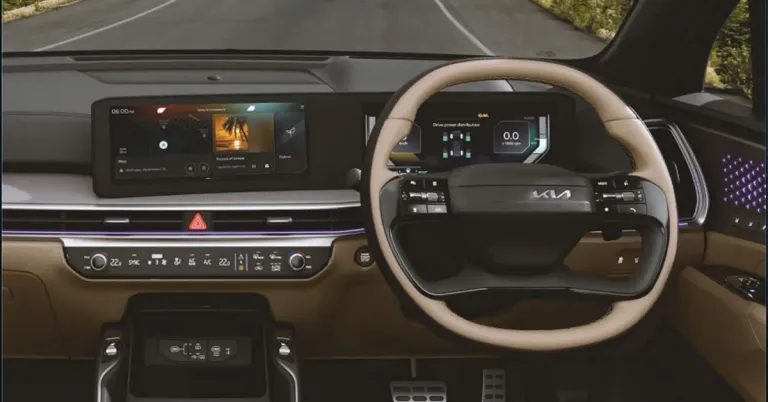
The Sorento’s interior feels more modern, upmarket and better-designed than that of the Fortuner. The Fortuner, on the other hand, has a cabin that looks more rugged and utilitarian. The difference is bigger when it comes to features. The Sorento is much better-equipped than the Fortuner.
The infotainment unit on the Fortuner is an 8-inch touchscreen paired with an 11-speaker JBL audio system. The Sorento, on the other hand, comes with a larger 12.3-inch touchscreen and a 12-speaker BOSE premium audio. The Kia SUV comes with wireless Apple Carplay and Android Auto whereas the Toyota gets wired Carplay and Android Auto. You will need a separate dongle to convert it into a wireless unit. The Kia also comes with a new AI Assistant powered by Live Generative AI. No such feature is available on the Toyota.
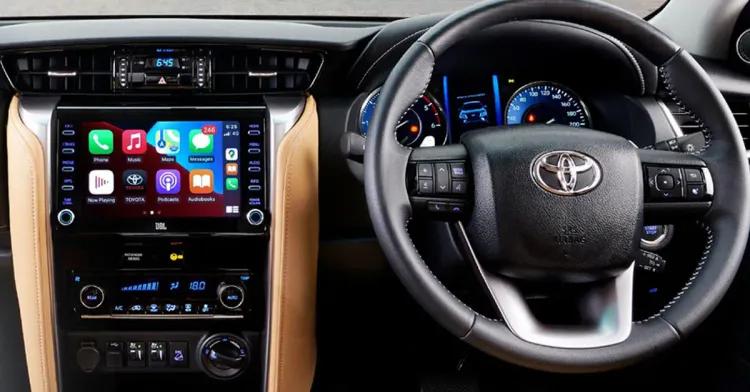
Both SUVs come with features like powered and ventilated front seats, dual-zone climate control, and connected car technology. The Sorento, however, gets a bunch of features that are completely absent on the Fortuner. For example, it gets a large panoramic sunroof, Head Up display, ambient lighting and second-row ventilation. The Fortuner offers a wireless charger as an optional accessory. The Sorento gets it as a standard fitment. The Fortuner gets an auto-dimming IRVM. The Sorento on the other hand, has a digital IRVM. The Toyota gets an analogue instrument cluster with a digital MID. The Sorento has a large 12.3-inch driver’s display.
Similarly, the Fortuner lacks a factory-fitted 360-degree camera and ADAS features. The Sorento gets a high-quality 360-degree camera and level 2 ADAS. The parking brake is a conventional unit on the Toyota while the Kia gets an electronic parking brake. The Sorento even has a built-in dual-channel dashcam. The Sorento is a better buy if you are feature-savvy.
Even on the safety front, the Sorento gets 10 airbags, while the Fortuner has seven. The Kia has parking sensors on front, rear and side, while the Fortuner has these at the front and rear only. The Sorento comes with four drive modes and 3 terrain modes. The Fortuner has 3 driver and five terrain modes. Auto Park assist is only available on the Sorento.

The Sorento comes with all wheel drive (AWD) technology, which will give drivers confidence on terrains and rough roads. It may not be as capable as the rugged 4×4 hardware on the Fortuner, but can handle rough roads and medium terrains effortlessly.
The Fortuner is based on Toyota’s time-proven IMV ladder-frame platform. The Sorento on the other hand, has a unibody monocoque construction. This brings about a major difference in the way these vehicles handle and in the ride quality on offer. We know how the ride quality on the Fortuner feels, and how it handles under spirited driving. The Sorento is likely to behave much better, due to its sorted dynamics and unibody construction.
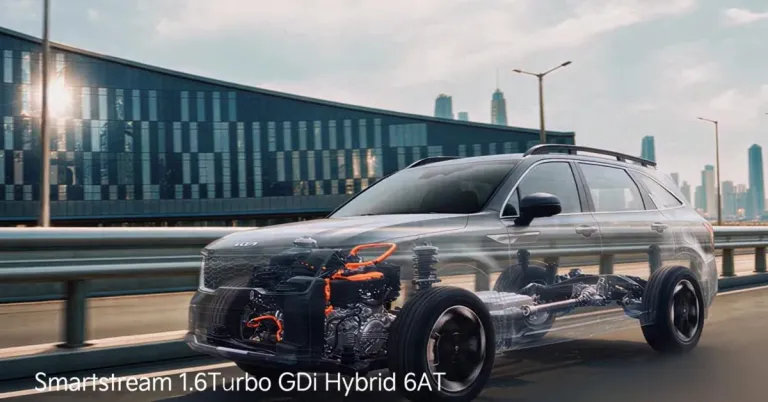
Of the two, only the Sorento offers a strong hybrid powertrain. The hybrid setup is based on a 1.6-litre turbocharged petrol engine. The Fortuner is offered with a 2.7-litre naturally aspirated petrol and 2.8-litre turbocharged diesel engine. Even the Sorento is available with a 2.2-litre diesel engine. On the powertrain front, Kia’s advantage clearly is the 1.6-litre strong hybrid.
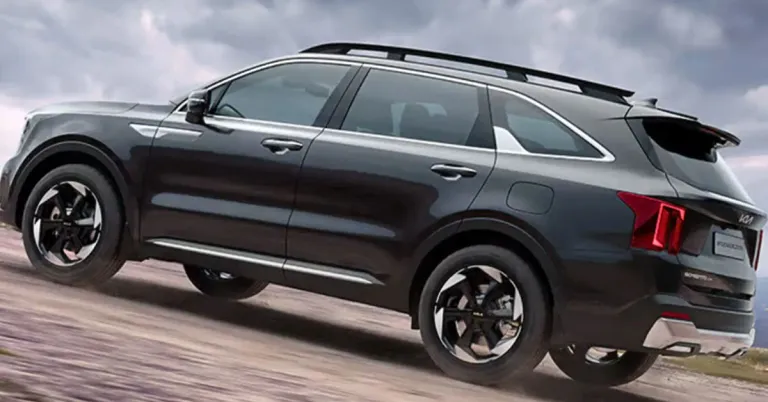
All in all, if you are looking for a large, spacious, feature-rich SUV that keeps you pampered inside, and that drives and handles well, and will not disappoint on mild and medium trails, the Sorento is a better option than the Fortuner. The top-spec is more affordable than the range-topping Fortuner. If you are specific about owning a rugged, proven, less-comfortable, and a more off-road-capable SUV go for the Fortuner.