Summary
- Saeed said the idea of preserving the family at any cost often places an unfair responsibility on women.
- Saeed also rejected the idea that Beena should simply return to Tabish.
- For Saeed, reconciliation between Beena and Tabish could only be possible if both were willing to completely rebuild their relationship rather than return to the same patterns of behaviour.
AI Generated Summary
Pakistani actor Sania Saeed has spoken strongly against the societal expectation that women must sacrifice their dignity, self-respect and wellbeing to keep a family together.
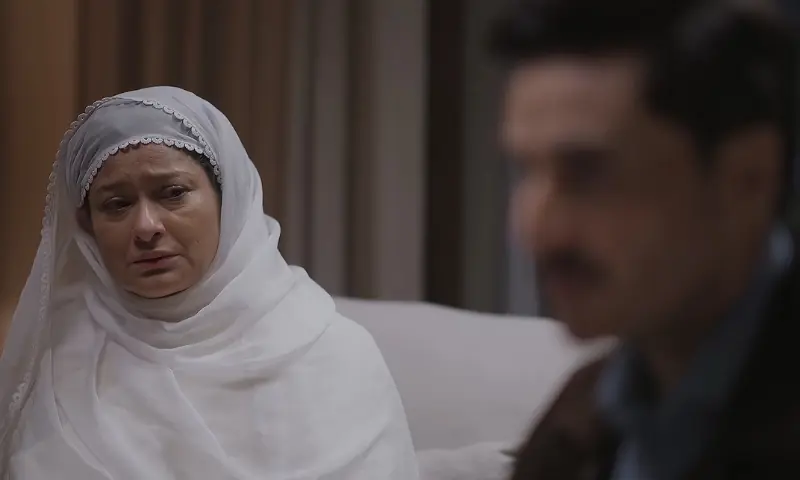
Speaking on the podcast Heart to Haute with Hassan Choudary, Saeed discussed her role in HUM TV’s drama Aap Ki Izzat, where she portrays the mother of Tabish, played by Ahsan Khan. Her character enables her son’s neglect and mistreatment of his wife, Beena, played by Urwa Hocane, rather than standing up for her daughter-in-law.
Saeed said the idea of preserving the family at any cost often places an unfair responsibility on women.
She argued that women are frequently expected to protect the institution of marriage through endless compromise, even when doing so comes at the expense of their own dignity and emotional wellbeing.
According to Saeed, her character’s cruelty and manipulation stem from her own helplessness within a patriarchal household. By controlling others, the character finds a limited sense of power in a system where she herself has little real authority.
However, Saeed stressed that Beena is even more vulnerable. Years of emotional abuse and neglect leave her feeling trapped, eventually pushing her to leave her home with another man.
The actor said Beena’s lack of education, financial independence and personal skills contributed to her inability to leave the abusive relationship earlier.
“What weapons have we given her to fight for herself?” Saeed questioned, highlighting the importance of giving girls education, practical skills and confidence from an early age.
She urged parents to encourage their daughters to express themselves and, more importantly, to listen to them rather than teaching them that enduring hardship is necessary to preserve a marriage.
Saeed also rejected the idea that Beena should simply return to Tabish. Asked directly whether she believed the couple should reunite, she responded, “No.”
She linked Beena’s situation to wider social attitudes toward gender-based violence, arguing that women’s suffering is often ignored until it reaches an extreme and potentially fatal level.
The actor also questioned whether returning home would actually restore Beena’s sense of identity after everything she had endured.
For Saeed, reconciliation between Beena and Tabish could only be possible if both were willing to completely rebuild their relationship rather than return to the same patterns of behaviour.
She suggested that Tabish would have to make an extraordinary effort to regain Beena’s trust and prove that he was willing to invest the time and emotional work necessary to create a healthier relationship.
Saeed also revealed that she initially hesitated to accept the role because she felt the drama would be emotionally demanding. She eventually agreed after director Saife Hasan persuaded her that he was the right person to handle such a sensitive narrative.
The actor said portraying emotionally complex characters can be exhausting because performers often experience intense internal conflict while remaining in character.
We welcome your contributions! Submit your blogs, opinion pieces, press releases, news story pitches, and news features to opinion@minutemirror.com.pk and minutemirrormail@gmail.com