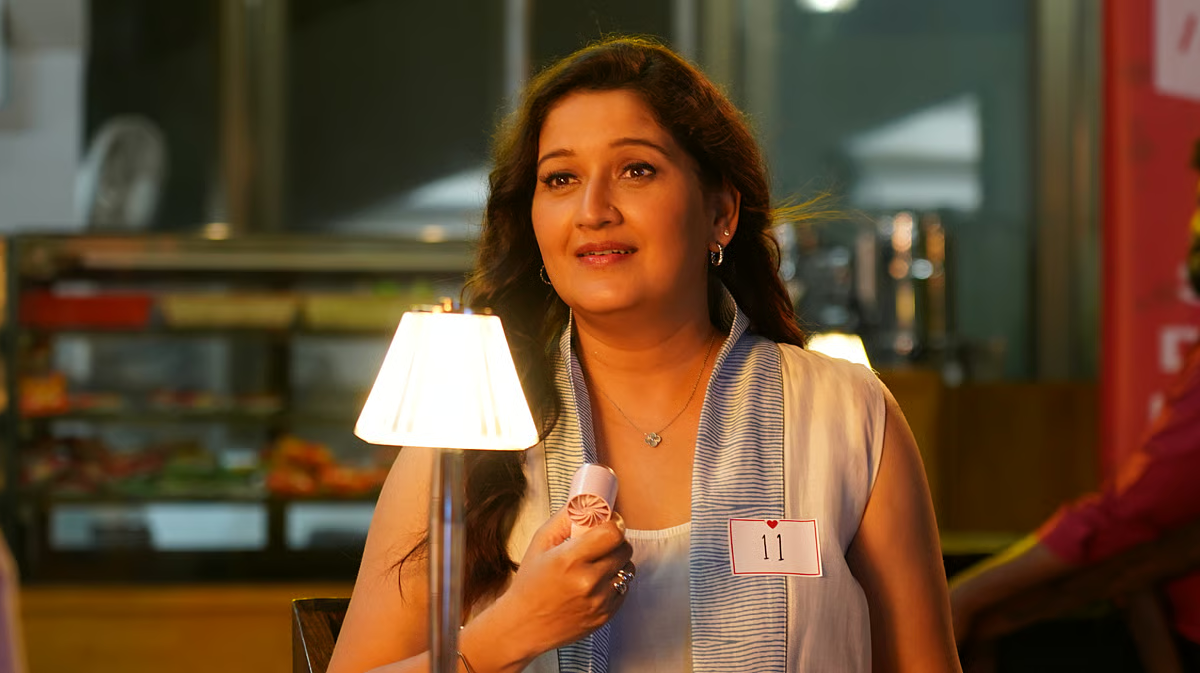
Imagine growing up loving ballet, a dance form known for its flamboyant sweeping movements and command of space. And then years later, your acting career meets the inevitable evolution of technology, and suddenly you are within the constricting vertical frame of a phone. Laila headlines Sun NXT’s recently released micro drama, Move On Rajeshwari. However, the actor, who shared screen space with the biggest stars of cinema like Vijayakant, Mohanlal, Suriya, Ajith Kumar, and Prabhu Deva, says her decision to do the micro drama came from her newfound freedom as a performer. “Back then, I had the pressure to chase after bigger projects. Now, I can focus on finding interesting characters.Now, I can do more roles. It is quite liberating. That’s why I experimented and did Move on Rajeshwari.
Laila is quite observant of how the audience preferences have evolved. She understands that you cannot fight the waves and the only way forward is to surf with it. “Everyone is constantly on their phones and everyone is looking for quick entertainment. That is why micro dramas are catching on. Each episode is just 2 minutes. They are already very popular in countries like China and South Korea. We just started,” says Laila. The actor confesses that she had not heard about micro dramas until she was approached for Move on Rajeshwari. On whether she feels restricted while trying to tune her performance for a constricting frame, she says, “I wouldn’t say ‘restricting’, it was just different and it was fun. The camera moves around but you cannot move around much and you have to be conscious of the shorter frame. When you are performing with a co-star, you have to make sure you cannot stand apart. But you still have to perform like you normally would.” Even as micro dramas are tuned to a shorter attention span, it doesn’t mean that they adopt the frenetic editing style you would normally associate with social media. Laila explains, “A lot of the episodes were single shot sequences. The geography doesn’t change as much but there are not a lot of cuts. Most of the scenes are conversational. The episode ends when a conversation ends, and of course there is a cliffhanger at the end of every episode. That aspect challenges you as a performer.”