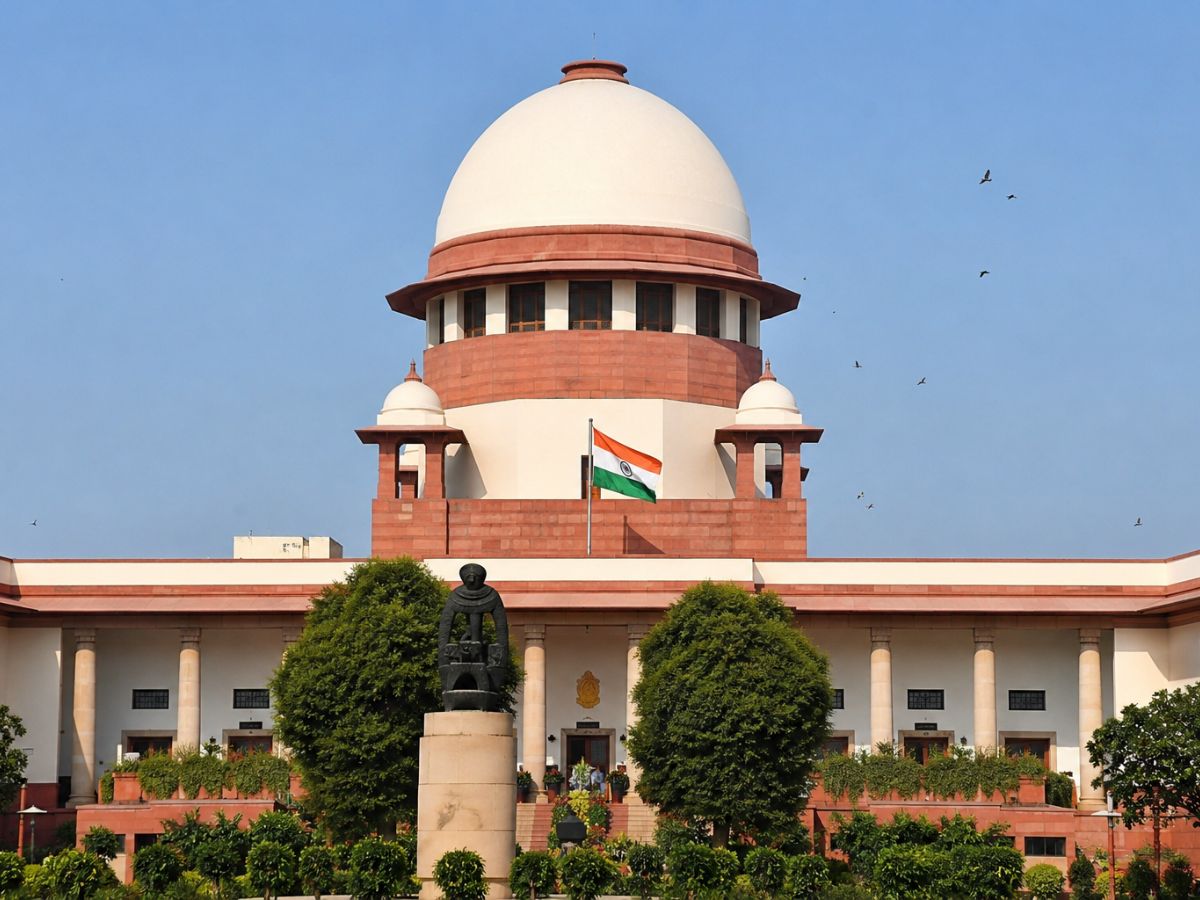
The Supreme Court on Wednesday took up a crucial question in the marital rape debate: Can a husband be prosecuted for rape despite the existing marital rape exception? A bench headed by Chief Justice of India Surya Kant, along with Justices Joymalya Bagchi and V Mohana, said it would first hear a Karnataka case involving a man accused of treating his wife as a “sex slave”.
The court will examine whether the existing rape law can be interpreted to allow prosecution in such cases. The issue will be considered before the larger constitutional challenge to the marital rape exception is taken up. The matter has been listed for final hearing after three weeks, on Wednesday and Thursday, according to a report by Bar & Bench.
Karnataka Case Raises Key Legal Question
Senior advocate Indira Jaising, appearing for the wife, argued that the Karnataka High Court had correctly allowed prosecution under the rape law. Jaising said the facts of the case were serious, with the woman allegedly being treated virtually as a “sex slave”.
She told the Supreme Court that she wanted to defend the High Court ruling. However, her argument was not necessarily that the marital rape exception must immediately be struck down. Instead, she argued that the existing law could be interpreted in a way that allows prosecution for such conduct.
This led to an important question from the bench. The court sought to examine whether a provision containing a clear exception can still be interpreted narrowly to allow prosecution in cases involving extreme sexual violence.
Two Major Questions Before The Court
The Supreme Court is now dealing with two connected issues. First, can the marital rape exception be interpreted narrowly so that certain acts committed by a husband can still attract criminal prosecution?
Second, does the marital rape exception itself violate the Constitution and therefore need to be struck down? The bench said both questions would be considered. However, it will first focus on the Karnataka appeal and the interpretation of the existing law.
Senior advocate Karuna Nundy, representing another group of petitioners, argued that the two questions cannot always be separated. She also referred to major changes in India’s rape laws following the 2012 Nirbhaya case.
‘Marriage Does Not Extinguish Individual Autonomy’
Justice Joymalya Bagchi acknowledged concerns over the safety and security of married women. He made it clear that “there was no question of marriage resulting in the extinction of an individual’s autonomy.”
At the same time, the judge said the court was dealing with penal law. It must therefore first determine whether the exception is unreasonable or manifestly arbitrary. Justice Bagchi also noted that the marital rape exception does not necessarily protect a husband from every criminal consequence of sexual violence.
For instance, where sexual violence results in grievous injury or death, other criminal provisions may apply. The bench also referred to the historic Phulmoni case, involving a young girl who suffered severe sexual assault and died from her injuries.
What Changed After The Nirbhaya Case?
Lawyers also highlighted changes made to India’s sexual offence laws after the Nirbhaya case. The legal definition of rape was expanded beyond penile penetration. At the same time, the wording of the marital exception was changed from “sexual intercourse” to “sexual intercourse or sexual acts”.
Nundy argued that the exception could still affect legal remedies in cases involving other forms of sexual violence within marriage. She also pointed to the Bharatiya Nyaya Sanhita, which replaced the IPC and removed Section 377.
Centre’s Stand On Marital Rape
Solicitor General Tushar Mehta said the Union government would assist the court on the legal questions. The Centre has already filed its response in the connected matters. The bench has directed that copies of the government’s response be supplied to the lawyers within two days. Parties have also been asked to compile their pleadings and supporting documents ahead of the final hearing.
Justice Bagchi further cautioned against creating “surprises” in penal law. He stated the court should carefully consider issues like intention, culpability and constitutional rights while examining criminal provisions. The Supreme Court’s eventual ruling could have major implications for how sexual violence in marriage is treated under Indian criminal law.
Sudeep Singh Rawat is a Copy Editor at NewsX Digital with over five years of experience in digital journalism. He covers national and international news, with a focus on politics, crime, technology, public affairs, and trending topics. Before joining NewsX Digital, he worked with Business Standard, The Sunday Guardian, and other digital media organisations. His reporting focuses on breaking news, enterprise stories, and explainers that inform readers through accurate, balanced, and context-driven journalism.
The post Can A Husband Be Charged With Rape? Supreme Court Takes Up ‘Sex Slave’ Case, Bigger Marital Rape Battle Next appeared first on NewsX.