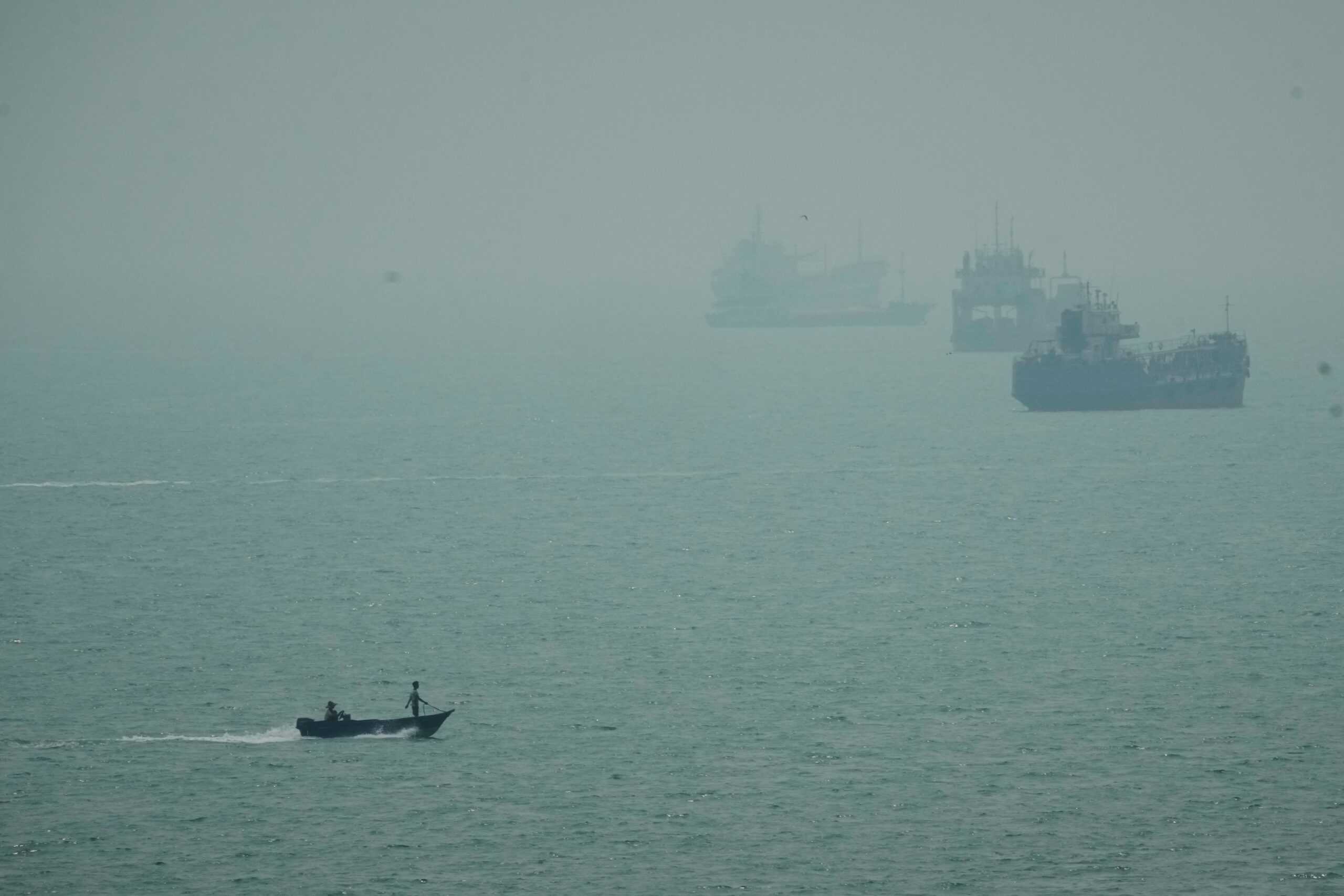
US Military Says It Destroyed 5 Iranian Oil Tankers After Missile Attacks/ TezzBuzz/ WASHINGTON/ J. Mansour/ The U.S. military said it destroyed five Iranian oil tankers after Iran’s Revolutionary Guard twice targeted an American warship with ballistic missiles. Iran subsequently launched missiles toward U.S. targets in Jordan, where the military reported intercepting 18 missiles without casualties. The renewed strikes are intensifying concerns about regional escalation, global oil supplies and navigation through the Strait of Hormuz.
Quick Look
- U.S. Central Command said five Iranian tankers were destroyed Tuesday.
- The vessels were identified as the Kivik, Charminar, Horizon 1, Riesco and Derya.
- CENTCOM said crews received instructions to abandon the ships before they were struck.
- The action followed two reported Iranian missile attacks on a U.S. Navy warship.
- Iran responded by launching missiles toward American targets in Jordan.
- Jordan said it intercepted 18 ballistic missiles and reported no casualties.
- Brent crude briefly reached $99.46 per barrel Tuesday.
- The Trump administration also expanded sanctions against Iran’s aviation sector.
- Iran warned that vessels near Kuwait and Bahrain could face retaliatory attacks.
Deep Look
US says five Iranian tankers were destroyed
WASHINGTON — The U.S. military said it destroyed five Iranian oil tankers Tuesday after Iran’s Revolutionary Guard launched two ballistic-missile attacks against an American Navy warship during the previous two days.
U.S. Central Command said the American vessel avoided the missiles and continued operating in regional waters.
“The U.S. warship successfully evaded the attempted Iranian attacks and continued to patrol regional waters. No American personnel were harmed,” CENTCOM said.
The military identified four of the tankers struck in the Gulf of Oman as the Kivik, Charminar, Horizon 1 and Riesco. It said a fifth vessel, the Derya, was destroyed near Kharg Island in the Strait of Hormuz.
According to CENTCOM, crews aboard all five tankers were warned to abandon their vessels before the attacks. Video released by the command showed the latest series of strikes.
Iran reports strikes near Jask and Kharg Island
Iranian state television confirmed that American forces had attacked Iranian oil tankers, reporting strikes near the southern port of Jask and Kharg Island in the Persian Gulf.
The broadcaster said the vessels’ crews were evacuated.
An Iranian state television reporter said one tanker was struck near the coast of Yekbeni. Subsequent reports described an attack on a second vessel near Jask and another in the anchorage area around Kharg Island.
Iran launches missiles toward Jordan
Following the American strikes, Iranian state-run media said Tehran launched missiles toward U.S. targets in Jordan.
Jordan’s military reported that its air-defense systems intercepted 18 ballistic missiles heading toward the kingdom. Two additional missiles landed in uninhabited areas, it said.
Jordan reported no casualties.
The country is a close U.S. ally and hosts American military personnel, making its bases recurring targets during the conflict. U.S. Central Command said it had no additional information to provide about the reported attacks in Jordan.
Fighting moves toward renewed hostilities
The latest exchange marked another escalation in a war that has continued for more than six months.
The United States and Iran had moved through periods of intense fighting and relative restraint, but the tanker strikes and missile attacks have again pushed the two countries toward more open hostilities.
U.S. forces previously destroyed three Iranian oil tankers on Saturday. The military said that operation followed an attempt by Iran’s Revolutionary Guard to attack an American aircraft carrier and destroyer with ballistic missiles.
After those strikes, the United States warned that it would, “if necessary, destroy Iran’s limited and exposed oil fleet.”
Rubio says Iranian attacks will receive a response
Secretary of State Marco Rubio said the United States would not allow attempts to strike American naval vessels to go unanswered.
“Iran continues to try to hit U.S. naval ships. And for every time they do that or try to do that, they’re going to lose tankers. And I think you’ll see that again today,” Rubio told reporters during a visit to Colombia.
The tanker attacks form part of the Trump administration’s combined military and economic campaign against Tehran.
On the same day as the strikes, the administration imposed sanctions on additional parts of Iran’s aviation industry. The measures targeted more than two dozen commercial and private airlines as well as foreign companies accused by Washington of supplying cargo or logistical services. Treasury records also show continuing changes to the U.S. sanctions regime involving Iranian transactions.
Strait of Hormuz remains at the center of conflict
Much of the confrontation is focused on control of the Strait of Hormuz, a strategically important passage connecting the Persian Gulf with the Gulf of Oman.
Approximately one-fifth of the world’s oil traveled through the waterway before the war began. Any prolonged disruption could reduce global energy supplies and increase transportation and fuel costs.
American forces have been helping a limited number of commercial vessels travel through a route on the Omani side of the strait. Tehran, meanwhile, wants ships to use a route selected by Iranian authorities.
Iran has also said it intends to announce a new “exclusion zone” near the strait for ships planning to transit the area.
Oil prices rise amid supply concerns
The escalating attacks have added to volatility in global energy markets. Brent crude, the international oil benchmark, briefly rose to $99.46 per barrel Tuesday.
Higher oil prices have created economic and political difficulties for President Donald Trump and the Republican Party ahead of the November midterm elections.
A U.S. blockade of Iranian ports has also restricted Tehran’s ability to export oil, putting additional pressure on the Iranian economy.
Iran issues warning near Kuwait and Bahrain
Before Tuesday’s tanker strikes, Iran’s Revolutionary Guard Navy warned crews aboard oil tankers near ports in Kuwait and Bahrain to leave their vessels immediately.
The Guard said those ships could be attacked in retaliation for American strikes against Iranian tankers. It accused Kuwait and Bahrain of hosting U.S. forces and helping facilitate American military operations.
Both Gulf countries are important U.S. security partners and host American military facilities.
Analyst warns of uncontrolled escalation
Danny Citrinowicz, an Iran specialist at Israel’s Institute for National Security Studies, warned that repeated military retaliation could produce further attacks and damage the global economy.
“There is no kinetic solution to the Strait of Hormuz problem,” he wrote on social media. “Every attempt to impose one only brings Washington and Tehran closer to an escalation that may become increasingly difficult to control.”
More on US News