Trump Predicts Iran War Will End After Midterms and Oil Prices Will Fall Sharply/ TezzBuzz/ WASHINGTON/ J. Mansour/ President Donald Trump predicted that the Iran war would end shortly after the November midterm elections and that oil prices would then fall sharply. Crude prices retreated Friday but recorded substantial weekly gains as threats to major Middle Eastern shipping and energy routes intensified. Diplomatic discussions are planned in Oman, while attacks on a Saudi pipeline and Houthi territorial gains continue to threaten global oil supplies.
Quick Look
- Trump predicted the Iran war would end shortly after the Nov. 3 midterms.
- He offered no specific basis or timetable for his forecast.
- Brent crude settled Friday at $104.61 a barrel.
- West Texas Intermediate finished at $100.05 a barrel.
- Iran and Gulf countries are expected to discuss Hormuz shipping in Oman.
- Iranian President Masoud Pezeshkian said Tehran would not surrender.
- Trump said Iran was probably responsible for attacks on a Saudi pipeline.
- Saudi Arabia temporarily closed its East-West pipeline.
- Iran-backed Houthis captured Perim Island and the port city of Mokha.
- Trump said the Houthis contacted his administration to avoid direct U.S. intervention.
Deep Look
Trump Predicts War Will End After Midterms
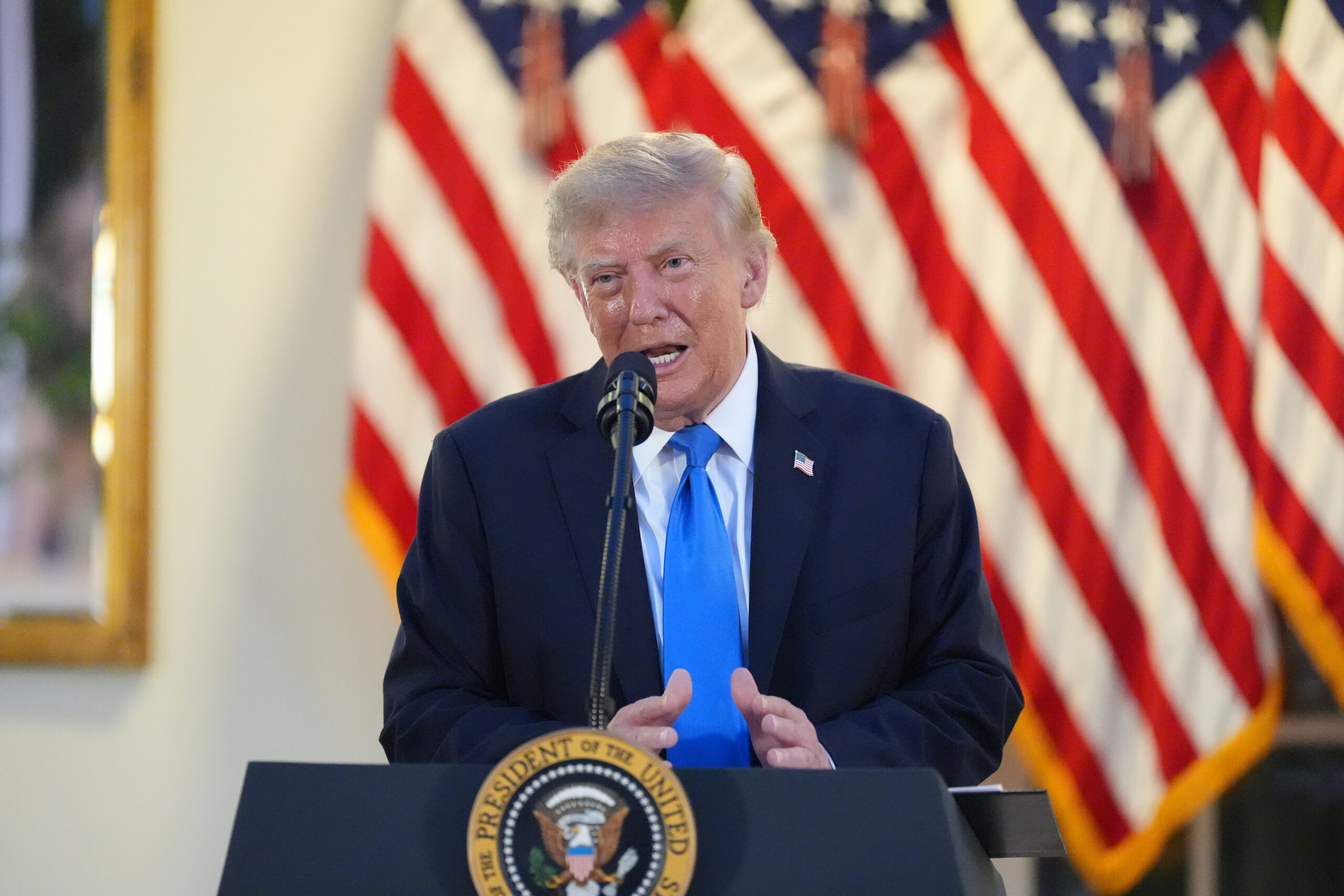
DUBLIN — President Donald Trump said Saturday that he expects the war with Iran to end shortly after the United States holds its midterm elections in November, predicting that oil prices will fall sharply once the conflict concludes.
Trump made the remarks during his visit to Ireland when reporters asked when he believed the war would end.
“I think very soon, I think it’ll be right after the mid-terms, actually,” Trump said. “I would say shortly, and oil will come tumbling down when that happens,”
Trump did not explain why he believed the conflict would end after the elections or identify a specific diplomatic or military development that would produce an agreement. His statement was a prediction rather than an announced timetable agreed upon by the governments involved.
The president has previously acknowledged that oil prices may remain elevated through the Nov. 3 elections, creating an economic and political challenge for Republicans trying to retain control of Congress.
Oil Prices Retreat but Remain Above $100
Oil prices pulled back Friday after reaching their highest levels in months, but both leading crude benchmarks remained above $100 a barrel.
Brent crude futures, the international benchmark, fell 2.8% to settle at $104.61 per barrel. U.S. West Texas Intermediate declined 2.4% and closed at $100.05.
Brent had climbed to about $108 during Thursday’s trading, while WTI surpassed $104. Despite Friday’s decline, oil registered a sharp weekly increase as investors continued assessing threats to production and shipping across the Middle East.
WTI’s Friday decline ended an eight-session winning streak, but the U.S. benchmark still gained about 9.4% for the week.
Higher oil prices have increased fuel and transportation expenses while adding to broader U.S. inflation pressures. Any lasting reduction would depend on the reopening and stabilization of shipping routes, restored production and a wider settlement of regional hostilities.
Oman Talks Raise Hopes for Limited Shipping Agreement
Friday’s decline in crude prices followed reports that Iran and Gulf countries plan to meet in Oman to discuss commercial shipping through the Strait of Hormuz.
Foreign ministers are expected to meet Monday as Oman and Iran seek regional support for a temporary arrangement. The proposed system could establish a joint Iran-Oman route providing safer passage for commercial vessels through Iranian and Omani waters.
Iranian Foreign Ministry spokesperson Esmaeil Baghaei said Tehran hoped the meeting would “enhance understanding among the countries of the region and contribute to strengthening shared regional security.”
Details of any agreement had not been finalized. The meeting represents a diplomatic opening, but it would not necessarily resolve the wider conflict between Iran and the United States.
Pezeshkian Says Iran Will Not Surrender
Iranian President Masoud Pezeshkian adopted a defiant position during a visit to New Delhi for the BRICS summit.
“Iran has successfully stood against Israel and the U.S.,” Pezeshkian said late Friday while addressing Indian religious leaders. “Since we are seeking truth and justice, we will not yield in front of bullying arrogance.”
His comments came after Trump claimed that Iran could have attacked Israel, other Middle Eastern countries, European cities and the United States if Washington had not used military force to prevent Tehran from obtaining a nuclear weapon.
Iran insists that negotiations cannot resume unless Washington accepts its conditionsincluding an end to the U.S. blockade and military operations, the removal of sanctions and the release of frozen Iranian assets.
Trump Blames Iran for Saudi Pipeline Attack
Trump also said Saturday that Iran was probably responsible for drone attacks that led Saudi Arabia to close its East-West crude oil pipeline.
“Well, I think they are. Probably, they are,” Trump said in response to a reporter’s question about Iran’s possible responsibility.
The president did not provide evidence directly connecting Tehran to the attack. Saudi Arabia said the drones were launched from Iraqi territory, where several Iranian-backed armed groups operate.
The Saudi government reported that the drones struck pipeline infrastructure in the Riyadh and Medina regions, causing fires, injuries and property damage. Emergency teams were deployed to secure the facilities and assess their safety.
Iraq has opened an investigation, dismissed regional security officials and temporarily closed border crossings with Iran. An Iraqi militia accused of involvement denied responsibility.
East-West Pipeline Provides Critical Hormuz Bypass
Saudi Arabia described the pipeline shutdown as a precautionary measure.
The East-West pipeline has a capacity of approximately 7 million barrels per day and carries crude from production centers in eastern Saudi Arabia to export terminals on the Red Sea.
The route has become increasingly important during the Iran war because it allows Saudi Arabia to bypass the Strait of Hormuz. The pipeline had recently been carrying between 4 million and 5 million barrels per day, representing as much as 5% of global oil supply.
Disruption of the pipeline further limits Saudi Arabia’s available export options at a time when both the Persian Gulf and Red Sea corridors face military threats.
Trump said he spoke with Saudi Crown Prince Mohammed bin Salman following the attack.
Houthis Say They Want to Avoid US Intervention
Trump also said Yemen’s Iran-backed Houthi movement had communicated with his administration and expressed a desire to avoid direct conflict with American forces.
“The Houthis called us and they don’t want to fight with us,” Trump said. “They let us know, they don’t want to fight with us. They don’t want me to go after them.”
Trump did not explain who contacted the administration, when the communication occurred or whether it involved direct or indirect talks.
The Houthis have said most international maritime traffic can continue, while maintaining restrictions against vessels associated with Saudi Arabia and other countries they consider adversaries.
Houthi Advance Threatens Red Sea Shipping
The Houthis captured Perim Island, also known as Mayun, after seizing the Red Sea port city of Mokha.
Perim is a small volcanic island inside the Bab el-Mandeb Strait, which connects the Red Sea with the Gulf of Aden. Its location provides strategic access to one of the world’s most important shipping corridors.
The Houthi advance represents one of the group’s largest territorial gains in years and places additional pressure on Saudi Arabia and Yemen’s internationally recognized government.
It also creates the possibility that Iran and an aligned armed movement could threaten two vital energy routes: the Strait of Hormuz east of the Arabian Peninsula and Bab el-Mandeb to the west.
Saudi Crown Prince Mohammed bin Salman reportedly asked Trump for direct U.S. military action against the Houthis. The administration declined but agreed to provide Saudi Arabia with intelligence and targeting assistance.
Continued disruption at the pipeline and both maritime chokepoints could keep crude prices elevated even if limited diplomatic discussions proceed in Oman.
More on US News