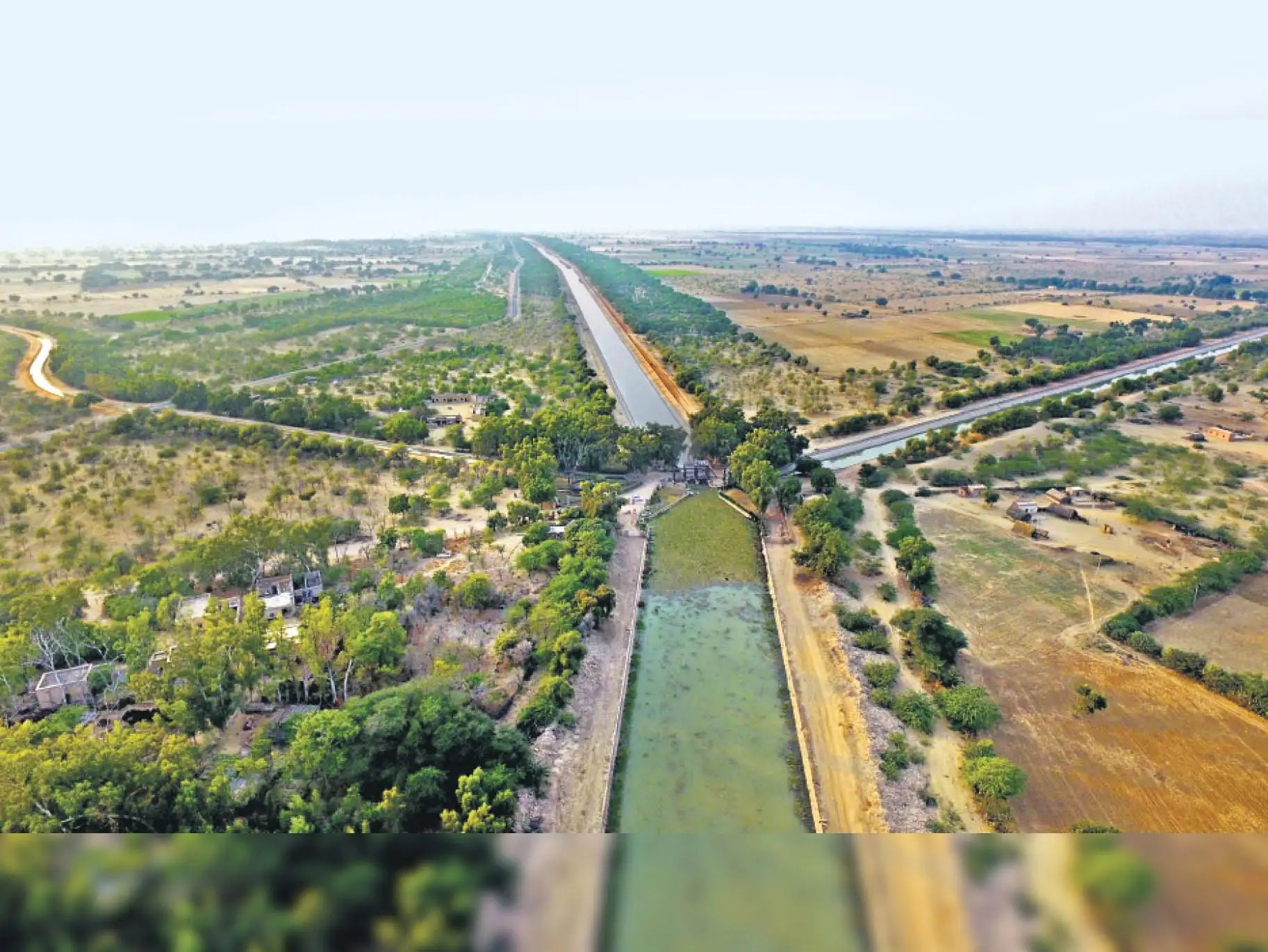
Providing water to the desert areas of Rajasthan was once considered an impossible dream. But with the help of visionary thinking, hard work and engineering, this dream was converted into reality. This thinking started with Ganga Canal, which later took the form of Indira Gandhi Canal, one of the biggest canal projects of the country.
dream of providing water to the desert
The western region of Rajasthan continued to suffer from severe water shortage for a long time. Here both farming and life depended on rain. Maharaja Ganga Singh, the ruler of the princely state of Bikaner, understood this problem and planned to provide water to the region. He dreamed of bringing the water of the Sutlej River to Rajasthan. There was a lack of modern technology and machines at that time, but with the strength of strong will and engineering skills, this huge project was taken forward.
How was Ganganahar built?
The construction of Ganga Canal started in the beginning of the 20th century. A plan was made to bring water from the Harike region of Punjab to the dry areas of Rajasthan. At that time there were neither machines like today nor modern survey techniques. The long canal was constructed with the help of labour, local resources and traditional engineering methods. This project was counted among the major engineering achievements of that era.
Ganganahar changed the picture of Sri Ganganagar
The arrival of Ganga Canal brought about a big change in the northern part of Rajasthan. Where once there was desert and drought, fields began to flourish. Agriculture developed rapidly in Sriganganagar and surrounding areas. For this reason this area also came to be called the “granary” of Rajasthan.
From Ganganahar to Indira Gandhi Canal
The success of Ganga Canal opened the way for large scale water projects in Rajasthan. Later, taking this thinking forward, Rajasthan Canal Project was started, which was named Indira Gandhi Canal Project in the memory of former Prime Minister Indira Gandhi in the year 1984. This project was developed with the aim of providing water to a large part of western Rajasthan.
Historic construction without modern technology
In today's time, state-of-the-art machines and digital technology are used to build big dams and canals. But despite the limited resources at the time of construction of Ganga Canal, this work was completed with the hard work of thousands of people. This project is considered an example of human ability, planning and determination of that era.
Lifeline for Rajasthan
Indira Gandhi Canal enhanced drinking water, irrigation and development prospects in many districts of western Rajasthan. This project, which brought greenery to large parts of the desert, impacted the lives of millions of people.
Share this story