At 6 a.m., the 24-hour Pollutant Standards Index (PSI) in the central region stood at 154, the highest among the five. The eastern and western regions both recorded 128, while they were 111 and 104 in the south and north, The Straits Times reported.
By 9 a.m., the PSI readings had eased slightly but remained in the unhealthy range.
In Singapore, 0 to 50 is considered good, 51 to 100 is moderate, and 101 to 200 is unhealthy. And then there are “very unhealthy” and “hazardous” classifications.
The city state has long been regarded as having one of the cleanest air in Asia. According to IQAir’s 2025 data, it ranked 4th in the region, behind only the Maldives, Japan, and Cyprus, with an average PM2.5 concentration of 11.9 µg/cu.m.
But that reputation took a hit on Tuesday morning, as haze from wildfires in Indonesia blanketed the country.
|
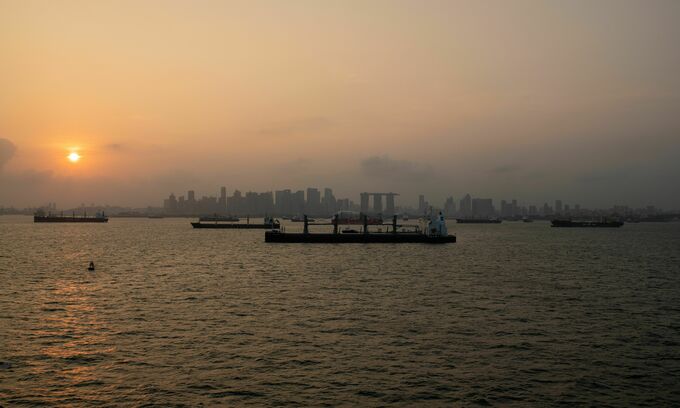
Singapore’s skyline seen through a hazy sky. Photo by Pexels |
The National Environment Agency (NEA) said on Monday in its daily haze advisory that moderate to dense smoke plumes from fires in Kalimantan, Indonesia, had drifted towards Singapore as prevailing winds shifted, according to Channel NewsAsia.
Smoke haze was also observed drifting from southern Sumatra.
“Dry conditions are forecast over Singapore and the surrounding region in the coming days,” the NEA said, warning that prevailing winds were expected to continue blowing from the southeast, putting Singapore at risk of further haze.”
The 24-hour PSI first entered the unhealthy range on Sept. 4, prompting the NEA to begin issuing daily advisories.
By 9 a.m. Tuesday, PM2.5 readings across the island had returned to safe levels.
The NEA advised the public to reduce outdoor activities when the 24-hour PSI is at unhealthy levels.