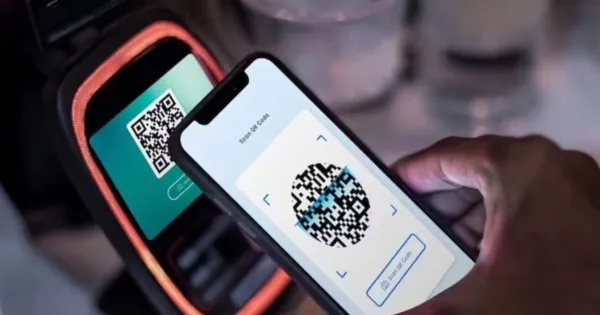
Delhi. If you also use UPI payment. So this news is for you. Let us inform you that the government has directed banks and payment system providers not to levy any charges on UPI transactions up to Rs 2,000 or payments made through RuPay debit cards. However, the government did not clarify whether the fee would be applicable on transactions above Rs 2,000 and whether it would have to be paid by merchants or not. As of now there are no charges on UPI transactions of any amount.
What charge will be deducted on transfer of more than Rs 2,000?
According to the gazette notification dated Monday, September 14, no bank or system provider will impose any fee, directly or indirectly, on any person making or receiving payment through RuPay debit card or Unified Payments Interface (UPI) transaction up to Rs 2,000. This notification has been issued after amendment in Section 10A of the Payment and Settlement System Act, 2007. This amendment provides an enabling framework for charging Merchant Discount Rate (MDR) from merchants on payments made through UPI and other notified electronic payment modes. The amendment bill was passed during the monsoon session of Parliament ending on August 13, 2026.
What will happen on UPI payment of large amount?
The biggest question at the moment is whether MDR charges will be applicable on UPI transactions above Rs 2,000 or not. The government has not yet clarified any final decision on this. The final picture regarding the rules on overpayment is yet to be revealed. Let us tell you that nowadays UPI is used for grocery shops, online shopping, bill payment and many other services. In such a situation, the decision on fees on large UPI transactions will be important for both merchants and customers.
The government has clarified the provision of not levying charges on UPI and RuPay debit card payments up to Rs 2,000, while leaving open the possibility of imposing MDR on amounts higher than this. The final rates and rules have not been decided yet.
What is MDR?
MDR is the fee that a bank or payment service provider charges from the merchant i.e. shopkeeper/business for accepting digital payments. This does not necessarily mean that the customer will have to pay this fee directly from his own pocket. Among the possible proposals discussed so far, there was a possibility of imposing MDR of 0.3% to 0.5% on UPI payments of more than Rs 2,000 by big merchants. But this is not the final rate.
MDR on large merchant transactions
After the bill was passed, the government had said that the National Payments Corporation of India (NPCI)-led UPI and Services Steering Committee will decide on the MDR rates. Explaining the reasons for imposing the fee, the government had said in a statement that with the rapid increase in the number of transactions, the system requires continuous large investments and upgrades in cyber security, fraud prevention and infrastructure. The statement said the tariffs are necessary to expand the market and make the system self-sustaining. It is important to increase competition by encouraging more companies to expand their business and this requires a self-sustaining revenue model.
what did the government say
The government had said that it is not viable to rely only on subsidies for the next phase of development. A balanced framework is also needed to ensure that UPI remains robust, inclusive and ready for future needs. UPI is operated by the National Payments Corporation of India (NPCI), an initiative of the Reserve Bank of India (RBI) and the Indian Banks Association. It facilitates instant payments between people and also allows customers to pay merchants directly when making purchases.
Impact on common UPI users?
P2P UPI payments to send money to friends or family are expected to remain free for now.
There will be no charges on UPI payments up to Rs 2,000.
The final fee for payments above Rs 2,000 has not been decided yet.
The potential MDR is primarily related to large merchant transactions; there has been no decision on whether to impose the charge directly on every UPI user.
Use of UPI in these countries
Talking about its presence abroad, UPI is now accepted in 11 countries. Recently Uzbekistan has also joined this list. Other countries where UPI is accepted include Singapore, UAE, France, Mauritius, Nepal, Bhutan, Qatar, Sri Lanka, Cambodia and Greece.
Why is change happening?
UPI is being used on a very large scale and its operation incurs costs for banks, payment companies and other system providers. It is noteworthy that UPI, launched on August 25, 2016, has changed the digital payments landscape of India. Its transaction value has increased from Rs 0.07 lakh crore in FY 2016-17 to about Rs 314 lakh crore in FY 2025-26, that is, an increase of more than 4,000 times in a decade. The government's objective of keeping small payments free and keeping the option of possible fees for large merchant transactions is believed to be to balance the cost of the digital payment system.