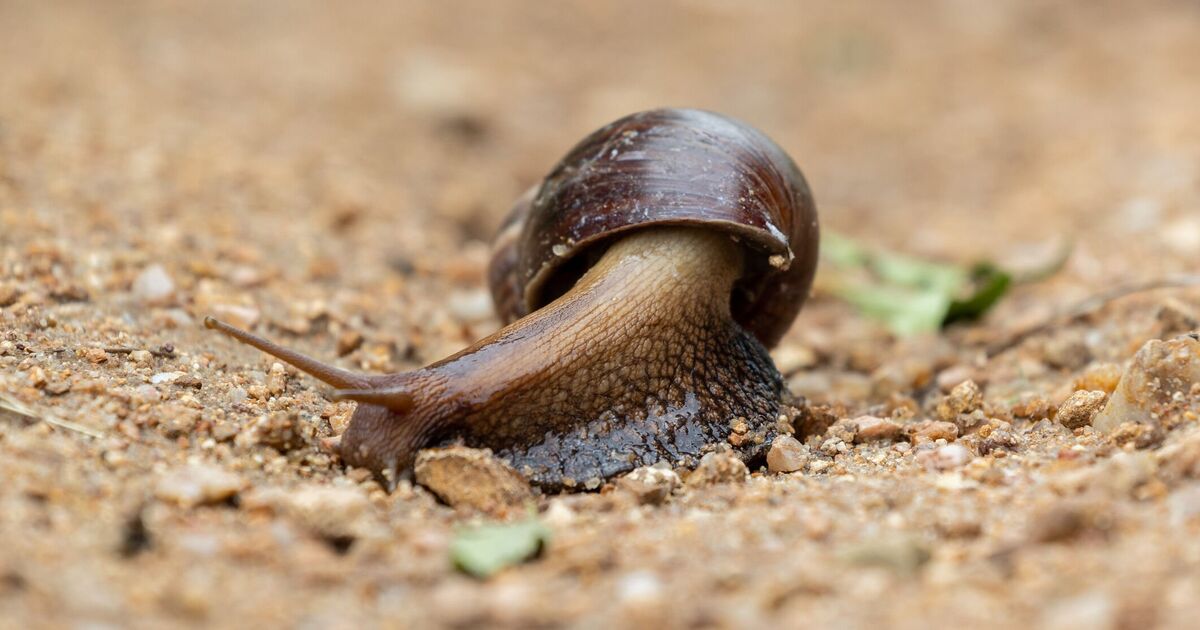
Spending time nurturing your garden all summer only to discover that snails have begun feasting on your plants is nothing but frustrating. Snails become more active in autumn because the cooler, wetter weather provides ideal conditions for feeding and moving around.
So, what’s the trick to keep snails at bay?
Instead of pouring vinegar or sprinkling salt on your plants, Chris recommends using a garlic solution. He revealed: “Slugs and snails hate garlic.
“[It] contains allicin and sulfur, compounds which they hate.” Chris states that it is good to use a concentrated solution to pour onto your plants.
In the video, he chops up garlic cloves and boils them in water for about 20 minutes. He then lets it cool before straining the liquid into a watering can.
Finally, Chris waters his plants and the soil directly with the solution. He shared: “Your plants will take up the solution and make them distasteful to the slimy vandals.
“You can also add grated garlic directly to the beds for a similar result.” Chris also states that chives contain the same compounds as garlic and can be used on plants to deter snails.
What else can you use?
Slugs and snails also hate wool. Chris states that the rough textures deter the slimy pests. However, a garden writer for Martha Stewart’s blog cautions that, like many DIY gardening hacks, using wool to deter slugs and snails may work, but there’s no guarantee.
Some evidence suggests that these pests dislike the coarse, scratchy fibres of natural wool and may change direction rather than cross it. If you’re still keen to give the idea a try, wool pellets designed specifically for garden use could be worth exploring.
According to Chimney Sheep, using wool can actually benefit your plants in lots of other ways. When wool gradually decomposes, it releases valuable nutrients into the soil.
Its excellent moisture-retaining properties also help keep plants hydrated. The wool layer blocks out light, helping to suppress weeds and keep them at bay.