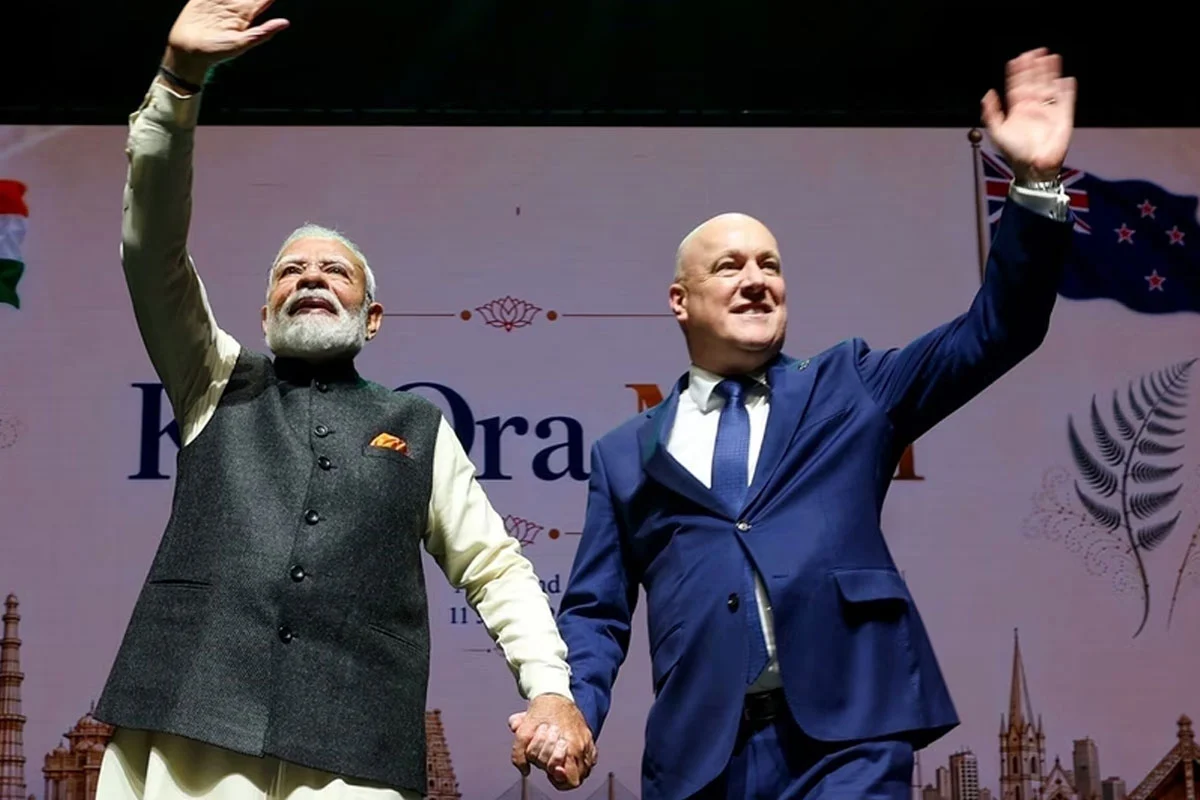
The New Zealand Parliament passed the Free Trade Agreement with India. New Zealand Prime Minister Christopher Luxon himself said that the bill was approved in the parliament. He mentioned this step as groundbreaking. Lacson claimed that New Zealand will benefit from this agreement with India as well. He specifically mentions the two issues of 'jobs' and 'higher income'. The question is, how much will India benefit from this agreement?
“Many told me that a free trade agreement with India was not possible. But today Parliament passed the final vote. It is happening. This landmark agreement means more jobs and higher incomes for New Zealanders. New Zealand goods will be opened to 1.4 billion Indians,” Lacson wrote in the X-Handle on Wednesday. The Prime Minister of New Zealand also claimed that the trade agreement with India is a very important step to make his country financially stronger. Its mission is to “address fundamental issues and build the future.”
The India-New Zealand Free Trade Agreement was signed on April 27. It is known that 93 votes were cast in the New Zealand Parliament in favor of the free trade agreement. On the other hand, only 29 votes against. According to multiple media sources, members of New Zealand's ruling National Party and the main opposition Labor Party have voted in favor of a free trade agreement with India.
How much will India benefit?
According to news agency sources, New Zealand has promised to invest two billion US dollars in India in the next 15 years. Also, under the terms of the Free Trade Agreement, both countries will be allowed to import and export most goods duty-free or with nominal duty. Needless to say, both countries will benefit financially. Note that all countries are eager to do business in a country of 1.4 billion consumers like India. The Narendra Modi government at the center wants to use that opportunity. Along with investment, advanced technology will be opened in the country. Initially, it is expected that the agreement will help create employment in various industries including textiles, leather goods, footwear, gems, ornaments, processed food. It has been promised that both the countries will work together in the field of agriculture.