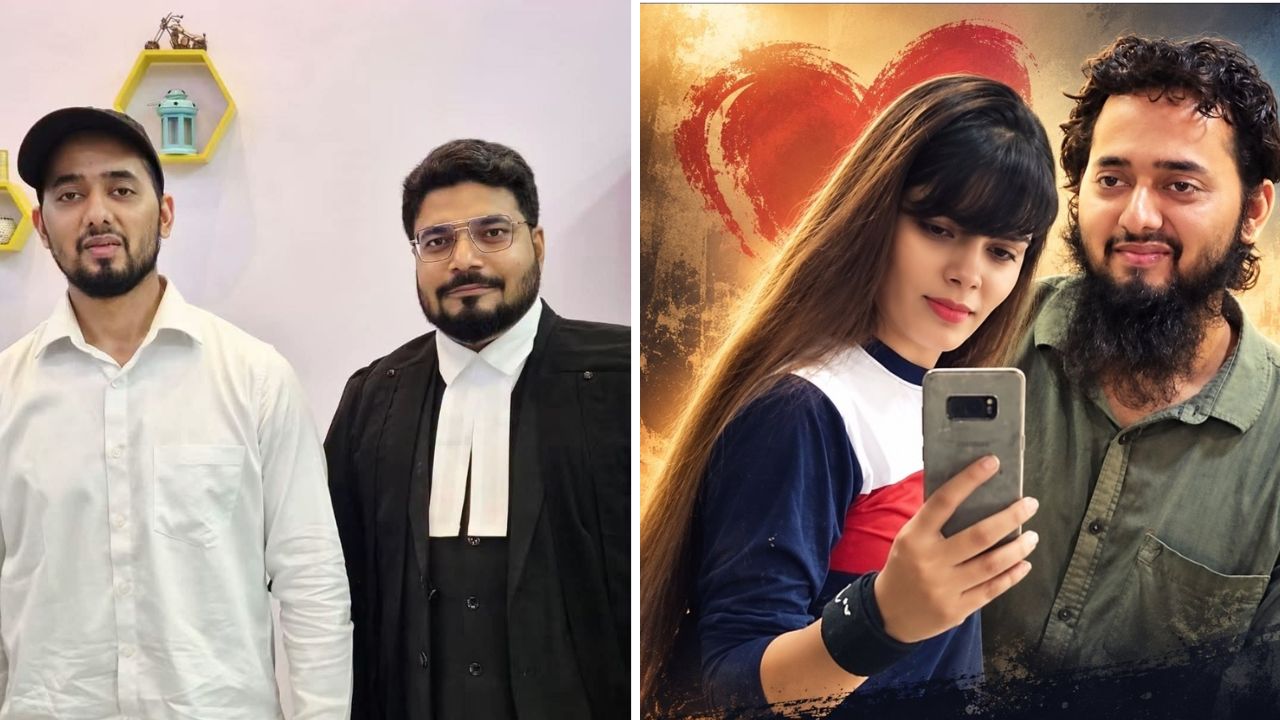
On one hand, the opposition of the family, on the other hand, the decision of an adult young man regarding his choice and religion… and then the matter directly reached the Allahabad High Court. About 31 year old Ayush Malik, resident of Shamli, Uttar Pradesh, said before the court that he had left Hinduism and adopted Islam of his own free will. He also said that there was no pressure, threat, greed or coercion on his decision. Ayush also expressed his desire to marry Muslim woman Chandni Qureshi.
On the contrary, the family alleged that Ayush had been influenced or brainwashed. Meanwhile, his family was accused of keeping him in the house illegally and the matter reached the High Court through a Habeas Corpus petition. On this, on September 16, Allahabad High Court, considering the statement given by Ayush and his age, clearly said that an adult person has the freedom to take decisions regarding his faith, place of residence and life partner as per the law. Along with this, the court has also reprimanded the police. Let us know the whole story…
Where did the story begin?
Ayush Malik, resident of Shamli, is about 31 years old and has studied Bachelor of Pharmacy i.e. B.Pharm. The matter came into limelight when a dispute arose between the family and the police regarding his religious conversion and relationship with a Muslim woman. According to the information revealed in the court, Ayush had also changed his name to Mohammad Ali. He said that he adopted Islam of his own free will. But from the family side this whole matter was seen from a different perspective.
When did Ayush talk about adopting Islam?
Ayush said in the High Court that he had voluntarily adopted Islam in 2014. He told the court that this decision was not the result of any threat, pressure, greed, undue influence or coercion. He also said that after adopting the religion, he has been following the essential religious practices of Islam. While recording his statement, the court said that at present no basis has emerged on which his voluntary decision can be disbelieved.
The family did not accept the change of son's religion.
An important thing that came to light in the case was that Ayush's religious conversion was not acceptable to his parents and other family members. Ayush told the court that his family did not accept his decision. He also alleged that since June 4, he had to face threats and illegal detention in his own house. From here the matter moved from mere dispute of religious conversion and marriage to the question of individual freedom.
The matter again reached the High Court
Habeas corpus petition was filed on behalf of Ayush in Allahabad High Court through his friend Sultan. In this petition, it was alleged that Ayush was being kept in illegal custody by his father and family. On September 9, Justice Sandeep Jain's court took the matter seriously and directed to present Ayush before the court. The court had also said on the basis of the documents available at that time that prima facie it appears that Ayush left Hinduism on his own will and adopted Islam and then married Chandni Qureshi against his father's wishes.
FIR against wife and her family after religious conversion
Another aspect of this entire controversy also came to light. A complaint was lodged with Shamli police regarding Ayush's religious conversion and his relationship with Chandni Qureshi. After this, action was taken against Chandni Qureshi and her father under the Uttar Pradesh Prohibition of Unlawful Religious Conversion Act, 2021. According to the report, sections of BNS were also added in the case. On behalf of Ayush, it was said in the High Court that his father, in connivance with the state officials, is detaining him illegally.
What is the father's allegation?
Ayush's father Dev Raj Singh Malik presented a different picture in the court from his son's statement. On behalf of the father, it was said that his son was not converting his religion on his own will, but some people had influenced or brainwashed him. A claim also came forward from the family that the Muslim woman and her family influenced Ayush and tried to gain control over the property. However, Ayush himself said before the court that his religious conversion was voluntary. There came a time when the matter of Ayush returning to Hinduism came to light.
The media reporting of the case also revealed the claim that Ayush had later allegedly returned to Hinduism. However, in his statement given before the court on September 16, Ayush clearly said that he had converted to Islam of his own free will in 2014 and he follows the essential practices of this religion. That is, different claims regarding Ayush's religious status came to light at different times in the case, but his immediate statement before the High Court focused on his voluntary adoption of Islam. He also made his decision clear regarding marriage with Chandni Qureshi. Religious conversion alone was not the center of controversy in the case.
Ayush told the High Court that he has decided to have marital relations with Chandni Qureshi and wants to marry her. A report also said that he had married Chandni against the wishes of his family, whereas his statement before the court recorded his desire to get married and to proceed with it as per the law. This is the reason why the court ruled on Ayush's religion and choice of life partner. Both were seen in the context of their personal freedom.
Ayush appeared in court on 16 September
After the order of 9 September, the police presented Ayush Malik before the Allahabad High Court on 16 September. Ayush said two things very clearly in front of the court. He adopted Islam of his own free will. He wants to establish marital relations with Chandni Qureshi. He also said that there was no threat, coercion, undue influence or greed behind his decision. The court said- Ayush is an adult, he can take decisions about his life himself. Considering Ayush's age and his statement, the court said that he is an adult and is capable of taking decisions related to his life. According to the court, Ayush has expressed his desire to believe and follow Islam without any ambiguity. He has also expressed his intention to marry Chandni Qureshi. The court said that at present there is no solid basis on which the voluntariness of these decisions can be doubted.
The family's concern is understandable, but…
The High Court also said that a father being concerned about the safety and well-being of his son is understandable in the context of family relationship. But the court made it clear that the personal autonomy of an adult person cannot be taken away just because his family does not like his decision. That is, parental disagreement and personal freedom of an adult person. On the question of balance between the two, the court gave importance to Ayush's own wishes.
High Court's important comment on freedom to choose religion
The court said that an adult person generally has the right to decide his religion according to his conscience. According to the court, a person's religious choice is linked to his personal autonomy and freedom of conscience. Just because family members do not agree with that decision, that person's choice cannot be overruled. The right to choose one's life partner is also a part of personal freedom. The court also linked the choice of marriage or life partner to the freedom of the individual. The High Court said that an adult's decision as to whom he wants to marry or establish a relationship with is part of his personal rights and autonomy. Mere family disagreement cannot be a valid ground to stop an adult person from making this choice.
Court also keeps an eye on the presence of police in the house
The High Court also noted that Ayush was living in the presence of police in his house. The court said that when an adult person has clearly stated his wishes and preferences before the court, that choice should generally be respected unless it is proved that his decision was influenced by any pressure or other illegal circumstance recognized in law. The court gave Ayush the freedom to live at the place of his choice. In view of all these circumstances, the High Court gave Ayush the freedom to live at the place of his choice. They were also given the freedom to believe and follow religion as per their wish. Also, the court gave them the freedom to take appropriate decisions regarding their marital relationship as per the law, after which this matter is getting a lot of buzz on social media.